

Think You Found a Brown Recluse? Not in Florida
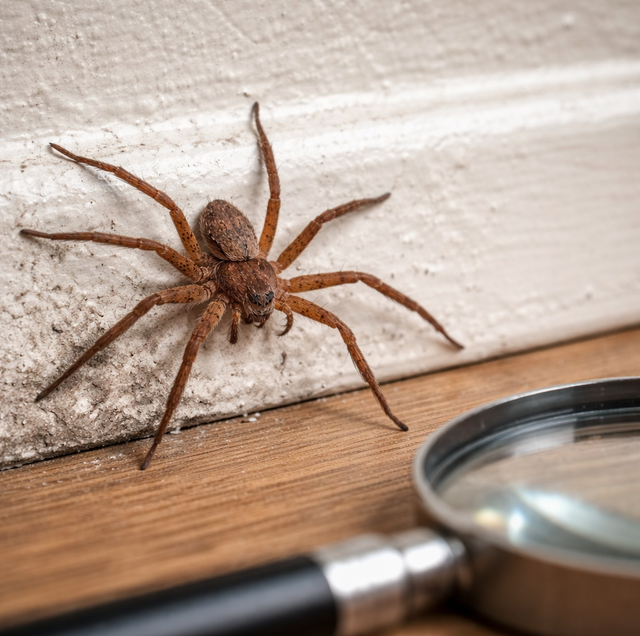
Quick Answer: Brown recluse spiders have no established population in South Florida. The spider you found is almost always a brown widow or a common house spider, and getting that identification right changes what actually needs to be treated.
You spot it low on the wall near the baseboard: a brown spider, legs tucked in tight, sitting still the way spiders do when they sense they're being watched. Someone mentions the words "brown recluse," and you are on your phone within a minute, holding your photo up against blurry stock images and squinting at a marking on its back that might be a violin shape, might just be shading. By the time you've read three articles, you're half-convinced the house has a recluse problem, and you're second-guessing whether it's safe to reach into a storage bin or a garage cabinet.
It's an understandable spiral, because the brown recluse is the spider almost everyone has heard of and almost no one has actually seen in person. The odds that the spider on your wall is a true brown recluse are low, and not because you got lucky. The species has never established a population anywhere near South Florida. What you're looking at is almost always something else, and figuring out which something else changes what actually needs to happen next.
Why the Violin Mark Doesn't Prove Anything
The marking people search for is a dark, violin-shaped smudge on the spider's cephalothorax, the fused head-and-body section behind the legs. Real brown recluses often carry it. So do several spiders that live in Florida year-round and have nothing to do with recluses. A handful of wolf spiders, southern house spiders in the genus Kukulcania, and huntsman spiders show a similar dorsal saddle pattern, because dark shading across that section of the body is a widespread camouflage trait, not a species fingerprint. A photo of a brown spider with a vaguely violin-shaped mark tells you almost nothing on its own.
The trait that actually separates a recluse from nearly everything it gets confused with is eye arrangement. Most spiders found in South Florida homes, including wolf spiders and house spiders, have eight eyes arranged in two rows of four. Spiders in the genus Loxosceles, which includes the brown recluse, have six eyes arranged in three separate pairs with a visible gap between each pair. Counting eyes on a spider small enough to sit on a fingertip takes real magnification, which is exactly why the violin mark became the shortcut people reach for even though it's the least reliable clue on the list.
Florida Has Never Had an Established Brown Recluse Population
UF/IFAS Entomology and the Florida State Collection of Arthropods, working from specimens submitted through FDACS-DPI's entomology program, track this directly. Confirmed brown recluse specimens in Florida have been found in only five counties, all in the northern half of the state: Alachua, Bay, Duval, Jefferson, and Leon. None of those five is anywhere near South Florida, and even inside those counties, most of the confirmed finds were isolated, a single building or a single vehicle, rather than an outdoor population spreading through a neighborhood. That's a separate question from how often people believe they've found one: Florida Poison Control fields roughly 182 alleged brown recluse bite calls in a typical year, against only a handful of specimens that ever actually get submitted and confirmed, a gap that says most self-diagnosed "recluse bites" are something else entirely.
The reason comes down to range, not chance. Entomologists map the brown recluse's established territory as running roughly from the southern Midwest, through Missouri, Arkansas, and Tennessee, down into Texas and the western fringe of Georgia, an area some in the field call the recluse belt. Florida sits outside that belt entirely, and South Florida sits further outside it still, hundreds of miles past the nearest confirmed county. A spider can travel in a moving box, or a shipment of goods the way plenty of insects do, but an occasional hitchhiker turning up in a crate is not the same thing as a species living and breeding in the walls of a house.
What's Actually Living in Your Home Instead
The spider you found almost certainly belongs to one of the small number of species that are really common in South Florida homes. The brown widow, a relative of the black widow, is by far the likeliest match for a dark, patterned spider found low to the ground: it builds a messy, irregular web in exactly the spots people check first, under patio furniture, inside an unused mailbox, along a lanai screen track, behind a shutter. Unlike the recluse, the brown widow is well established across the state and remains active year-round in South Florida's climate rather than appearing on a seasonal cycle.
Wolf spiders are another frequent source of misidentification, mostly due to size. They're large, fast, and hairy, which reads as threatening even though they don't spin webs and hunt on the ground at night instead. A female wolf spider carries her egg sac attached directly to her spinnerets and, once the eggs hatch, carries dozens of spiderlings clinging to her back, a behavior no recluse or widow shows. Past those two, the catch-all is ordinary house and cellar spiders: small, long-legged, brown or gray, living in closet corners and garage shelving and doing nothing more dramatic than eating whatever smaller insects wander in.
A red, swelling bite is often assumed to be a brown recluse before testing, when the real cause is frequently a bacterial infection such as MRSA. See a physician for any worsening wound rather than assuming which species caused it.
Why Getting the ID Right Matters
Misidentifying a spider isn't just a curiosity problem, because it changes what you actually do next. Someone convinced they have a recluse problem often reaches for broad indoor spraying to kill spiders on contact, which does very little against a brown widow's real habits: adults stay close to their web, so scattered chemical treatment rarely reaches the female tucked behind a shutter track or under a stored planter.
Spiders are, for the most part, a downstream sign. Web-building species set up wherever their prey concentrates, and around a South Florida home that's usually exterior lighting, a screened lanai holding onto humidity, or a mulch bed thick with the small insects that spiders actually eat. Knocking down the visible webs without addressing what's feeding the population means new webs reappear within days in the same spots because the food source and shelter never change. Sealing the gaps in a lanai screen track, clearing the harborage in stored items, and cutting the prey supply around the exterior does more than another round of web removal aimed at a species that was never a recluse to begin with.
What the Spider in Your Photo Is Probably Telling You
A brown spider on the wall isn't, on its own, evidence of anything alarming. It's evidence that South Florida's warm, humid conditions support many small predatory insects, and that a handful of species, mostly brown widows and a few common house and wolf spiders, are doing exactly what they're built to do. The species rarely at fault is the one everyone assumes first. Confirming what's actually living in the webs, then dealing with the sites and the prey supply behind them, does more than another round of guessing based on a marking that half the local spider population happens to share.
Frequently Asked Questions
A few times, and even those cases are old and isolated rather than a sign of a lasting population. Separate from the state's five confirmed brown recluse counties, university identification records note a single specimen intercepted near Lemon City in Miami-Dade County, credited to arachnologist Gertsch in 1958, and a small building infestation in Osceola County near Runnymede, credited to Banks in 1904 (the years mark when each record was cited in print, not necessarily when the spider was collected). Neither represents an established population, and neither is the true brown recluse species most people mean by the name. More recent isolated finds of related recluse species, a Mediterranean recluse turning up in a Florida warehouse and a Chilean recluse found in a single Polk County home, follow the same pattern: one-off interceptions tied to shipped goods, not populations living and breeding on their own.
Because a phone call or a submitted photo isn't the same thing as a confirmed specimen. The five-county record reflects collections that entomologists actually examined and identified under magnification, while the much larger number of self-reported "brown recluse" sightings called in or posted from South and Central Florida each year are rarely followed up with an actual specimen submission, so they never enter the confirmed record at all. That gap between what gets reported and what gets verified is part of why the myth keeps circulating this far outside the spider's real range.
In theory, but it's not reliable from an ordinary phone photo. If you want a confirmed answer instead of a guess, most county agricultural extension offices and university entomology labs will accept a submitted photo or a preserved specimen and return a formal identification from a trained entomologist, which settles the question far more reliably than comparing a picture to search results yourself.
Generally not. Wolf spiders are solitary ground hunters, not colony builders, so finding one wandering across a garage floor at night is typically an isolated event rather than a sign of a growing indoor population. They're drawn indoors chasing the insects that gather near exterior lights, so a wolf spider sighting is often a secondary clue that something else is drawing bugs to that door or window. They can deliver a defensive bite if handled bare-handed, producing local swelling and discomfort similar to a bee sting for most people, but they aren't considered medically significant the way a venomous species would be.
It depends which orb weaver is doing the building. Smaller garden-spider types in the genera Argiope, Neoscona, and Araneus do rebuild nightly, eating the old web at the end of the night and spinning a fresh one before the next, so a lanai screen near exterior lighting can show a brand-new web every single morning no matter how many were cleared the day before. The golden silk orb weaver (Trichonephila clavipes), the larger species most often strung across South Florida pool cages and lanais, is the exception: it patches and reuses the same web for days or weeks rather than starting over, so seeing an identical web in the identical spot doesn't mean nothing was cleared. Either way, switching an exterior fixture to a warmer, less insect-attracting bulb reduces the flying-insect draw that's pulling spiders to that screen in the first place, which cuts the food supply behind the webs more effectively than repeated removal ever will.
If it's safe to do so, capture the spider in a closed container for identification rather than releasing or crushing it, since that's often the fastest way to confirm what actually happened. Watch the bite site for spreading redness, worsening pain, or symptoms beyond mild local swelling, and contact Poison Control for guidance or seek medical care if anything worsens rather than trying to treat it yourself. It's also worth knowing that medical entomologists who review suspected spider bite cases regularly find that many turn out, on closer examination, to be something else entirely, another insect bite or an unrelated skin reaction, which is one more reason a confirmed ID matters more than a guess.
Not sure if that spider is something to worry about — get it identified and the real web sites and entry points treated, not just knocked down. Buggify Pest Solutions serves Boca Raton, West Boca, and communities across Palm Beach and northern Broward. Call Tyler: (561) 672-0200.
