
Spider Webs on the Lanai After a Storm: What Rebuilds First
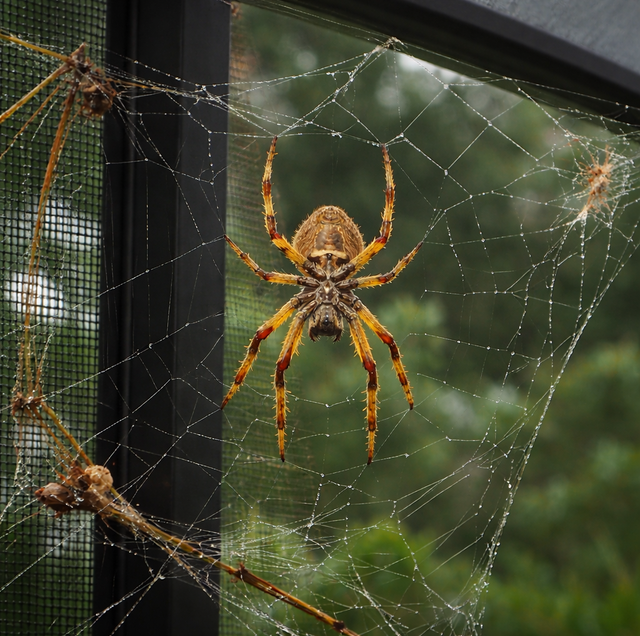
Quick Answer: A strong storm strips most webs off a lanai within hours, but rebuilding starts almost immediately. Orb weavers and brown widows are typically first back, drawn to the same exterior lighting and screen framing that attracted them before the storm.
A lanai screen that carried three or four spiderwebs before a storm can look completely bare the next morning, then have new strands strung across the same corners within days. That isn't the same spiders simply reappearing out of nowhere. Wind and driving rain destroy the silk itself, and the insects those webs were built to catch scatter or die off in the same weather. What comes back afterward follows a pattern that repeats after any storm strong enough to do that kind of damage, whether it's a named hurricane, a tropical storm, or just a severe thunderstorm squall that rolls through outside the official season entirely.
Why a Storm Erases Weeks of Web-Building
A spiderweb is a temporary structure by design. An orb weaver's web is a few dozen strands of silk anchored at a handful of points, built to flex with a light breeze, not to survive sustained wind. Once gusts climb into storm territory, most of those anchor points fail, and the web either shreds or blows away entirely. A brown widow's tangle web holds up a little better because it's denser and lower to the ground, but heavy rain still saturates and collapses it, and flooding around a lanai's base can wash out webs built near ground level altogether.
The spiders themselves usually fare better than their webs. Many retreat into the same tight gaps they'd use anyway, a screen track, a downspout bracket, the underside of a ledge, and ride out the storm there rather than out in the open. Some are killed, washed out, or displaced well off the property, and how many make it through in place likely comes down to storm severity and how much shelter was available. A multi-year academic study that tracked spider communities across 41 Bahamian islands before and after a catastrophic hurricane found that recovery afterward wasn't instant or uniform: different aspects of the community, how many species were present, how abundant they were, and what mix made up the population, returned to their pre-storm state at different rates over the years that followed, not all at once. That uneven pattern is a useful way to think about a single lanai, too, even on a much shorter timeline than a whole island: activity doesn't snap back all together, and different parts of what "normal" looked like before the storm can lag behind each other on the way back.
Orb Weavers and Widows Are Usually First Back
Two groups tend to reappear fastest, and both do it for reasons tied to the lanai itself rather than luck.
Orb weavers rebuild fast because the biology allows it: A single adult can spin a complete new web in under an hour once she settles on a spot, and storms leave behind exactly the conditions that draw her back to the same general area. Flooded lawns, downed vegetation, and a few days of disrupted routine tend to concentrate flying insects near whatever exterior lighting is still working, and a lanai fixture left on at night is one of the more reliable draws in the yard. The web usually goes back up within a few feet of where the last one was, not because the spider remembers the spot, but because the airflow and light pattern that made it a good location haven't changed.
Brown widows come back for the structure, not the light: A storm rarely touches the tight, sheltered gaps a widow prefers, so the harborage that made a downspout bracket or a stack of stored planters attractive before the storm is still just as attractive after. Widows don't need much time to reestablish once conditions settle, and because their webs sit low and out of sight, a new one can go unnoticed for a stretch before anyone spots it.
Check lanai screen frame tracks, downspout brackets, and any furniture or planters left outside first. Brown widows favor tight, sheltered gaps that a storm rarely disturbs, even when every nearby open web is completely stripped away.
How Long a Full Rebuild Actually Takes
Individual webs can reappear within a matter of days, especially the exposed orb-weaver kind built near lighting. A yard's overall web activity returning to its pre-storm level is a slower process, and there's no single fixed timeline for it: the pace depends on how severe the storm was, how much of the local insect population it knocked back, and how much shelter survived intact. A glancing thunderstorm might barely dent activity for more than a day or two. A direct hit from a named storm that flattens plantings and floods low areas can suppress the insect supply, and with it the spider population it feeds, for considerably longer before things return to normal.
One Storm Event Among a Year-Round Pattern
It's worth keeping a storm-driven reset in perspective. South Florida doesn't have a real pest off-season, and spider activity around a property fluctuates throughout the year, driven mostly by how much prey is available, not by any single event. A major storm is one input into that broader pattern, a sharp, temporary interruption layered on top of a cycle that keeps running in every month regardless. A homeowner checking the lanai in February after an off-season squall will see the same rebuild pattern described here, on a smaller scale, because the mechanism- wind and rain stripping fragile silk while the spiders and their food supply recover close by- works the same way whether it's June or January.
Getting Ahead of the Reset
Sweeping down every web the morning after a storm feels productive, and for safety or simple visibility around doors and walkways, it's a reasonable first step. It won't slow the rebuild much on its own, though, since the webs were never the actual population, just the visible evidence of it. The exterior lighting choice matters more than the cleanup does: a warmer-spectrum bulb draws noticeably fewer flying insects overnight than a bright white one, which gives orb weavers less reason to resettle on that fixture once the storm passes. Screens, downspouts, and anything stored outside are worth a real look too, not just a glance, since that's where widows tend to reestablish first and where an egg sac is easiest to miss.
Frequently Asked Questions
The trigger isn't the storm's official classification; it's whether wind and rain crossed the threshold a web's silk can hold, and plenty of severe summer squalls clear that bar without ever reaching tropical-storm strength. One wrinkle worth knowing: if the same storm knocks out power to an exterior light for a few days, that fixture stops concentrating flying insects for as long as the outage lasts, which can delay a specific web's reappearance even after the wind and rain damage has already healed.
Fresh silk looks tighter and has a slight sheen when the light hits it at the right angle, while a web that's been through wind and rain, even one that technically held together, tends to look duller and looser, with a few strands sagging or broken. A web that's been repeatedly wetted also collects more visible dust and debris along its lines within a day or two, which a new web at the same stage won't have yet.
Usually close to it, but not identically, and there's a wrinkle worth knowing: many orb-weaver species already tear down and eat their own web every night to recycle the silk proteins, then spin a new one before dusk, so a storm-triggered rebuild is really that same nightly routine starting from a bare screen instead of the previous night's web. The location itself won't tell you whether it's the same spider. What does is the animal sitting at the hub: individuals of the same species vary enough in size, color pattern, and abdomen markings that a close look at the spider, not the web, is the more reliable way to tell a returning resident from a different spider that's simply claimed the same good spot.
Yes, and it's an easy spot to skip. Folded cushions, stacked chairs, and rolled umbrellas left outside during a storm are exactly the tight, undisturbed gaps a brown widow looks for once conditions settle, and an egg sac tucked into a cushion fold can sit unnoticed through several weeks of use before anyone finds it. Check the underside of chair arms and the joints where an umbrella pole telescopes, too, not just the cushions themselves; those tight metal-on-metal gaps hold just as much appeal. Tap or shake an item before handling it rather than reaching straight into a fold, since brown widows tend to hold still and stay tucked in rather than run, so a quick look alone can miss one pressed into a seam. Left alone, a single egg sac can produce dozens of spiderlings that disperse to their own spots around the lanai, turning one missed check into several new webs within a matter of weeks.
It can go either way depending on how the storm affected the insect population feeding the spiders. A wetter storm season that leaves standing water and lush new growth in its wake can actually support more prey once things dry out, which means a stronger spider rebound than a drier season would produce. A storm severe enough to flood or strip most of the surrounding growth can suppress the food supply long enough that the rebound to its usual level takes noticeably longer.
Clearing them is reasonable for safety and visibility around doors, steps, and walkways. Work top to bottom with a soft broom or a gloved hand rather than a hose on full pressure; forcing water at torn silk and wedged debris tends to drive both deeper into screen tracks and hinge gaps instead of removing them, and can loosen screen spline in the process. Debris changes the picture beyond what wind alone does, too: downed leaves, twigs, and torn palm fronds piled in a corner or against a screen create new sheltered nooks that weren't there before the storm, so a debris pile can actually draw the first rebuilt webs to a spot that had none previously, not just bring back the old ones.
Noticing webs rebuilding fast on the lanai after a storm — get the source addressed, not just the webs cleared. Buggify Pest Solutions serves Boca Raton, West Boca, and communities across Palm Beach and northern Broward. Call Tyler: (561) 672-0200.
