

A Spider in Your Bed: Why It's Rarely a Cause for Alarm
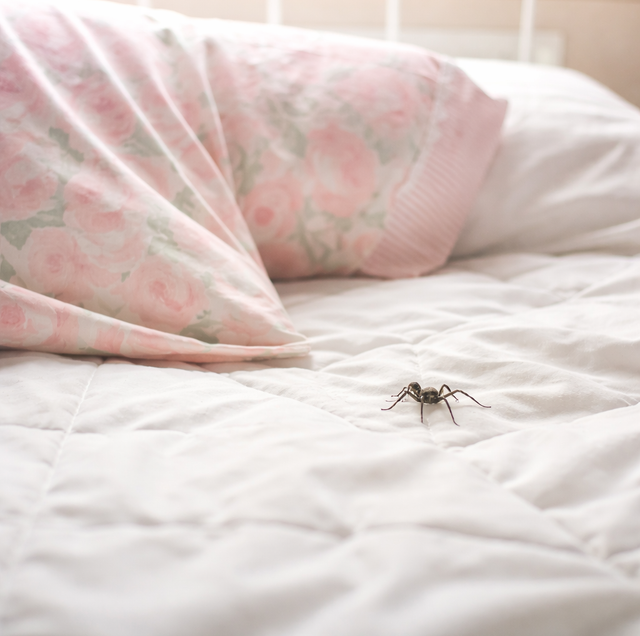
Quick Answer: A spider in your bed is almost always a single wandering hunter, not an indoor colony. Cup it, slide a card underneath, and release it outside. Check nearby entry points afterward, and treat repeat sightings, not one, as the real signal.
A spider in the bed is rarely what it feels like at 2 am. The instinct is to picture a nest tucked behind the headboard or spun somewhere inside the mattress, but the species actually active in South Florida bedrooms don't behave that way: they walk in rather than build there. A single one crossing the sheets or the pillow is ordinary wandering behavior for a handful of species in this climate, and what actually matters is what you do in the next five minutes, not how many spiders you imagine might be hiding nearby.
Why a Spider in the Bed Is Almost Always a Lone Wanderer
South Florida's two web-building species that are worth any real concern, the brown widow and the golden silk orb weaver, stay outdoors almost without exception. A brown widow tucks itself into a low, tight gap, under patio furniture, inside a mailbox, along a fence rail, and spins a loose, messy tangle there rather than moving indoors. The golden silk orb weaver builds its broad, sun-catching web across open outdoor spans instead: a pool cage corner, a lanai screen, the gap between two trees. Neither species relocates a web onto bedding, and a spider generally doesn't spin silk across a mattress the way it would across an open outdoor corridor, so one physically in the bed rarely got there by building a web.
That points to a different kind of animal: a ground hunter that walked in rather than one that wove its way to that spot. A wolf spider hunts on foot after dark, favoring low, shaded paths, and one that came in through a gap under an exterior door or a garage entry can easily end up crossing a bedroom floor and climbing onto low bedding. A jumping spider is smaller and more often found on a wall or windowsill than the mattress itself, stalking prey visually rather than trapping it in silk. Either one showing up once is an isolated wanderer, not a sign of a population living in the room.
What Likely Brought It Into the Room
A wandering spider doesn't pick a bedroom at random; it's usually following either an entry point or a food source, and the two are often the same thing. A door propped open for a few minutes, a torn window screen, or a gap where a laundry line or garage connects to the house gives a ground hunter a direct path in. Once inside, a small flying insect drawn to a bedside lamp or a nightlight left on overnight has a reason to stay in that particular room rather than move on to the kitchen or bathroom.
This isn't a seasonal quirk. South Florida's climate keeps insect activity, and the spiders hunting that activity, viable outdoors year-round, so a wandering spider indoors is just as plausible in January as it is in August. Laundry or shoes brought in from a garage or a clothesline can also carry one in without any gap or entry point being involved at all, which is worth keeping in mind before assuming a hole somewhere is automatically the cause.
The Safe Capture-and-Release Method
Most spiders that turn up in a bedroom, including wolf spiders and jumping spiders, aren't dangerous to handle indirectly, and a simple capture-and-release approach clears the immediate problem without needing to identify the species first.
Cover it, don't corner it: Set a rigid cup or a drinking glass over the spider slowly, without pressing down on the surface it's resting on. A sudden motion is far more likely to send it toward a hand than a slow, deliberate cover is.
Slide, don't scoop: Work a stiff piece of paper, an index card, or a thin piece of cardboard under the cup's rim until it fully seals the opening, then lift the two together as one unit. A partial seal is how a spider ends up loose on a hand or a sleeve mid-carry.
Carry it out and release it away from the door: Walk it outside and set it down in mulch, a planting bed, or open grass a few feet from the structure, rather than right against the foundation, so it isn't released straight back at whatever gap it may have used to get in.
Wash the bedding if it helps you settle back in: A quick load through the wash isn't necessary for the spider's sake, but it's a reasonable step if it's what actually gets you comfortable getting back into bed.
Never trap a spider between skin and fabric; that's usually when a defensive bite happens. Keep the cup sealed fully against the card until you're outside, and set it down gently rather than shaking the card near your hand.
For anyone who would rather not get that close, a vacuum with a hose attachment works nearly as well: run it directly over the spider, then empty the canister or bag outside right away rather than leaving it in an indoor bin.
When a Single Sighting Is Worth Checking Entry Points
One spider is background activity for this climate, but a five-minute walk around the room afterward is still worth doing, mostly because the fix is quick if there's actually something to find. Check the bottom of the exterior doors nearest the bedroom for daylight showing through a worn sweep, run a hand along the window screens for a loose corner or a small tear, and look at where a dryer vent, an AC line, or a plumbing penetration passes through an exterior wall, all common paths for something walking rather than flying.
The lighting is worth a look too. A porch light or a bedroom window left lit overnight draws the small flying and crawling insects a wandering hunter is actually following, and moving a fixture or swapping to a warmer-toned bulb can cut that draw without giving up the light itself. If the door sweep, the screens, and the lighting all check out clean, there usually isn't much more to do beyond keeping a half-eye on the room for a repeat sighting.
When It's Actually Cause for a Professional Visit
A single wanderer doesn't call for treatment, and spraying a bedroom on the strength of one sighting usually treats a problem that isn't really there. What changes the calculation is a pattern: the same type of spider turning up more than once in the same week, sightings spreading into a second room, or an egg sac found somewhere nearby, since a sac left in place can still hatch weeks later no matter what happens to the individual spider that laid it.
The other case worth flagging is identification. A spider matching a brown widow's description- small, a mottled tan-to-dark-brown body, sitting in a loose tangled web rather than moving across open ground, showing up indoors more than once is unusual enough to be worth a photo and a second opinion, since that's the one species in this region actually worth treating as more than a shrug. Outside those two patterns, a wandering spider found once, captured, and released outside is a closed matter, not the start of an ongoing problem.
Frequently Asked Questions
This is one of the more persistent bedroom pest myths, and it doesn't hold up well against what's known about how these spiders actually behave. A sleeping person's breathing, body heat, and involuntary movement register as a threat to a small hunting spider far more than an invitation, and spiders generally avoid warm, vibrating surfaces rather than seek them out. There's no solid body of evidence behind the specific claim, and pest professionals treat it as folklore rather than a real risk worth planning around.
Not really. A spider that slips under a nightstand or behind a headboard before it can be caught hasn't taken up residence there; wolf spiders and jumping spiders both need the humidity and prey density of an actual yard to survive long-term, and one stranded indoors without a way back out typically doesn't make it past a week or two before conditions catch up with it, rather than settling in. Checking under nearby furniture with a flashlight for a night or two is a reasonable habit if it helps you relax, but an escaped spider isn't a loose end that needs resolving.
Yes, slightly. The cover-and-slide steps still apply, but there's less rush to it: a brown widow tends to hold still under the glass rather than bolt for a gap the way a wolf spider does, so there's time to get a clear look and a photo through the glass before sliding the card underneath. Once it's contained, the more useful next step isn't the door-sweep-and-screen check that covers a generic wanderer; it's a walk-through of the room's low, tight voids instead: behind a nightstand, the corner of a closet, underneath a dresser. A brown widow favors that kind of tucked-away gap over open floor, so those spots are worth a look even if the door and window check comes back clean.
No, and it shouldn't be done. Residual pesticide products are labeled for hard surfaces like baseboards, door frames, and window tracks, not fabric or bedding someone sleeps on directly, and applying one to a mattress doesn't address the entry point a spider actually used anyway. The fix that holds up is closing the gap or clearing the food source identified during the entry-point check, rather than treating the bed itself.
No. Spiders don't feed on mattress fabric, foam, or the dust inside a mattress the way other household pests might, so there's no food source drawing one to nest inside the structure itself. A spider on or in the bedding got there by wandering across the floor and climbing up, not by living inside the mattress, which means the mattress is rarely the real issue even after a sighting.
Yes, and it changes where to look rather than just whether to look. A spider turning up twice in the same bedroom usually traces back to something local to that room, its own door sweep, its window screen, a gap where a vent passes through that one wall. One showing up in a bedroom one week and a home office or bathroom on the other side of the house the next points somewhere more central instead: a garage entry, an attic access panel, or a shared plumbing chase that lets a hunter range further before it settles down to hunt. When the rooms don't match, it's worth widening the entry-point check to those central points rather than re-checking the same bedroom's screen a second time.
Get a spider identified and the entry point closed for good — skip the guesswork if sightings keep repeating. Buggify Pest Solutions serves Boca Raton, West Boca, and communities across Palm Beach and northern Broward. Call Tyler: (561) 672-0200.
