

One-Time Pest Treatment or a Recurring Plan? How to Tell Which Fits
You found a wasp nest under the eave, or you noticed a scattering of roaches under the sink, and now you are staring at two very different offers: a single visit to knock the problem down, or an ongoing plan that keeps a technician coming back every couple of months. The single visit sounds like the cleaner answer. The plan sounds like a subscription you may not need. Choosing between them without understanding what each does is how homeowners end up overpaying for services they didn't need or calling back six weeks later because the same problem walked right back in.
The real question is not which option sounds better. It's whether what's happening in your yard and your structure is a contained event or an ongoing source of pressure. One-time treatment and recurring service solve two different problems, and matching the wrong one to your situation is why people feel like they "already tried pest control and it didn't work," when the format simply never matched the problem.
What a Single Treatment Is Actually Built to Solve
A one-time visit is a targeted strike against a specific, contained event: a wasp nest under the soffit, a yellow jacket colony built into a corner of the yard, a spider population that has taken over a covered patio, or a household pest showing up because of a single fixable condition like a leaking hose bib. In these cases, the trigger is identifiable, the population isn't being continuously replenished from outside, and once it's removed, the space stays clear because nothing remains to generate new activity.
The mechanism matters here. A wasp colony has one queen and one nest; eliminate the nest and the colony is gone, with no ongoing source refilling it. A spider population feeding off insects drawn to porch lights behaves the same way: knock down the webs, treat the harborage, reduce the food source, and the population doesn't rebuild itself out of thin air. These are closed systems, and treating the source once correctly leaves nothing to push new activity toward the house.
What a Recurring Plan Is Actually Built to Solve
A recurring plan exists for the opposite situation: pressure that never fully stops. Ants, roaches, and rodents rarely show up due to a single isolated event. They show up because outdoor conditions, mulch beds holding moisture, irrigation overspray against the foundation, gaps at the roofline, and landscaping that touches the structure are continuously producing new foragers and new entry attempts. Treat that kind of activity once and you've interrupted the population active on the day of the visit, but you haven't touched the conditions that will produce the next one.
Biology works against a single visit here. Ant colonies with multiple queens keep producing brood on a rolling basis. A German cockroach egg case hatches roughly a month after it's laid, so a population that looks handled after one treatment can be rebuilding within weeks. Rodents are drawn to a structure by ongoing food, water, and shelter conditions that don't disappear after a single trap-out. A single visit resets the count without correcting what generated it, so activity climbs right back toward where it started.
A recurring plan also does something a one-time visit structurally cannot: it keeps a fresh residual in place. Exterior products applied around a foundation and entry points stay active for roughly three to four weeks before breaking down from sun, rain, and heat. A single visit gives one window of protection, then nothing. A set interval means a new barrier goes down before the old one fully fades, so the property is rarely left unprotected for long stretches.
Comparing the Two Approaches Side by Side
| Factor | One-Time Treatment | Recurring Plan |
|---|---|---|
| Best-fit situation | A single, identifiable event: one nest, one colony, one fixable condition | Ongoing outdoor pressure from breeding pests with no single point of origin |
| Pest-cycle coverage | Covers the population active on the day of service | Covers new generations as they hatch, on a repeating interval |
| Prevention vs. reaction | Reactive by design; addresses what already exists | Preventive; keeps a barrier in place before the next wave arrives |
| Residual product life | One window, then no further protection | Refreshed before the prior application fully breaks down |
| Source correction | Effective when the source is removed in the same visit | Ongoing source management across visits, since outdoor conditions shift with weather and seasons |
| Entry-point exclusion | Can include a one-time fix (sealing a gap, removing a nest) | Monitored and adjusted over time as new entry points appear |
| Typical pests it fits | Wasps, hornets, yellow jackets, an isolated spider population | Ants, roaches, rodents, general year-round pest pressure |
| Risk if mismatched | Low, if the trigger really was a single event | High, since a one-time visit on an ongoing source usually means a rebound within weeks |
| Long-term cost pattern | Lower total visits if the problem truly doesn't return | More visits, but each one is smaller in scope than a repeated emergency call |
The table serves as a general guide, but the real answer depends on what's driving the activity, not on which pest is visible on the surface.
Why the Same Pest Can Fall on Either Side
People often assume the pest itself decides the answer, but the same species can call for a different approach depending on what's behind it. Roaches showing up because a door was propped open at a party and a handful wandered in are a different situation than roaches sustained by grease buildup behind an oven and moisture under a dishwasher. The first is a one-time nuisance. The second is a self-sustaining population that keeps producing new roaches as long as the food and moisture source stays in place, no matter how thoroughly a single visit treats what's visible that day.
The same split applies to rodents. A single mouse that got in through a gap around a utility line, sealed the same day it was found, can be closed. A pattern of roof rats using soffit-fascia gaps and roofline penetrations as repeated entry routes is not a one-time occurrence; it's an ongoing exclusion and monitoring situation, because the geometry that let the first rat in is still waiting for the next one.
When One Visit Really Is Enough
A single treatment is the right call when three things line up: the trigger is identifiable, the population has a single point of origin, and nothing about the property's outdoor conditions is likely to cause a recurrence. A wasp nest removed from a soffit with no other nests nearby fits this. A spring cleanup that clears cobwebs and egg sacs from a covered patio before a season of heavy porch-light traffic often fits too, especially on a property with a dry, well-maintained perimeter.
The tell that one visit is enough: nothing about the yard, foundation, or structure remains that would keep generating the same activity. If you can point to the specific thing that was removed and explain why nothing similar is likely to form again soon, a one-time treatment has done its job.
When Ongoing Pressure Means a Plan Is the Better Fit
A recurring plan earns its cost when the property sits under continuous pressure rather than a single event. Homes near dense landscaping, homes with irrigation running against the foundation daily, and properties in a climate with no true dormant season for insects all fall into this category, because outdoor conditions keep generating new activity regardless of how thoroughly any single visit was performed.
The tell here runs opposite to the one-time case: if the same type of activity returns within weeks of a treatment, that isn't a sign the treatment failed. It's a sign the source was never a single, contained event to begin with. A property that keeps producing the same pest, cycle after cycle, at roughly the same interval is describing an ongoing condition, and that needs an ongoing response, not a repeat visit every time the symptom reappears.
What Guessing Wrong Actually Costs You
Choosing a one-time visit for an ongoing-pressure situation is the more common misstep, since it looks like the more conservative choice in the moment. It treats a symptom without touching the source, so the population rebuilds on the same timeline it always has, and the homeowner ends up booking single visits again and again, each a fresh reaction to a problem a preventive schedule would have kept from building in the first place.
The reverse mistake, a truly isolated event on a full recurring plan, is less common but worth naming. It isn't dangerous, but it means paying for ongoing service against a source that no longer exists. If a plan has run for a while with no activity between visits, that's the moment to ask whether the interval can be stretched, not a reason to assume the whole approach was wrong.
How to Decide for Your Own House
Start with the trigger, not the pest's name. Ask what specifically produced the activity. If you can point to one nest, one gap, one condition, and that thing is now gone or sealed, a single treatment likely closes the loop. If the honest answer is "I'm not sure, it just keeps showing up," that uncertainty is the signal, since an ongoing, undiagnosed source is exactly what a source-first recurring plan is built to find and manage.
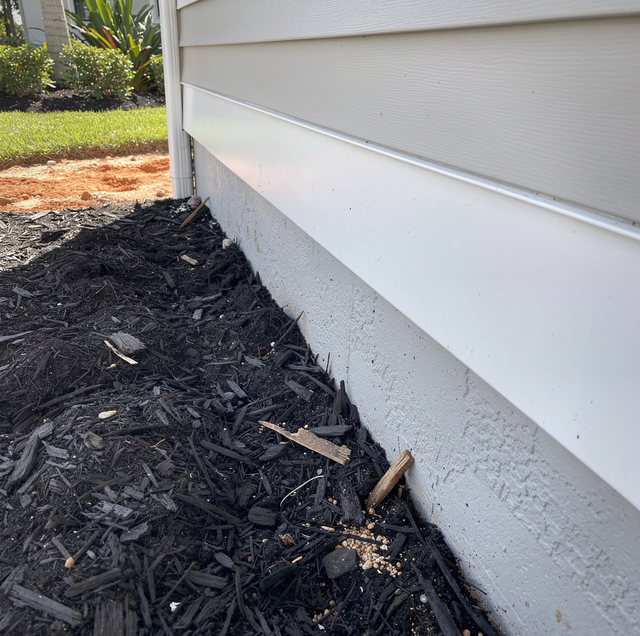
Next, look at the outdoor conditions rather than just the room where the problem appeared. Mulch beds against the foundation, irrigation overspray, dense landscaping touching the siding, and a roofline with visible gaps all continue to generate pressure long after a single visit ends. A property with none of those is a far stronger candidate for a one-time fix than one where several are present at once.
Finally, weigh your own tolerance for a rebound. A one-time visit accepts the risk of a repeat in exchange for a lower initial commitment; a recurring plan trades ongoing visits for a barrier that's rarely down for long. Neither preference is wrong, but it belongs in the decision.
Frequently Asked Questions
Yes, and this is a common path. A homeowner books a single visit for what appears to be an isolated event, and if activity returns within a few weeks despite the trigger being addressed, that pattern is useful information. It tells a technician the source was never fully contained, and switching to a scheduled plan from there is an easy call.
A properly run one-time visit should still start with identifying what's producing the activity, not just treating whatever is visible. Spraying a symptom without finding the nest, the gap, or the moisture condition behind it is how a one-time visit fails even when the pest looks handled for a few days.
Not necessarily, but worth questioning if that problem had an identifiable, removable trigger. A recurring plan makes the most sense when the property's landscaping, moisture patterns, and entry geometry continue to create pressure regardless of which pest shows up first. One past problem with a clear, corrected cause doesn't justify an ongoing plan on its own.
Give it a couple of weeks past the visit before drawing conclusions, since a short flush of activity right after treatment is normal as pests are driven out of harborage. Activity that fades and stays gone points to a truly contained event. Activity that returns at roughly the same level it started at signals the source was ongoing rather than isolated.
It can, on a property where outdoor conditions have clearly improved, drainage has been corrected, landscaping has been thinned back from the structure, and activity has stayed low for an extended stretch. That's different from stopping service outright on a property still under active outdoor pressure, where a lapse tends to hand the population a head start.
Picking based on the pest's name instead of its source. Two houses with the same pest crawling across the counter can need opposite approaches, one because the trigger was a single fixable event, the other because outdoor conditions keep feeding the population. Asking what's driving the activity, rather than assuming the format based on which insect is visible, is what keeps the choice from being a guess.
The Format Only Works If It Matches the Source
Neither option is automatically the "better" choice. A single treatment is the right tool against a contained, identifiable event, and paying for ongoing visits against a source that no longer exists is spending without a matching need. A recurring plan is the right tool against continuous outdoor pressure, and treating that kind of situation with a single visit tends to produce the same disappointing result again and again, not because the treatment was weak, but because the format never matched what was happening outside the house. Look at the trigger and the outdoor conditions, and let those two things decide, rather than the name of the pest on the label.
Not sure if your situation is a single fix or an ongoing source — get it inspected and matched to the right approach. Buggify Pest Solutions serves Boca Raton, West Boca, and communities across Palm Beach and northern Broward. Call Tyler: ( 561)672-0200.
