

Luxury Home Spider Control in Boca Raton: What Estate Lots Need
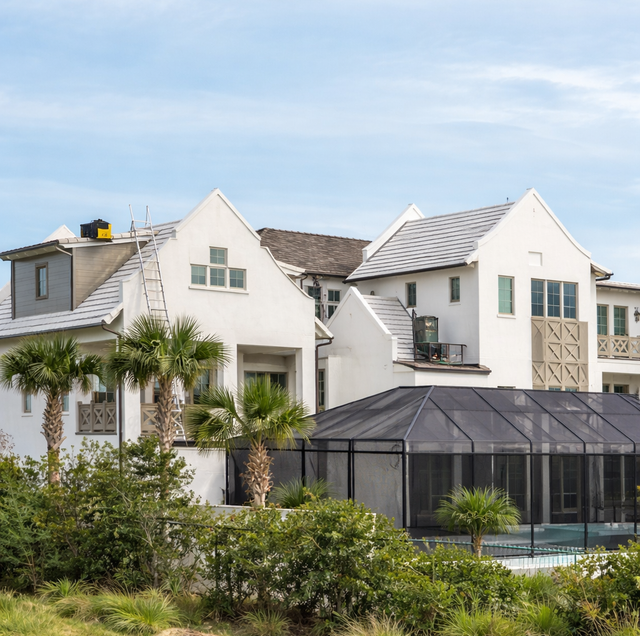
An estate lot in a gated Boca Raton community isn't a scaled-up version of a standard suburban yard. It's built on a different physical scale, and a spider program that treats it like a typical single-story home ends up covering only part of what's actually there. More roofline means more eave, gable, and dormer surface for a web to anchor to. A larger screened lanai or pool cage means more aluminum framing track and more corner posts where spiders and the insects they feed on collect. More perimeter means more distance between the house and the property line for a technician to actually walk and inspect.
None of that is decoration. It's what determines whether a spider program covers the entire property or only the areas closest to the front door. Four things tend to change scope on a property built at this scale: how much roofline and elevation there is to reach, how large the screened footprint actually runs, what a household with staff on a working schedule expects from a technician on-site, and what a gated entry adds before anyone even reaches the driveway.
Multi-Story Rooflines Change What Full Coverage Means
On a single-story home, a perimeter sweep and a residual pass along the eaves cover nearly everything a spider could use as an anchor point. A two- or three-story estate home changes that math. Gable ends, roofline transitions, and dormer returns sit well above what anyone can reach from a stepladder, and those upper returns are exactly where lanai-edge and eave-building orb weavers prefer to work: the height keeps a web out of ground-level wind gusts and puts it close to the porch and exterior lighting that draws flying insects after dark. The same soffit-fascia gaps and tile-edge returns common to Boca Raton's tile-roof architecture also give spiders undisturbed voids to build in, since nothing at that height ever brushes a web away on its own.
Covering that upper roofline doesn't mean climbing the structure. It means using equipment built for the reach. A backpack unit like a Solo 475-BHD, or a gas-powered rig such as a Cardinal CPS435, can put a residual barrier on eave returns and gable peaks from the ground, at a height and volume a hand-pump sprayer isn't built for. The trade-off is time: an elevation with three or four separate rooflines simply takes longer to treat properly than a single ranch-style roofline, and a visit scoped for a standard home routinely underestimates the time required.
There's a second effect worth naming. On a single-story house, a resident spots a web from a window and reports it. On a multi-story estate home, the upper gable ends and roof valleys mostly go unseen from inside, so activity there can build for months before anyone notices it from the ground. That's why inspection on a property like this starts at the roofline and works down, rather than starting wherever someone last happened to notice a web.
A Larger Lanai or Pool Cage Multiplies the Perimeter to Cover
A screened lanai or pool cage on an estate lot commonly wraps two or three times the linear footage of a standard patio enclosure. Each extra section of framing adds another run of corner posts and panel seams, and those seams matter more than the open screen mesh does. The mesh keeps out mosquitoes and no-see-ums, but it does nothing to stop a spider, or the insects it eats, from using the aluminum track itself as a walkway. Undisturbed corner posts near cage lighting are prime anchor points for lanai-edge orb weavers; many rebuild a fresh web most nights and take it down again near dawn, though the golden silk orb weavers common on larger cages instead hold the same web for days or weeks, patching torn sections rather than starting over. The farther a given panel run sits from a door or a frequently used path, the less foot traffic disturbs a web, so the corners farthest from the house tend to hold the most activity.
House spiders take a different approach, tucking into gaps behind fascia trim, under pool equipment housings, or inside storage lockers along the cage that rarely get moved. Brown widow exclusion is the piece that needs the most deliberate attention on a property this size, since a larger cage has more of those dark, undisturbed voids for a widow to settle into.
Brown widow spiders nest in dark voids under pool furniture and lanai fascia gaps. Their venom is potent per bite, but bites stay mild and local since they inject little venom. Leave an unidentified web or egg sac to a licensed technician.
Treating a cage this size as a single "yard" line item is how sections get missed. A program scoped to the actual footprint treats the full framing run and the fixtures near it, not just the section closest to the pool deck door, and folds prey-insect reduction around cage lighting into the same visit rather than handling it as a separate step.
Discreet Service Expectations Shape Scheduling and Technique
A pest visit on a standard single-family home rarely has to work around anyone else's routine. On a property with household staff, a property manager, or family working from home on a set schedule, arrival time and how a technician moves through the property matter as much as the treatment itself. Scheduling around when the property is actually free to work, rather than the next open slot on a route, helps ensure a visit doesn't interrupt a working household. Uniform and vehicle presence follow the same logic: if a resident prefers a technician not arrive in branded apparel or a marked vehicle at the gate, that's a request handled at scheduling, not something assumed by default.
Continuity helps here too. When the same technician handles a property at every visit instead of a rotating route tech, there's no need to re-explain the gate code, which areas are off-limits (a home office, a nursery, a wine room), or where the dogs are on a given day. That familiarity also means fewer surprises walking into a screened cage or side yard where kids or pets use the space daily, which is part of why pet- and family-safe treatment defaults matter more, not less, on a property with more people and animals actually moving through the areas being treated.
Gated-Community Access Adds a Coordination Step
A gated or master-planned community adds a step before a technician even reaches the driveway. Guard gates typically need advance notice or a standing visitor authorization to let a recurring service vehicle through without a resident placing a call every time, and some HOAs restrict exterior service hours or equipment noise under their community rules. None of that changes the treatment itself, but skipping it is what turns a scheduled visit into a no-show at the gate.
Shared amenities add a less obvious wrinkle. A clubhouse, cabana, or shared pool area with lighting left on overnight draws the same flying insects that spiders feed on, and that draw doesn't respect a property line. A unit backing up to a community amenity can carry more prey-insect pressure than one that doesn't, simply because of what's lit up nearby every night, which is worth factoring into how often the areas facing that amenity get checked.
What Changes, and What Doesn't
The materials and the baseline don't shift on an estate lot. Source-first diagnosis before any product goes down, pet- and family-safe treatments, and an eight-week cadence that holds up against South Florida humidity better than a quarterly one would, all apply regardless of square footage. What changes is the ground that same program has to cover: more roofline to reach without a ladder, more framing track around a larger cage, more coordination to get on and off the property without interrupting a household, and sometimes a gate to clear before any of it starts.
A property built at this scale needs a plan scoped to match it, not a standard visit stretched thinner across more square footage. The only thing that actually grows with the lot is how much ground gets walked at each visit.
Frequently Asked Questions
Not usually enough to change how the space gets used. Brown widow venom tests as potent per milligram in a lab, but the spider injects very little of it and tends to retreat rather than bite, so most reported bites stay a local, mild reaction rather than a medical emergency. A suspected bite that causes spreading redness, muscle cramping, or symptoms beyond the bite site warrants a same-day medical evaluation rather than a wait-and-see approach. On a property with kids, pets, or staff handling pool furniture and storage bins daily, exclusion still matters; it just isn't a reason to treat the cage as off-limits.
Not for most two-story homes and standard three-story eave heights; an extension wand on the same backpack or gas-powered rig reaches that range from the ground. The limiting factor at that height isn't how far the stream can travel; it's keeping the application controlled and on-target instead of misted or drifting, which is why coverage there takes more time per linear foot than a ground-level pass. A gable that sits directly over a pool deck or a planting bed adds another layer, since a technician also has to account for where overspray lands, not just where the spray reaches. An unusually tall great-room gable or a widow's walk is the exception, and that gets flagged at inspection rather than assumed ahead of time.
It doesn't require the property cleared of other crews, but on a property running multiple vendors in the same week, flagging the technician's arrival window to a property manager or household staff keeps a fresh application from being walked through right afterward by a pool skimmer net or a blower clearing debris off a treated cage panel.
It can. A property irrigated from a private well or a lake-fed system often keeps beds and turf noticeably wetter than one running on a municipal timer, and that extra moisture holds insect activity and the webs that follow it closer to the house than on a drier lot. An inspection on a well- or lake-irrigated property spends more time on the zones nearest the irrigation heads and any low, shaded beds that stay damp between cycles, rather than treating the whole perimeter as equally dry.
It gets checked as part of the same visit rather than being scheduled separately, but it isn't skipped by default, as a rarely used structure sometimes is. A guest house that sits empty for weeks between visitors still has exterior lighting, gutters, and eaves that draw the same web activity as the main house, and an unoccupied structure often goes longer before anyone notices a web forming there. Flagging how often the guest house is actually in use helps the technician decide whether it needs the same eight-week attention as the main residence or a lighter check at each visit.
Yes. A rough or pitted surface, such as coquina, ledgestone veneer, or heavily textured stucco, gives both spiders and the small insects they feed on more foothold and crevice space than a smooth, painted stucco wall. Hence, those finishes tend to show more web activity within the same square footage. It doesn't change the treatment method, but it does mean that an inspection of a stone-faced elevation checks mortar joints and coping edges more closely than a smooth wall would require.
Schedule a spider inspection for your estate property — a technician will scope treatment to your actual roofline, screened footprint, and access needs. Buggify Pest Solutions serves Boca Raton, West Boca, and communities across Palm Beach and northern Broward. Call Tyler: (561) 672-0200.
