

Boric Acid, Bug Bombs, and Why Roaches Keep Coming Back
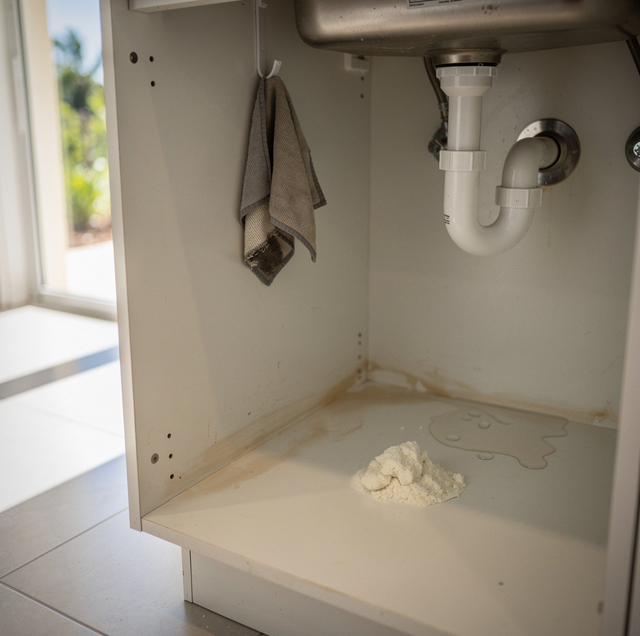
There are two moves almost everyone tries before calling anyone: a puff of boric acid dust under the sink, and a fogger set off in a closed-up house for the afternoon. Both feel like real treatment. Both come from a can or a box with a roach on the label. And in this climate, both usually leave you with the same roaches a week later, sometimes in more rooms than before. That's not because you did it wrong. It's because the two most-reached-for DIY tools work against two mechanisms that South Florida's humidity and wall construction actively defeat.
Why Boric Acid Clumps Before It Ever Gets a Chance to Work
Boric acid kills a cockroach two ways at once: as a stomach poison once it's ingested, and as an abrasive dust that damages the waxy coating on the roach's exoskeleton, which lets it lose water and die of dehydration. Neither of those mechanisms happens on contact. A roach has to cross the dust, pick it up on its legs and antennae, and then groom itself, swallowing what it collected. The dust has to stay a dust: a fine, barely visible layer that clings to the fine hairs (setae) on a roach's legs is what makes that pickup work. A visible pile doesn't do that job better; it does it worse, because a roach will route around an obvious mound the same way it avoids any obstacle in its path.
Boric acid is hygroscopic, meaning it pulls moisture out of the air around it. At 40 to 50 percent humidity, a light dusting stays a light dusting for weeks. South Florida runs 70 to 85 percent humidity for most of the year, and the cabinets, dishwasher surrounds, and AC condensate lines where German roaches actually harbor run even wetter than the ambient reading, because that's exactly the moisture that draws roaches there in the first place. Under that kind of humidity load, boric acid absorbs water, cakes into a crust, and loses the loose, clingy structure that stuck to a roach's setae in the first place. What's left behind is either a hardened clump a roach walks past, or a paste that's been diluted below the dose it needs to kill.
Where a Fogger's Fog Actually Lands, and Where Roaches Live
A total-release fogger works on a simple premise: set it off in the middle of a room, and the aerosol fills the air and settles on every exposed surface as it falls. That's a reasonable description of what happens to your countertops, your floor, and the tops of open cabinets. It's a poor description of what happens to a German roach, because German roaches don't spend their time on countertops. They aggregate, drawn together by a pheromone the colony itself produces, inside cracks under an eighth of an inch wide: behind switch plates, inside cabinet hinges, under the motor housing on a refrigerator or dishwasher, and deep in wall voids around plumbing penetrations.
An aerosol droplet settling out of room air doesn't get pushed into those gaps. It lands on the open surfaces closest to the canister and drifts no further than normal air movement carries it, which is nowhere near strong enough to force droplets sideways into a switch-plate gap or down into a wall void. The label's own instructions describe coverage in terms of open floor area for exactly this reason: it's a room treatment, not a void treatment, and German roaches spend the overwhelming majority of their time in voids.
A fogger's aerosol propellant is flammable near a pilot light, an open flame, or a running HVAC blower. Label directions require shutting the system down and covering exposed dishware, not just leaving the room for the listed re-entry time.
How a Bug Bomb Scatters the Colony Instead of Ending It
The gap between where the fog lands and where the colony lives creates a second problem, and it's the one that actually makes things worse rather than merely ineffective. Most fogger formulations are built around pyrethroid active ingredients, which have a repellent, irritating effect on roaches at low concentrations well before they reach a lethal dose. A roach harbored in a wall void gets enough exposure to the vapor to be driven out of that void, but not enough to die there. Pest control literature has a name for this: the flushing effect, dispersal driven by irritation rather than a kill.
A flushed colony has somewhere to go: In the kind of block-and-stucco, shared-wall construction common across South Florida condos, townhomes, and HOA communities, roaches don't have to leave the building to get away from a fogged room. The same wall voids and plumbing chases that let them travel between your kitchen and your bathroom also run behind a shared wall into the unit next door, or into a common hallway chase serving several units on the same line. A single-family house isn't immune either; the same voids run from the kitchen wall into a bedroom or garage wall on the far side of the house. Instead of one harborage you can locate and treat, you end up with a colony spread across rooms, or units, that wasn't there a week earlier.
Why Treating the Surface Isn't the Same as Treating the Source
Both mistakes stem from the same misreading: treating the space you can see rather than the harborage you can't. An over-the-counter gel bait avoids some of boric acid's humidity problem, since the bait matrix is sealed in a syringe or a small pre-filled station until it's placed, but it still only works where it's actually placed, in or near the harborage, not scattered around a room. Diatomaceous earth fails for close to the same reason boric acid does: it works as a dry abrasive, and South Florida humidity clumps it the same way. Neither is a fix for a treatment method that lands in the wrong place; it's a different product hitting the same wrong place.
The actual harborage, the crack behind the dishwasher toe-kick, the void around a plumbing stub-out, the gap under a baseboard where a slab has settled, is the thing that has to be found and treated directly. That's a different job than filling a room with either a fine dust or an aerosol cloud and hoping the roaches walk through it before the climate or the wall cavity gets in the way.
A roach problem that survives boric acid and a fogger isn't a sign you need a stronger version of either one. It's usually a sign the colony's actual harborage was never touched, just disturbed, and disturbance without elimination tends to spread a population rather than shrink it.
Frequently Asked Questions
Lab efficacy tests apply boric acid under controlled humidity and keep the dust undisturbed between measurements, which is exactly the condition your kitchen doesn't hold. A real kitchen also requires repeated crossings for a lethal dose to accumulate through grooming; a roach that crosses treated cabinet space only once or twice, then finds an untreated route, may never pick up enough to die, even before humidity becomes a factor.
It reduces splash exposure but doesn't eliminate humidity exposure, since a station placed near a dishwasher, sink cabinet, or AC air handler closet still sits inside air that's frequently near saturation. A station also has to be positioned directly in a roach's travel path between harborage and a food or water source; placed even a few inches off that path, it does nothing regardless of how well it's protected from moisture.
Surface residue does kill roaches that cross it while foraging in the open, but a German roach colony reproduces faster than open foraging alone can offset. A single female can produce four to eight egg cases (oothecae) in her lifetime, each holding roughly 30 to 40 eggs, incubating for about a month inside the void the fogger never reached. Surface kills thin the visible population without touching that reproduction.
Farther than most homeowners expect. A German roach usually forages within about 10 to 15 feet of its harborage on a given night, moving through wall and floor voids rather than across open rooms, and a flushing event doesn't reset that range; it just adds a starting push in a new direction. That's enough distance to cross from a kitchen wall void into an adjoining bathroom, hallway closet, or bedroom on a single night's travel, well before anyone notices activity in the new room.
Diatomaceous earth carries the same humidity vulnerability as boric acid dust and needs the same undisturbed, dry placement to work at all. A gel bait dot set in an open, high-traffic spot gets fouled by grease, dish soap film, or a countertop wipe-down within days, and a fouled bait station stops being attractive to a roach long before the tube is empty, which is a different failure point than either boric acid or a fogger runs into.
Because the thing drawing them there is still in the crack. The aggregation pheromone that pulls a German colony together is deposited in the fecal spots the insects leave on surfaces they travel over, so it stays in the void after any adults present are killed or flushed out, and it keeps recruiting new individuals to that exact spot. Physically cleaning or replacing a heavily fouled harborage surface, where it can be reached, is part of why a treated crack stays quiet rather than repopulating.
Ask about a source-first cockroach inspection that traces the actual harborage instead of treating the room around it — a technician finds where German or American roaches are living before any product goes down. Buggify Pest Solutions serves Boca Raton, West Boca, and communities across Palm Beach and northern Broward. Call Tyler: (561) 672-0200.
