
Wiped the Trail, but Ants Keep Returning to the Same Spot
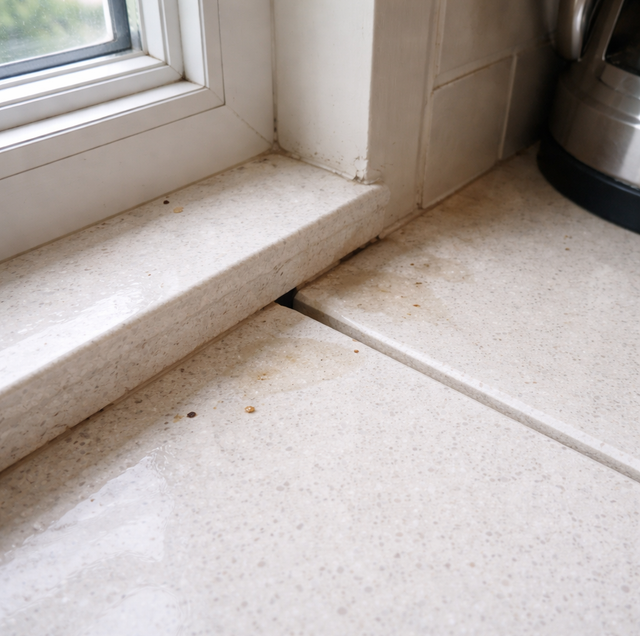
You wipe the counter, the trail disappears, and the ants are gone by dinner. Three days later, the same thin line is back, running along the same edge of the same counter to the same half-inch of grout beside the window. Not a new spot somewhere else in the kitchen. That spot. It starts to feel almost deliberate, as if the ants have settled on that one patch of your home and cannot be talked out of it.
In a sense, they have settled on it, and the reason is written in a chemistry you cannot see. The ants are following a scent trail to something they want, and wiping the counter removed the ants and a little of the scent without touching either the nest that sent them or the reason they were headed to that exact place. Understand what the same spot is actually made of, and the loop stops looking stubborn and starts looking solvable.
What You Actually Wiped Off the Counter
The ants crossing your counter are foragers, the small share of the colony sent out to find food and water. When a scout stumbles onto something worth hauling home, it walks back to the nest, laying down a trail pheromone, a faint chemical line drawn from its own body along the surface. Nestmates read that line with their antennae, follow it to the find, and each one reinforces it on the return trip. A trail that a dozen ants are using gets refreshed constantly, which is why a foraging line looks so orderly and so fixed.
When you wipe the surface, you remove the ants standing on it and some of the scent painted across it. What you do not remove is the source of that scent. The nest sits outside, and a fresh scout can re-lay the whole trail within hours of the cleanup. The line you erased was a copy. The original is a live nest with egg-laying queens, and it keeps printing more.
Why It Is Always the Same Spot
The same spot is not a coincidence, and it is not the ants being difficult. It is the meeting point of two things that do not move.
The first is a fixed entry. Ants funnel in along the path of least resistance, and that path is usually a specific gap: the underside of an exterior door threshold, a weep hole in the brick, an expansion joint in the slab, or the spot where an air-conditioning line or a plumbing pipe passes through the wall. That opening stays in the same place month after month, so the ants enter at the same place month after month.
The second is a fixed resource. Somewhere just inside that entry there is water, or sugar, or grease, or a crumb wedged where you cannot see it. The trail is simply the shortest route the colony has found between the two. A stable way in plus a stable reward equals the same line every time. When the same counter keeps lighting up, the ants are telling you precisely where those two points sit.
Why Cleaning Alone Keeps Failing
Cleaning goes after the visible part of the problem and leaves the engine running. A wipe-down takes the day's crumb and a stretch of scent, but the nest is still outside, the queens are still laying, and scouts are back out probing your baseboards within a day. Plain water often does not fully break the pheromone line either, so the surviving edges of the trail hand the next scout a head start.
There is a version of this that makes the problem worse rather than merely temporary. Reaching for a repellent spray does knock down the foragers you can see, but repellent residue can prompt certain multi-queen ants, including ghost ants, to split their colony and scatter into several new trails. So the can under the sink can turn one stubborn line into three. The tool that ends a same-spot trail works on the opposite principle, and that is where a real fix begins.
What Is Really Drawing Them There
Before anything gets treated, it helps to know what the reward at that spot actually is, because the draw is not always obvious.
Moisture more than food: In a warm, humid climate, water is often the bigger magnet. A dripping faucet, condensation sweating off an air-conditioning line inside a cabinet, a damp base under the sink, or the pet's water bowl can keep a trail alive with no food present at all. Ghost ants and white-footed ants, two of the most common trailing nuisance ants in humid regions, will work a moisture source relentlessly.
Sugars and grease: Many household ants crave carbohydrates, then swing to grease and protein depending on what the colony needs. A sticky ring behind the toaster, a soda spill dried into a corner, or a film of cooking grease on the stove backsplash all read as a food source worth a permanent route.
A crumb or reservoir you cannot see: The draw is frequently in a spot you never clean, under the refrigerator, in the gap beside the dishwasher, or down a crack in the floor where liquid pooled once and dried. From the counter, it looks like the ants want nothing in particular. They want something you cannot reach with a sponge.
Potted plants: An indoor pot is an easy source to overlook. The moist soil makes a ready harborage, and aphids, mealybugs, or scale insects living on the plant secrete honeydew, a sugar the ants farm and defend. A trail that seems to end at a windowsill often ends at the plant sitting on it.
What Actually Breaks the Cycle
Because the same spot is built from a nest, an entry, and a draw, a real fix has to reach all three. None of them alone holds.
Treat the trail back to the nest with non-repellent bait: A non-repellent bait is undetectable to the ants, so foragers feed on it and carry it home as food, sharing it mouth to mouth through the colony until it reaches the queens you were never going to find outdoors. Placed on the active trail rather than sprayed over it, it uses the same route the ants already walk against them. This is the part a wipe or a spray can never do, because it targets the reproduction instead of the traffic.
Seal the specific entry: Once the colony is knocked back, close the gap the trail used. Weatherstrip the door threshold, caulk the pipe or cable penetration, seal the expansion joint. Do this while an established nest is still active and the ants usually just find the next opening, which is why sealing works as the follow-through to baiting, not as a standalone cure.
Fix the moisture and clear the draw: Repair the drip, dry the cabinet, move or treat the honeydew-covered plant, and get at the hidden crumb behind the appliance. Removing the reward is what keeps a new colony from adopting the same convenient route later.
What the Pattern Is Telling You
The same spot is a clue, not a curse. A trail that keeps returning to one line is pointing at the exact place where a way in and a reward line up, and at a nest outdoors that is still in business. That is more information than a scattered problem gives you, not less. Read the spot for what it is, get the trail baited back to its source, and close the entry behind it, and the line that felt permanent turns out to have been a route the whole time, one you can finally take off the map.
Frequently Asked Questions
A trail pheromone is volatile and begins to fade on its own within hours if no ant refreshes it, which is why a route the colony abandons disappears fairly quickly. The catch is that an active foraging line almost never gets abandoned, because ants reinforce it on every trip. So the trail you are hoping will evaporate is being repainted faster than it breaks down. Cutting the food and water at the end of it is what finally lets the scent die out, because the ants stop having a reason to refresh it.
A diluted vinegar solution or soapy water does a better job of breaking up the scent chemistry than plain water, and scrubbing the line can buy you a day or two of confusion while the scouts re-map. It is a useful stopgap, not a fix. The nest is still outside, and the entry is still open, so a new trail gets laid to the same resource. Treat vinegar as a way to slow a trail down, not to end it, and do not spray it near a bait placement, since erasing the scent path also erases the route the ants need to reach the bait.
Water is the usual answer. Ants need moisture as much as calories, and a spot with a slow drip, trapped condensation, or damp grout will hold a trail with nothing edible in sight. The other possibility is that the visible spot is a corridor rather than a destination, a smooth edge the ants use to travel toward a source in the next room or inside the wall. In both cases, the counter is on the route, not at the end of it, which is why cleaning that surface never satisfies them.
Yes, and it is one of the most missed sources. Potting soil that stays moist gives ants a warm, damp place to nest right inside the house, and any aphids, mealybugs, or soft scale on the plant produce honeydew the ants harvest like livestock. A pot can supply nesting, moisture, and food at once. If a trail leads to a windowsill or a plant stand, check the undersides of the leaves and the soil surface before you blame the kitchen. Two fixes the kitchen counter never gives you: water from the bottom or let the top inch of soil dry out fully between waterings so the pot no longer works as damp harborage, and move an infested pot outdoors to sever the indoor trail at its source while you deal with the honeydew insects on the plant.
Sealing helps, but rarely on its own while a colony is established and motivated. Ants are small enough to exploit an opening a business card could not fit through, so closing one entry with an active nest nearby usually just reroutes them to the next weep hole or threshold. Sealing pays off as the last step after the colony has been baited down, when there is little pressure left to go hunting for a new way in. Done in that order, it holds; done first, it tends to move the trail a few feet over.
In warm, humid regions there is no real off-season, so the same-spot trail can appear in any month. Weather shifts the trigger rather than switching it off. A stretch of heavy rain drives ants indoors to escape saturated soil, while a dry spell drives them in looking for the moisture your kitchen and bathroom reliably supply. Either way, the colony outdoors stays viable, which is why a fix built around the nest and the entry lasts where a seasonal cleanup does not.
Tired of wiping the same trail off the same counter every few days? Get the entry found, the moisture fixed, and the colony baited at its source. Buggify Pest Solutions serves Boca Raton, West Boca, and communities across Palm Beach and northern Broward. Call Tyler: (561) 672-0200.
