
Wasp, Bee & Hornet Removal in Lighthouse Point
Boat-storage yellow jacket in outboard-motor housing and dock-line paper-wasp nesting on private dock infrastructure. Vessel + dock coordinated inspection.
- FL DACS License #JB268060 · Certified Operator Tyler Craig
- Bayer Authorized Applicator (Termidor)
- $1M general liability insurance
- Google 5.0 Rated · live review feed
- Family-owned · 1,000+ South Florida homes served since 2018
- Pet-safe and family-safe treatments by default
- Free phone estimates · no long-term contracts
Lighthouse Point's canal-built residential density puts most properties within a few feet of a private dock, and many households store a recreational boat at that dock during the off-cycle months. That storage geometry creates two stinging-insect nesting scenarios most inland residential properties do not encounter: yellow jacket colonies establishing inside outboard motor housings and boat-lift motor covers during the extended non-use periods (typically September through March), and paper-wasp umbrella nests on dock-line infrastructure, dock cleats, boat-lift frames, dock-house eaves, dock-side pergolas. Boat owners returning to the vessel for a first spring trip after a quiet winter routinely open the outboard cowling to a fully established yellow jacket colony. The Lighthouse Point protocol reads the vessel, dock hardware, and dock-line residential infrastructure as a connected inspection zone rather than as separate sites. Parent Lighthouse Point city hub covers the vessel-transfer rodent scope, canal-corridor mosquito work, and coastal salt-air exclusion in depth; this Tier 3 page focuses on the boat-storage and dock-line stinging-insect dimension.
Boat-Storage Yellow Jacket Specialty
Outboard motor housings and boat-lift motor covers are prime yellow jacket cavity habitat during extended non-use periods.
Dock-Line Paper-Wasp Coverage
Dock cleats, lift frames, dock-house eaves, and dock-side pergolas covered as part of the same inspection pass as the vessel.
Marine-Safe Chemistry on Dock-Line Work
Water-quality-aware treatment protocols on dock-adjacent zones; no broadcast application near the waterline.
Same Technician Every Visit
Tyler runs every Lighthouse Point stinging-insect job.
Direct Line to Tyler
Mon–Fri 8 am – 5 pm.
No Contract Lock-In
Bills per visit.
Four technical details specific to Lighthouse Point wasp, bee, and hornet work
Vessel-dock connected inspection protocol, marine-safe chemistry selection, boat-owner coordination on residual dispersal timing, and dock-line surface treatment technique.
Vessel-Dock Connected Inspection Protocol
Stinging-insect calls on Lighthouse Point residential include the vessel (if stored on-site), boat-lift infrastructure, dock hardware, and dock-line residential eaves as a connected inspection zone. Not billed as separate visits.
Marine-Safe Chemistry on Dock-Adjacent Zones
Water-quality-aware treatment protocols on dock-line and seawall zones. Targeted foam and dust formulations for direct nest-cavity application; no broadcast spray application near the water line.
Boat-Owner Coordination on Residual Dispersal Timing
Treatment inside outboard cowling and motor covers requires a residual dispersal window before next vessel use, the specific window documented in the condition-of-treatment note. Coordinated with the boat owner's next-use schedule.
Dock-Line Surface Treatment Technique
Dock cleat, lift-frame, and dock-house eave surface treatment uses direct nest application with awareness of canal-side breeze on residual dispersal timing. Treatment windows selected for calm-air periods when possible.
Boat-storage yellow jacket case: three winter-established colonies cleared before spring launch
The winter-storage condition
A Lighthouse Point boat owner returned to the dock for a first spring trip after a quiet winter. Opened the outboard motor cowling and immediately closed it; a fully established yellow jacket colony was inside. Called Tyler that afternoon.
The coordinated inspection
Tyler inspected the vessel, boat lift motor cover, and dock hardware as a single zone. Confirmed yellow jacket presence in the outboard cowling. Additional inspection found a smaller second yellow jacket colony in the boat-lift motor cover and a paper-wasp umbrella nest at the dock cleat under the vessel.
The treatment sequence
Boat repositioned on the lift for cowling access; owner stepped back for treatment window. Cowling treated with targeted dust application inside the housing; motor cover treatment with foam application. Dock cleat paper-wasp nest treated with direct application. Residual dispersal timing before next vessel use documented in condition-of-treatment note.
Why Lighthouse Point stinging-insect work covers the vessel and the dock together
Lighthouse Point's canal-built residential geometry places most properties directly on the water, with a private dock and boat storage as standard rather than as exceptional infrastructure. That creates stinging-insect cavity habitat most inland service areas don't encounter: outboard motor cowlings and boat-lift motor covers become fully protected cavities during extended non-use periods (typically September through March), and yellow jacket colonies establishing in those cavities can reach substantial size before the boat owner returns for a first spring trip and opens the cowling.
Dock-line infrastructure, dock cleats, lift frames, dock-house eaves, dock-side pergolas, add a second cavity inventory that inland residential doesn't have. Paper-wasp umbrella nests establish on any sheltered horizontal surface, and dock hardware provides plenty of them. The Lighthouse Point protocol reads the vessel, dock hardware, and dock-line residential infrastructure as a connected inspection zone rather than as separate sites, so a stinging-insect call at the residence includes the dock and vessel by default.
The Parent Lighthouse Point hub covers vessel-transfer rodent work, year-round mosquito work in the canal corridor, coastal salt-air exclusion, and in-depth dock-line + seawall inspection. This Tier 3 page focuses on the boat-storage cavity and dock-line stinging-insect dimensions.
Five Lighthouse Point conditions that shape stinging-insect work
Canal-built residential geometry, private dock density, seasonal boat-storage cavity habitat, dock-line infrastructure inventory, and coastal salt-air seasonality all shape the wasp and bee protocol.
Canal-Built Residential Geometry
Most Lighthouse Point residential is directly on canal water with a private dock as standard. Stinging-insect inspection includes the water-adjacent infrastructure by default.
Private Dock and Boat-Storage Density
Recreational boat storage on private residential docks is the community standard. Outboard motor cowlings and boat-lift motor covers create cavity habitat during extended periods of non-use.
Seasonal Non-Use Cavity Establishment (Sep-Mar)
September through March is the extended non-use window for recreational boat storage in Lighthouse Point. Yellow jacket colonies routinely establish inside vessel cavities during that window.
Dock-Line Infrastructure Inventory
Dock cleats, lift frames, dock-house eaves, and dock-side pergolas add cavity and horizontal-surface inventory that inland residential areas lack.
Coastal Salt-Air Extended Season
Warm coastal salt air extends the active paper-wasp season on waterfront residential eaves. Treatment cycles run longer than inland properties.
Every Lighthouse Point wasp, bee, and hornet issue Buggify handles
Five work profiles across vessel, dock, and dock-line residential.
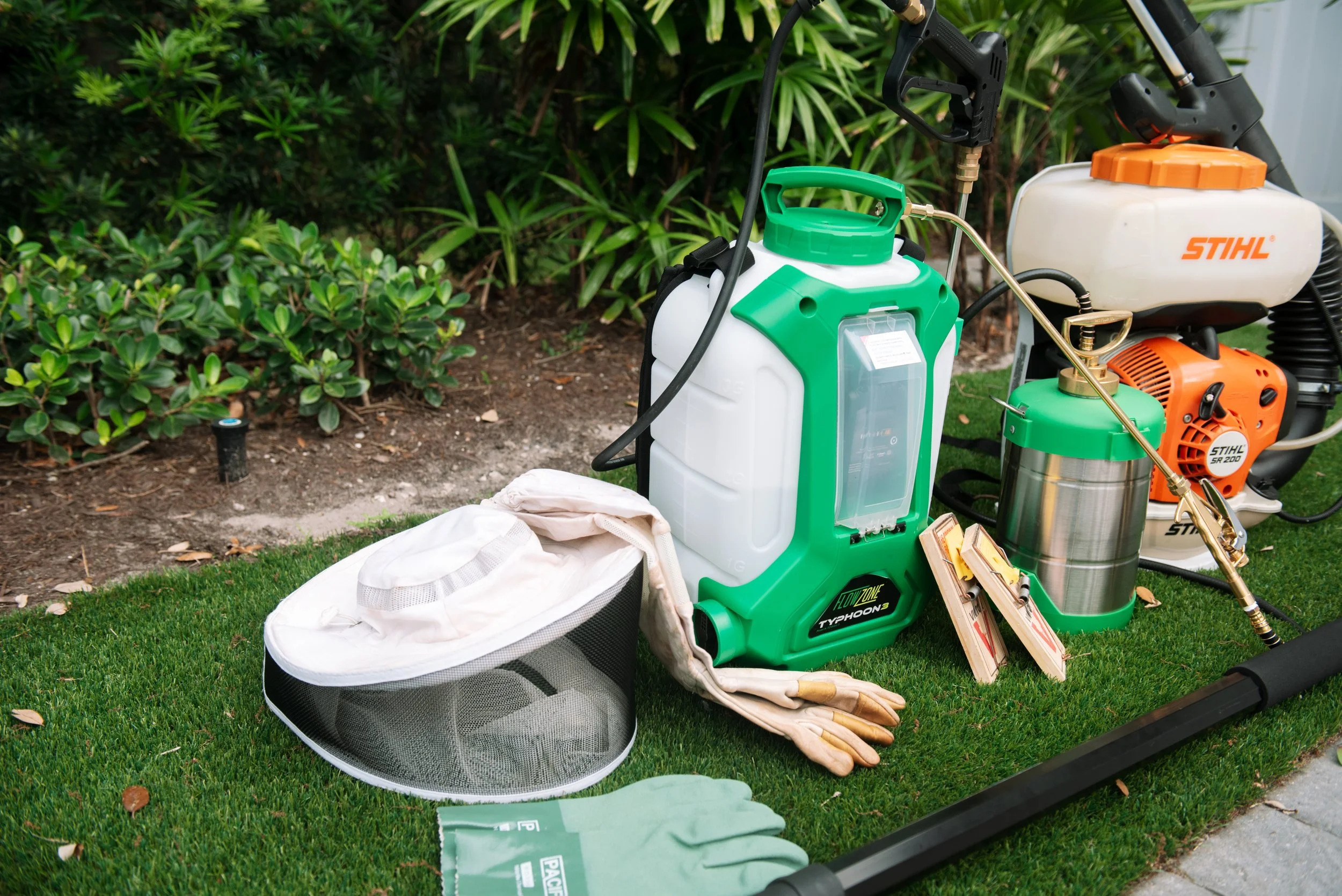
Outboard motor housing yellow jacket colonies
Cavity treatment inside outboard cowling and boat-lift motor cover. Coordinated with the boat owner on pre-treatment vessel access and post-treatment residual dispersal timing before next use.
Dock cleats and lift-frame paper-wasp umbrella nests
Dock hardware sheltered horizontal surfaces receive paper-wasp umbrella nest establishment. Direct nest application with marine-safe chemistry.
Dock-house eaves and dock-side pergola nests
Dock-house overhang and dock-side pergola paper-wasp and hornet nests. Standard treatment approach with awareness of adjacent water-line exposure.
Waterfront-residential eave paper-wasp on canal-corridor lots
Standard residential treatment on waterfront eaves and lanai; awareness of canal-side breeze on residual dispersal timing.
Honey bee cavity finds on aged waterfront tile roofs
Standard species-identification protocol. European colonies get live-relocation coordination; Africanized colonies get controlled treatment.
What Lighthouse Point wasp, bee and hornet removal costs
Firm stinging-insect pricing follows an on-site inspection because access, nest location, hive size, and species drive the work required. A phone conversation gives a range and confirms whether emergency dispatch is appropriate.
Phone estimate
Free, Tyler gives a treatment range on the first call after confirming access, nest location, and suspected species. On-site inspection sets firm pricing.
Emergency dispatch note
Stinging-insect calls involving allergic occupants, children, pets, or aggressive swarm behavior get priority scheduling. Standard scheduling runs same-week.
Included in every job
Species identification (paper wasp, mud dauber, yellow jacket, hornet, honey bee, carpenter bee), nest removal, treatment residual, and a written condition-of-treatment note.
21-day return
If the nest re-establishes at the treated location within 21 days, Tyler returns at no additional charge.
Buggify vs. National Pest Chains
Seven-point comparison. Every row is verifiable from how Buggify operates.
| Feature | Buggify in Lighthouse Point | National Pest Chains |
|---|---|---|
| Who answers when you call? | Tyler Craig, the licensed operator | Call center or booking bot |
| Same technician every visit | Yes, Tyler runs every job | Different rotating techs |
| Live-bee relocation policy | Coordinated with a beekeeper before removal for honey bee finds | Kill-and-remove default |
| Africanized-bee protocol | Bee identification before treatment; DNA-testing referral available | Standard chemical treatment regardless |
| Allergy notification | Written allergy-aware protocol for occupants before treatment | Not standard |
| Return-visit policy on stinging insects | Included when a nest re-establishes within 21 days at no charge | Extra visit fee typical |
| Contract lock-in | None. Bills per visit; cancel anytime. | Annual contracts common |
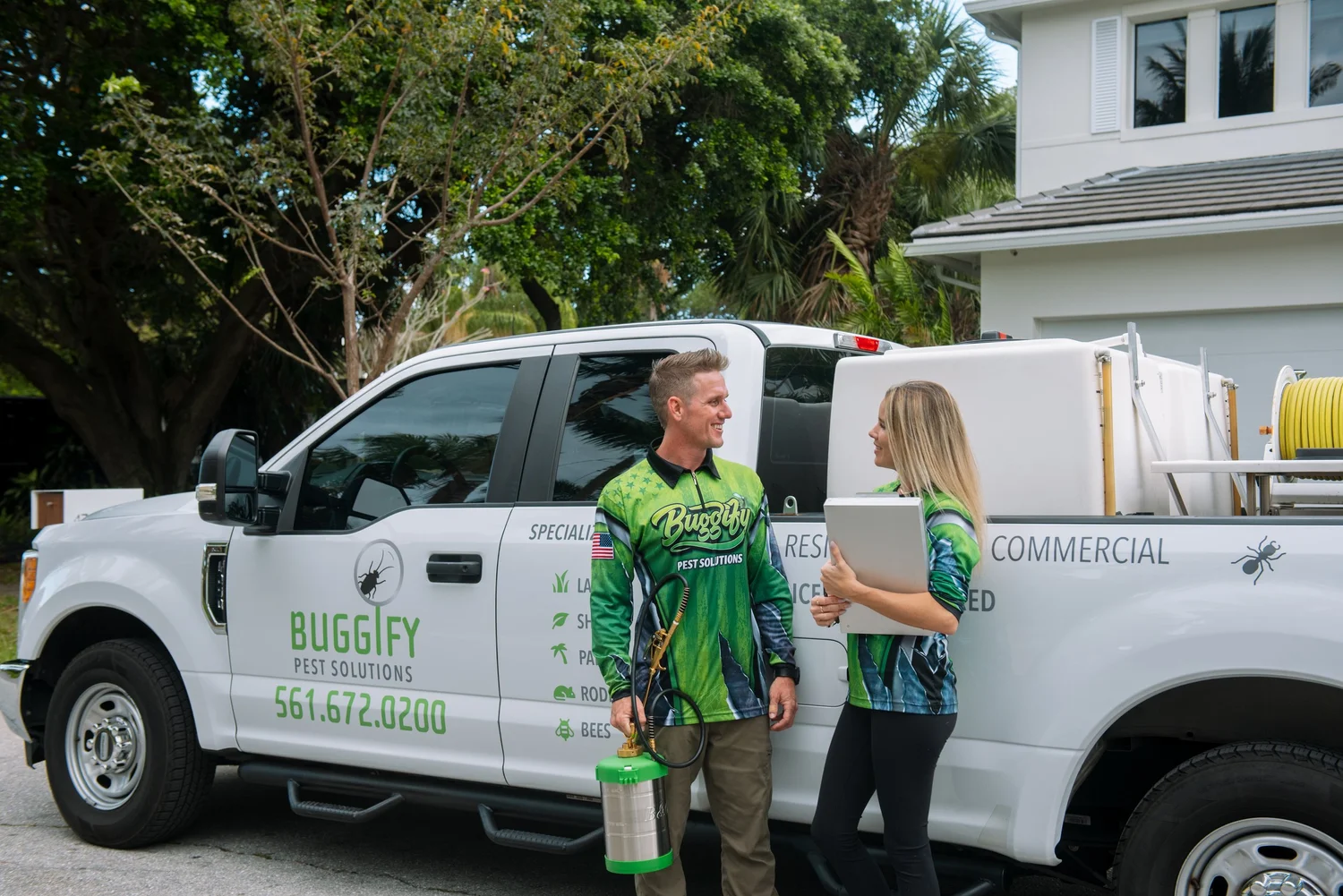
Read what Lighthouse Point customers say on Google directly
Real Google reviews from Lighthouse Point residents drive most of Buggify's new stinging-insect calls. Tyler answers, talks through the situation, and quotes a range on the first phone call. The live widget below pulls current reviews directly from Google, with a five-star average across all pest categories, with wasp and bee removal jobs mentioned frequently by name.
Three things Buggify will never do to you
Three things Buggify will never do to you (full list of seven on Why Choose Buggify):
Quote a real treatment price without inspecting the property first. Phone gives a range; firm pricing comes after an on-site walkthrough.
Indoor spraying when the source is outside. Most Lighthouse Point pest pressure is driven by outdoor harborage; indoor-only work is a short-term cover-up.
Long-term contracts that lock you in. Bi-monthly plans bill per visit and can be canceled anytime, no fees.
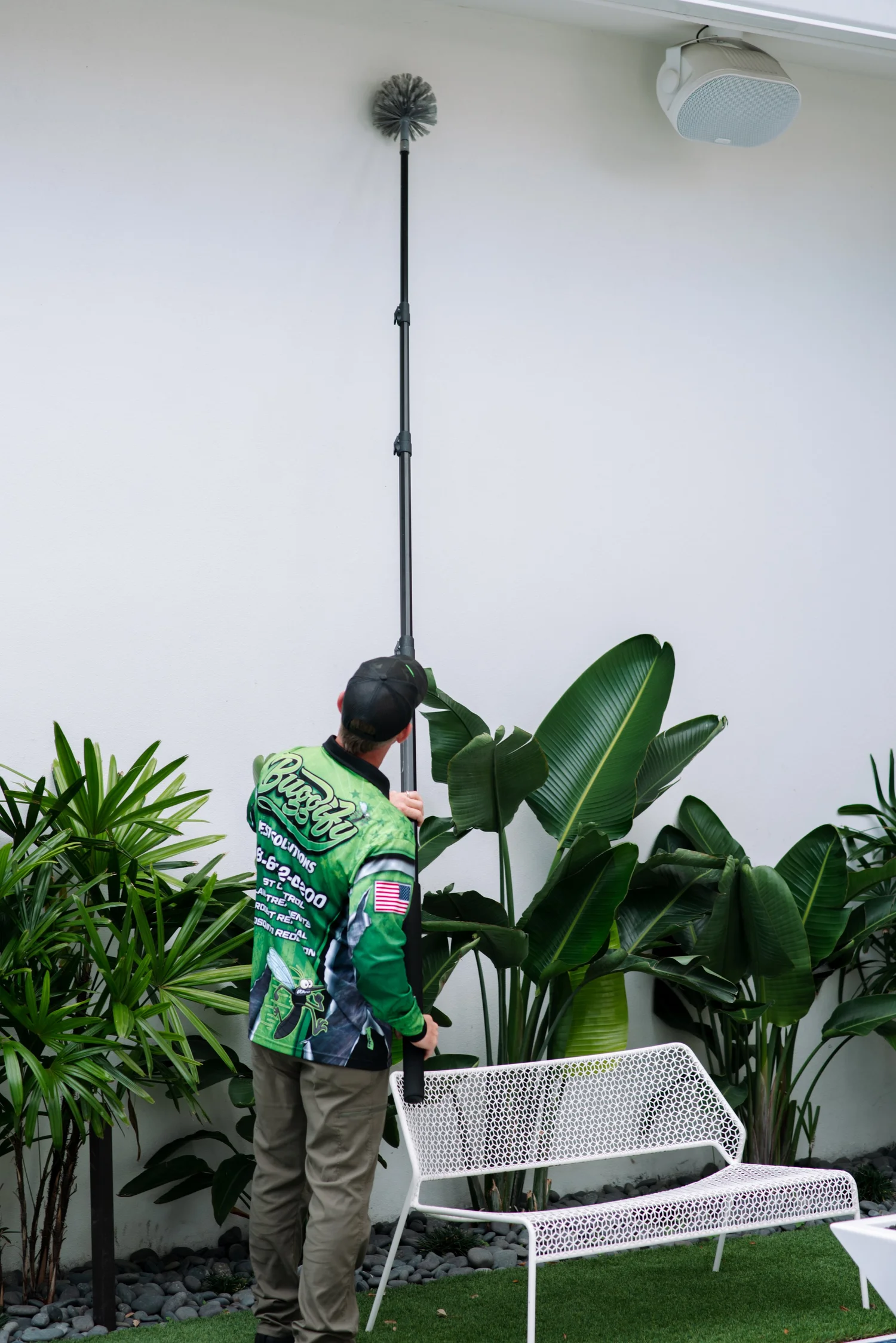
Call (561) 672-0200. Tyler answers, gives you a price range on the first call, and books your Lighthouse Point appointment into the next dispatch window (standard scheduling runs same-week; stinging-insect emergencies get prioritized).
Lighthouse Point wasp, bee and hornet FAQ
How does yellow jacket establishment happen inside an outboard motor?
September-through-March extended non-use windows leave outboard cowlings undisturbed for months at a time. The internal cowling cavity is dark, sheltered, and dry, prime yellow jacket cavity habitat. Colonies can reach substantial size by the first spring vessel use if the storage window ran the full winter.
Can you treat the outboard motor while it's still on the lift?
Yes, with the vessel repositioned for cowling access and the owner stepped back for the treatment window. Cowling internal treatment uses targeted dust application; motor cover treatment uses foam formulation. Residual dispersal window before next vessel use documented in condition-of-treatment note.
Will your treatment chemistry drift into the canal water?
No, water-quality-aware protocols use targeted foam and dust formulations for direct application to nest cavities. No broadcast spray application near the waterline. Written condition-of-treatment note documents product selection and application method.
Do you cover the dock and the boat as part of the same visit?
Yes. Stinging-insect calls on Lighthouse Point residential include the vessel (if stored on-site), boat-lift infrastructure, dock hardware, and dock-line residential eaves as a connected inspection zone by default. Not billed as separate visits.
What if I discover the yellow jacket colony when I'm already on the boat and running?
Return the vessel to the dock and step off. Do not attempt to run the outboard with a colony inside the cowling; the vibration triggers defensive behavior. Call Tyler; same-day dispatch available on active-vessel colony situations. Immediate-area control instructions available by phone while dispatch is en route.
Direct line to the technician serving Lighthouse Point
Phone: (561) 672-0200 (Tyler answers) · Mon–Fri 8 am – 5 pm
Email: Getbuggify@gmail.com
Address: 22617 Middletown Dr., Boca Raton, FL 33428 (West Boca shop, primary dispatch)
License: FL DACS #JB268060 · Certified Operator: Tyler Craig
Call (561) 672-0200 or submit the form below for a free phone estimate. Tyler answers directly. Lighthouse Point dispatch is owner-operator across a route from the West Boca shop, so appointments are pre-scheduled rather than drop-in; most standard jobs book for the same week.