
Lawn Pest Control in Lighthouse Point
Canal-front seawall-adjacent salt-tolerant turf pest work. Palm-tree Ganoderma-adjacent scale monitoring on the canal-corridor palm inventory.
- FL DACS License #JB268060 · Certified Operator Tyler Craig
- Bayer Authorized Applicator (Termidor)
- $1M general liability insurance
- Google 5.0 Rated · live review feed
- Family-owned · 1,000+ South Florida homes served since 2018
- Pet-safe and family-safe treatments by default
- Free phone estimates · no long-term contracts
Lighthouse Point's canal-built residential geometry places nearly every property within a few feet of the canal and seawall infrastructure. That geometry shapes lawn pest work in two specific directions. First, canal-front seawall-adjacent turf is often installed as salt-tolerant species (paspalum, salt-tolerant Bermuda cultivars) rather than standard St. Augustine because standard St. Augustine struggles with the salt-spray load at seawall-adjacent zones. Salt-tolerant turf has a different pest susceptibility profile and different chemistry tolerances than St. Augustine, and treatment matches the specific installed cultivar. Second, the canal-corridor palm inventory (Sabal, coconut, queen, royal) on Lighthouse Point waterfront residential has an elevated Ganoderma butt-rot disease pressure that affects palm scale treatment decisions: heavily Ganoderma-affected palms may not benefit from scale treatment if palm removal is imminent, and coordinated inspection with an arborist or palm specialist is standard on any palm scale call where fronting Ganoderma symptoms are present. Parent Lighthouse Point hub covers the vessel-transfer rodent scope, canal-corridor mosquito, and coastal salt-air exclusion in depth; this Tier 3 page focuses on the salt-tolerant turf and Ganoderma-adjacent palm dimensions.
Salt-Tolerant Turf Specialty
Canal-front seawall-adjacent paspalum and salt-tolerant Bermuda cultivars require cultivar-specific chemistry.
Ganoderma-Adjacent Palm Scale Coordination
Canal-corridor palm inventory scale treatment coordinated with palm-health assessment. Arborist referral on suspected Ganoderma.
Marine-Safe Chemistry on Seawall-Adjacent Zones
Water-quality-aware treatment on turf and ornamental zones adjacent to canal water.
Same Technician Every Visit
Tyler runs every Lighthouse Point lawn pest job.
Direct Line to Tyler
Mon-Fri 8 am - 5 pm.
No Contract Lock-In
Bills per visit.
Five technical details specific to Lighthouse Point lawn pest work
Salt-tolerant turf cultivar identification, Ganoderma symptom recognition, marine-safe chemistry selection, arborist coordination protocol, and honest palm-scale scope disclosure.
Salt-Tolerant Turf Cultivar Identification
Seashore paspalum, salt-tolerant Bermuda cultivars, and salt-tolerant Zoysia varieties are identified on-site before chemistry selection. Cultivar-specific pest susceptibility profiles drive targeted treatment products and application rates.
Ganoderma Symptom Recognition on Canal-Corridor Palms
Lower-trunk conk (bracket fungus) formation, progressive crown decline, and lower-frond drop pattern are all indicative. On-site symptom recognition triggers arborist referral before scale treatment commitment.
Marine-Safe Chemistry Selection
Water-quality-aware treatment protocols on turf and ornamental zones adjacent to canal water. Targeted foam and dust formulations for pest-specific application; direct-application containment; no broadcast at the water line.
Arborist Coordination Protocol
Palm specialist or arborist referral on suspected Ganoderma or other palm-health concerns. Coordinated assessment before scale treatment commitment; honest scope disclosure to the property owner.
Honest Palm-Scale Scope Disclosure
Palm scale treatment on a Ganoderma-declining palm may not meaningfully extend the palm's remaining useful life. Written condition-of-treatment note discloses when scale treatment is recommended, deferred pending palm-health assessment, or not recommended due to underlying palm-health condition.
Ganoderma-adjacent palm case: honest coordination saved unnecessary scale treatment
The condition
A Lighthouse Point canal-front homeowner had noticed accelerating scale on a mature queen palm at the seawall edge and requested treatment. Preliminary phone assessment flagged the palm's canal-front position and requested a photo of the palm base.
The inspection
Tyler's on-site inspection confirmed scale populations on the palm crown, but also identified a mature Ganoderma conk (bracket fungus) at the palm base, indicating active butt-rot disease. Palm crown showed progressive lower-frond decline consistent with a 12- 24-month remaining life expectancy.
The honest coordination
Tyler recommended coordinated inspection with an arborist or palm specialist before committing to a scale treatment cycle, because scale treatment on a Ganoderma-declining palm would not meaningfully extend the palm's useful life. Referral to a palm specialist for assessment; scale treatment paused pending the palm specialist recommendation.
The specialist outcome and follow-up
The palm specialist confirmed advanced Ganoderma and recommended removal within 12-18 months. Owner elected to defer scale treatment and schedule palm removal, replaced with a Ganoderma-resistant palm species. Owner reported appreciation for the honest scope disclosure rather than routine scale-treatment application.
Every Lighthouse Point lawn and ornamental pest issue Buggify handles
Five work profiles across canal-front and non-canal-front Lighthouse Point residential.
Salt-tolerant turf pest work (paspalum, Bermuda cultivars, Zoysia)
Cultivar-specific chemistry selection. Spittlebug on paspalum, cultivar-specific sod webworm on Bermuda, standard Zoysia work. Chinch bug pressure lower than St. Augustine but not absent.
Ganoderma-adjacent palm scale coordination
Canal-corridor palm inventory scale treatment coordinated with palm-health assessment. Arborist referral on suspected Ganoderma before committing to scale treatment cycle.
Seawall-adjacent marine-safe chemistry treatment
Water-quality-aware treatment protocols on turf and ornamental zones adjacent to canal water. Direct-application containment; no broadcast at the water line.
Standard St. Augustine chinch bug on non-canal-front residential
Standard May-October chinch bug diagnostic and treatment on non-seawall-adjacent residential where St. Augustine is still viable.
Fire ant colony management on canal-front and dock-side yards
Full-yard colony mapping followed by targeted mound treatment. Marine-safe chemistry near the seawall zone; standard chemistry inland from the water line.
Why Lighthouse Point canal-front lawn work matches salt-tolerant turf and Ganoderma-aware palm decisions
Standard St. Augustine turf struggles at Lighthouse Point seawall-adjacent installations because the constant salt-spray load weakens the outer leaf surface and creates the specific micro-habitat that both fungal disease and secondary pest pressure exploit. Canal-front seawall-adjacent residential frequently uses salt-tolerant turf species instead: seashore paspalum, salt-tolerant Bermuda cultivars, or salt-tolerant Zoysia varieties on the newer luxury installs. Salt-tolerant species have different pest susceptibility profiles than St. Augustine: paspalum is more resistant to chinch bug but susceptible to spittlebug; Bermuda cultivars have different sod webworm response; Zoysia has its own species-specific pest signature. Chemistry selection matches the cultivar installed, not a generic Florida-turf standard.
The canal-corridor palm inventory across Lighthouse Point waterfront residential has an elevated Ganoderma butt-rot disease pressure that affects palm scale treatment decisions. Ganoderma zonatum is a soil-borne fungal pathogen affecting Sabal, coconut, queen, and royal palms; visible symptoms include lower-trunk conk (bracket fungus) formation and progressive crown decline. On a palm scale call where fronting Ganoderma symptoms are present, coordinated inspection with an arborist or palm specialist is standard because scale treatment on a Ganoderma-declining palm may not extend the palm's remaining useful life meaningfully; the palm may need removal within 12-24 months regardless of scale treatment. Honest scope disclosure on this point avoids treatment cost the owner does not benefit from.
Parent Lighthouse Point hub covers vessel-transfer rodent work, canal-corridor year-round mosquito, coastal salt-air exclusion, and dock-line + seawall inspection. This Tier 3 page focuses on the salt-tolerant turf and Ganoderma-adjacent palm scale dimensions.
Three Lighthouse Point conditions that shape lawn pest work
Canal-built residential geometry, salt-tolerant turf installation, and canal-corridor palm inventory each shape the lawn pest protocol.
Canal-Built Residential Geometry
Nearly every residential property within a few feet of canal water and seawall infrastructure. Marine-safe chemistry standard on turf and ornamental zones adjacent to canal.
Salt-Tolerant Turf Installation
Canal-front seawall-adjacent residential frequently uses paspalum, salt-tolerant Bermuda, or salt-tolerant Zoysia rather than St. Augustine. Cultivar-specific chemistry.
Canal-Corridor Palm Inventory Ganoderma Pressure
Waterfront palm inventory has elevated Ganoderma butt-rot disease pressure. Scale treatment coordinated with palm-health assessment; arborist referral on suspected Ganoderma.
What Lighthouse Point lawn pest control costs
Firm lawn and ornamental pricing follows a walkthrough because turf species, hedge count, palm inventory, and pest signature drive the work. A phone call establishes a range and identifies whether coordinated ornamental + turf visits will help.
Phone estimate
Free: Tyler walks through your yard footprint (approximate square footage, turf species, if known, hedge count, palm inventory) and provides a treatment range.
Bi-monthly programs
Turf and ornamental care works best with a rotational treatment. Programs bill per visit; cancel anytime.
Included in every visit
Pest identification, targeted application, condition-of-yard note, and treatment product disclosure.
30-day return
If chinch bug, sod webworm, or whitefly pressure returns within 30 days of a treatment, Tyler returns at no additional charge.
Buggify vs. National Pest Chains
Seven-point comparison. Every row verifiable from how Buggify operates.
| Feature | Buggify in Lighthouse Point | National Pest Chains |
|---|---|---|
| Who answers when you call? | Tyler Craig, the licensed operator | Call center or booking bot |
| Turf ID first, treatment second | Confirms St. Augustine vs Zoysia vs Bermuda and identifies the specific pest before chemistry selection | Broadcast treatment without turf-species distinction |
| Pollinator-safe application windows | Whitefly and hedge treatments timed outside pollinator foraging windows on request | Standard-schedule application regardless |
| HOA landscape coordination | Written condition-of-treatment note suitable for HOA architectural review | Not standard |
| Return-visit policy on turf pests | Included when pressure returns within 30 days of a confirmed treatment | Extra visit fee typical |
| Contract lock-in | None. Bills per visit; cancel anytime. | Annual contracts common |
| Ornamental + turf coordination | One technician handles both zones as a connected landscape | Separate crews or vendors |
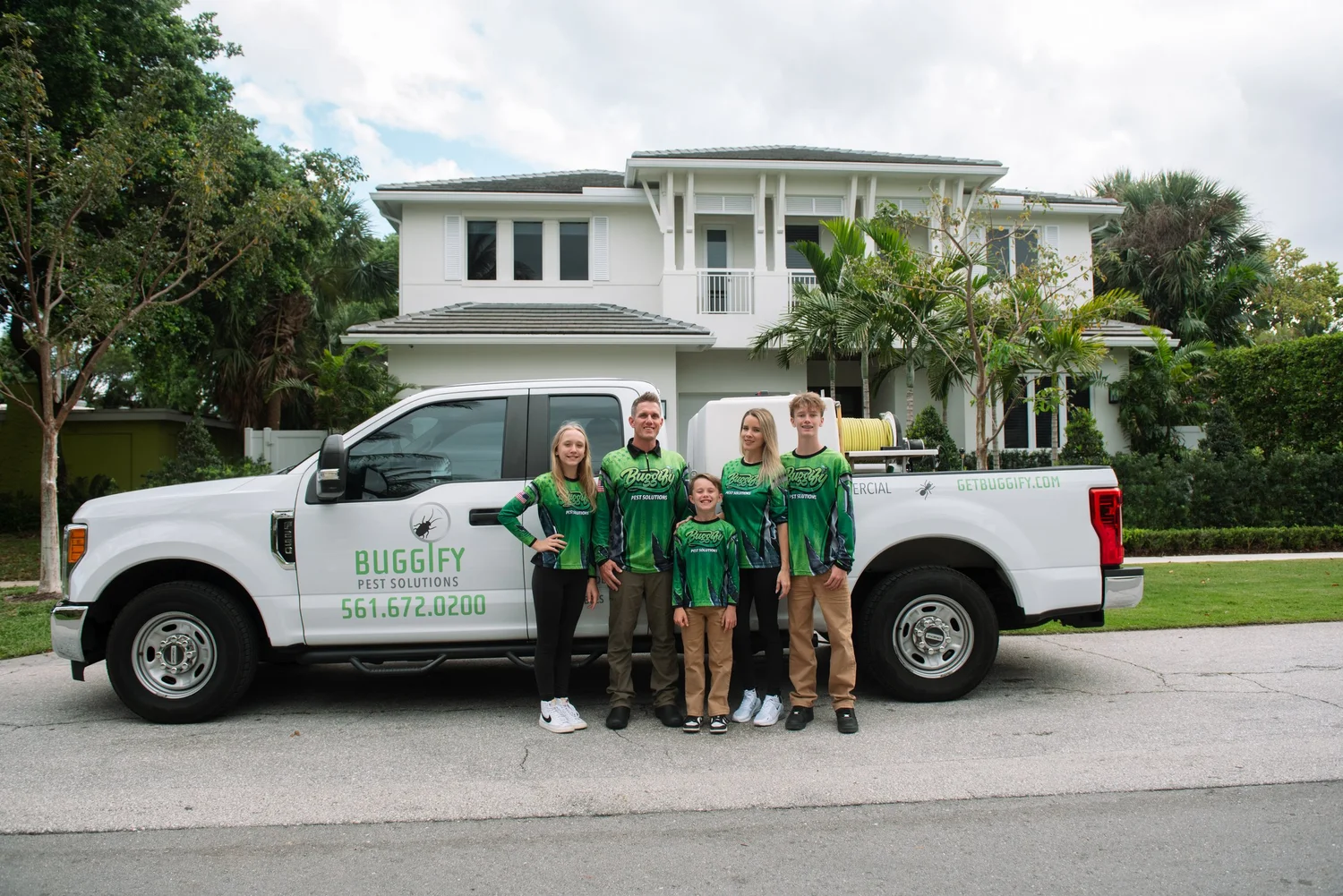
Read what Lighthouse Point customers say on Google directly
Real Google reviews from Lighthouse Point residents driving lawn and ornamental calls. Tyler walks the yard on the first visit, identifies the specific pest signature (chinch bug, sod webworm, ficus whitefly, palm scale), and matches chemistry to turf species. The live widget below pulls current reviews directly from Google.
Three things Buggify will never do to you
Three things Buggify will never do to you (full list of seven on Why Choose Buggify):
Quote a real treatment price without inspecting the property first. Phone gives a range; firm pricing comes after an on-site walkthrough.
Indoor spraying when the source is outside. Most Lighthouse Point pest pressure is driven by outdoor harborage; indoor-only work is a short-term cover-up.
Long-term contracts that lock you in. Bi-monthly plans bill per visit and can be canceled anytime, no fees.
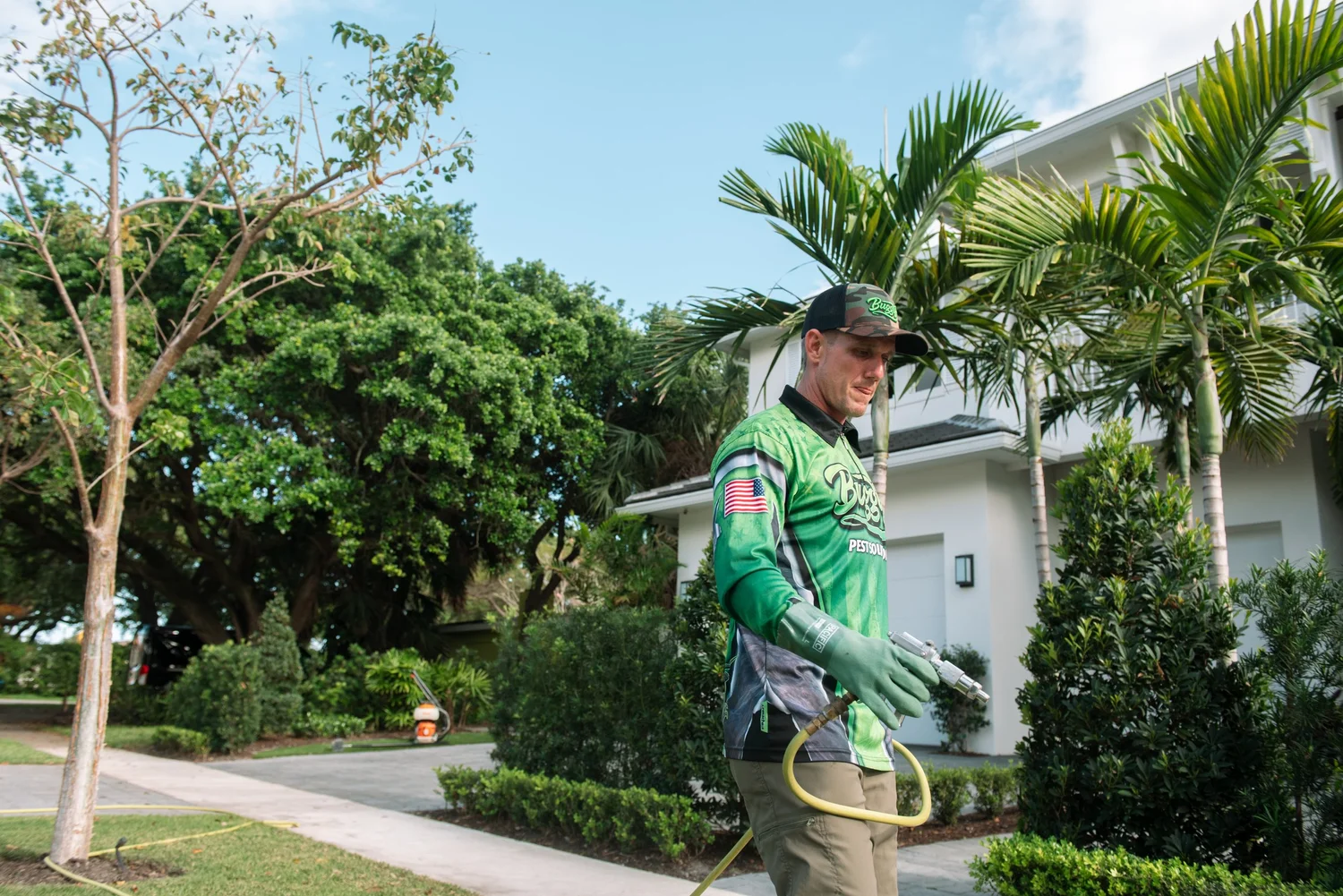
Call (561) 672-0200. Tyler answers, gives you a price range on the first call, and books your Lighthouse Point appointment into the next dispatch window (standard scheduling runs same-week; stinging-insect emergencies get prioritized).
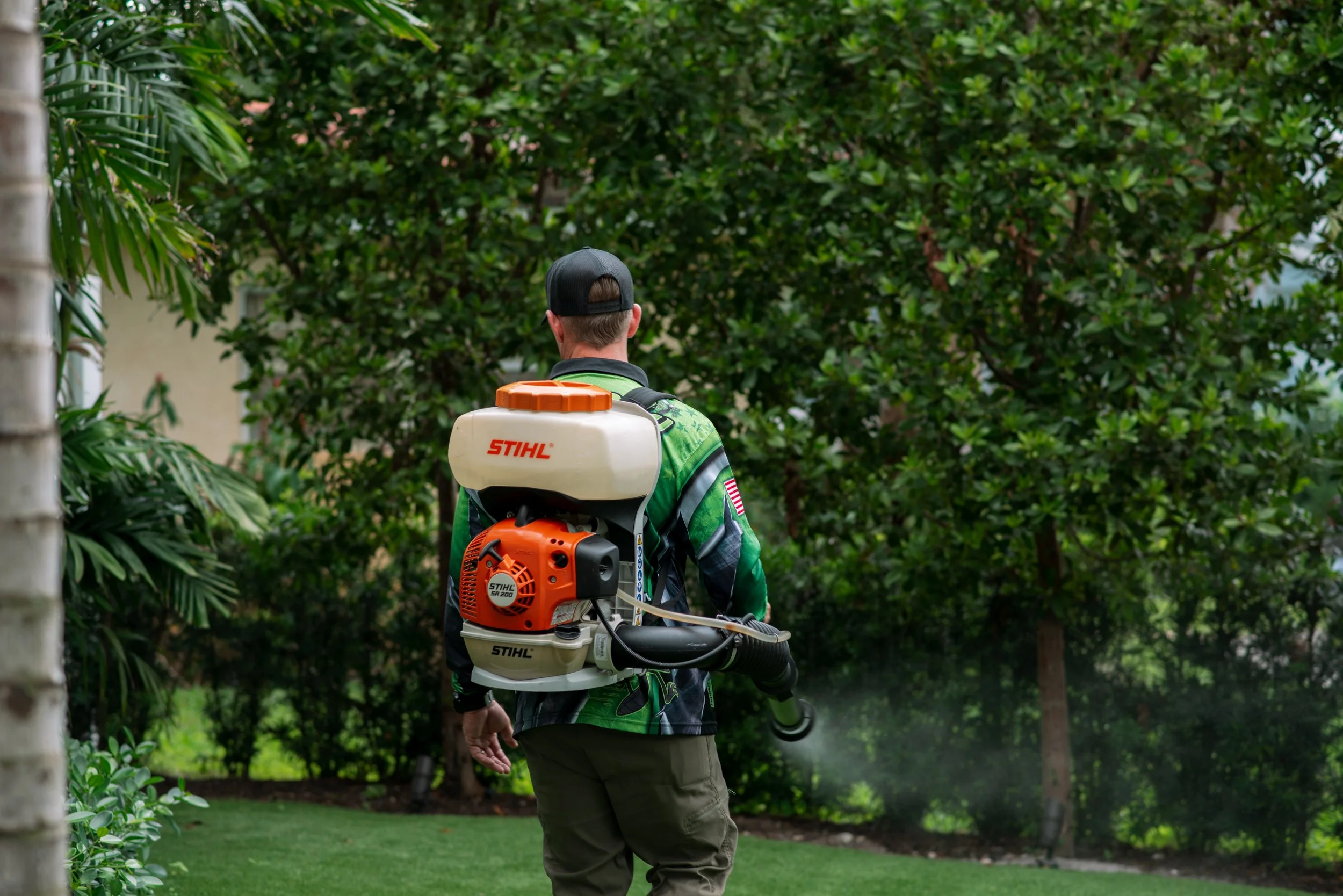
Lighthouse Point lawn pest FAQ
Why does my canal-front lawn use paspalum instead of St. Augustine?
Standard St. Augustine struggles at seawall-adjacent installations because constant salt-spray load weakens the leaf surface. Salt-tolerant turf species, paspalum, salt-tolerant Bermuda cultivars, and salt-tolerant Zoysia, hold up better in the canal-front micro-habitat. Cultivar-specific chemistry matches the installed species.
Do paspalum lawns still get chinch bug?
Paspalum is more resistant to chinch bug than St. Augustine but not fully immune. Chinch bug pressure is lower, and the treatment window is different; spittlebug is the more common paspalum pest. Diagnostic identification confirms which is active before chemistry selection.
What's Ganoderma and how do I know if my palm has it?
Ganoderma zonatum is a soil-borne fungal pathogen affecting Sabal, coconut, queen, and royal palms. Visible symptoms include lower-trunk conk (bracket fungus) formation and progressive crown decline with a lower-frond drop pattern. On-site symptom recognition during palm scale inspection triggers arborist referral for definitive assessment.
If my palm has Ganoderma, is scale treatment still worth it?
Not necessarily. Scale treatment on a Ganoderma-declining palm may not meaningfully extend the palm's remaining useful life; the palm may need removal within 12-24 months regardless. Coordinated inspection with an arborist or palm specialist is the honest first step before committing to a scale treatment cycle on a Ganoderma-affected palm.
Will your lawn or palm treatment chemistry drift into the canal water?
No. Water-quality-aware protocols use targeted foam and dust formulations for pest-specific application with direct-application containment. No broadcast at the water line. Written condition-of-treatment note documents product selection and application method.
How do you tell which salt-tolerant turf species I have?
On-site cultivar identification during initial inspection: leaf blade width, growth pattern, texture, seed head presence, and salt-tolerance response history from the property owner. Cultivar-specific pest susceptibility profile drives targeted treatment product and application rate.
Do you coordinate with a palm tree service if my palm needs to be removed?
Yes. An arborist or palm specialist referral is standard for suspected Ganoderma or other palm health concerns. Coordinated timing on any scheduled palm removal so scale treatment is not applied to a palm scheduled for near-term removal.
Direct line to the technician serving Lighthouse Point
Phone: (561) 672-0200 (Tyler answers) · Mon–Fri 8 am – 5 pm
Email: Getbuggify@gmail.com
Address: 22617 Middletown Dr., Boca Raton, FL 33428 (West Boca shop, primary dispatch)
License: FL DACS #JB268060 · Certified Operator: Tyler Craig
Call (561) 672-0200 or submit the form below for a free phone estimate. Tyler answers directly. Lighthouse Point dispatch is owner-operator across a route from the West Boca shop, so appointments are pre-scheduled rather than drop-in; most standard jobs book same-week.