
Wasp, Bee & Hornet Removal in Coral Springs
HOA landscape trimming cycles disturb paper-wasp and hornet nests on Sabal Palm canopies. Coordinated removal ahead of hurricane-prep tree work.
- FL DACS License #JB268060 · Certified Operator Tyler Craig
- Bayer Authorized Applicator (Termidor)
- $1M general liability insurance
- Google 5.0 Rated · live review feed
- Family-owned · 1,000+ South Florida homes served since 2018
- Pet-safe and family-safe treatments by default
- Free phone estimates · no long-term contracts
Coral Springs' stinging-insect calls cluster around one specific trigger: HOA-scheduled landscape work that disturbs established paper-wasp and hornet nests concealed in Sabal palm canopies, hedge lines, and shade-tree crowns. Every annual palm-trim cycle and every June/July hurricane-prep tree pruning window generates a wave of same-day nest-removal calls, because a landscape crew hitting a paper-wasp nest with a pole saw or a chainsaw sets off a defensive swarm that shuts down the work zone. The Coral Springs protocol is preemptive: coordinate a walk-through inspection with the HOA property manager two weeks ahead of scheduled canopy work, identify and treat active nests before the landscape crew arrives, and hand off a clean canopy. When a landscape crew has already been stung and left the site, Tyler dispatches a same-day crew, treats the disturbed colony, and coordinates the crew's return timing. Parent Coral Springs city hub covers general pest scope and the citywide roof-rat/mosquito/ant load in depth; this Tier 3 page focuses on the HOA-landscape-cycle coordination the hub does not address at length.
Sabal Palm Canopy Wasp Specialty
Coral Springs' Sabal palm inventory harbors paper-wasp and hornet nests concealed in the crown. Canopy inspection precedes trimming.
Hurricane-Prep Trim-Window Coordination
June–July pre-storm tree-trim windows generate a wave of nest disturbance calls. Preemptive walkthrough two weeks ahead avoids the swarm.
HOA Property-Manager Coordination
Coordinate with HOA property managers on scheduled landscape cycles. Coral Springs residential is largely HOA-managed.
Same Technician Every Visit
Tyler runs every Coral Springs stinging-insect job.
Direct Line to Tyler
Mon–Fri 8 am – 5 pm.
No Contract Lock-In
Bills per visit.
Five Coral Springs conditions that shape stinging-insect work
Coral Springs' HOA-managed landscape density, Sabal palm inventory, hurricane-prep trimming window, and Everglades-corridor humidity each shape the wasp-and-hornet protocol.
HOA-Managed Residential Density
Most Coral Springs residential is HOA-managed with scheduled landscape cycles. Coordination with property managers is the standard workflow, not the exception.
Sabal Palm Canopy Inventory
Coral Springs has a dense Sabal palm inventory across HOA-managed residential. Palm crowns are prime paper-wasp and hornet nesting habitat.
June–October Hurricane-Prep Trim Window
Pre-storm canopy work concentrates in June–October, which is exactly when stinging-insect nests are most active. Preemptive inspection times to the trim schedule.
Everglades-Corridor Humidity
West-side Coral Springs residential borders the Everglades canal system; year-round humidity supports year-round paper-wasp activity, extending the treatment season.
Established Landscape Crew Familiarity
Same landscape companies work the same HOA communities year after year. Preemptive nest treatment, coordinated with the same crew year over year, builds an operational rhythm.
HOA landscape-cycle case: preemptive walkthrough cleared 11 nests before the crew arrived
The scheduling
A Coral Springs HOA property manager scheduled its June palm-trim cycle across 240 residential lots. In the prior year, the same trim cycle had generated 8 emergency stinging-insect calls and shut down landscape work for two consecutive weekends. The property manager reached out to Tyler in mid-May to coordinate a preemptive inspection.
The walkthrough
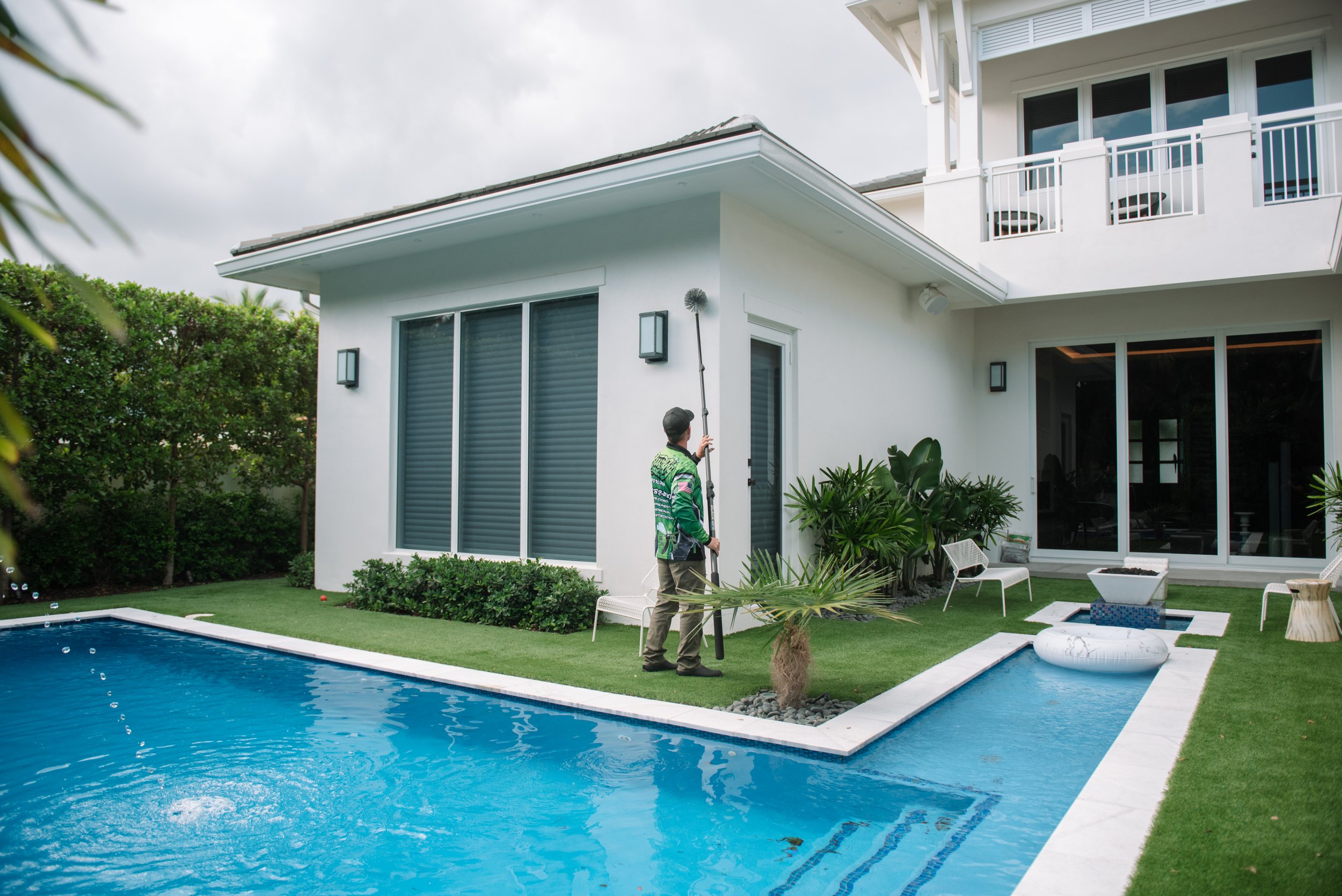
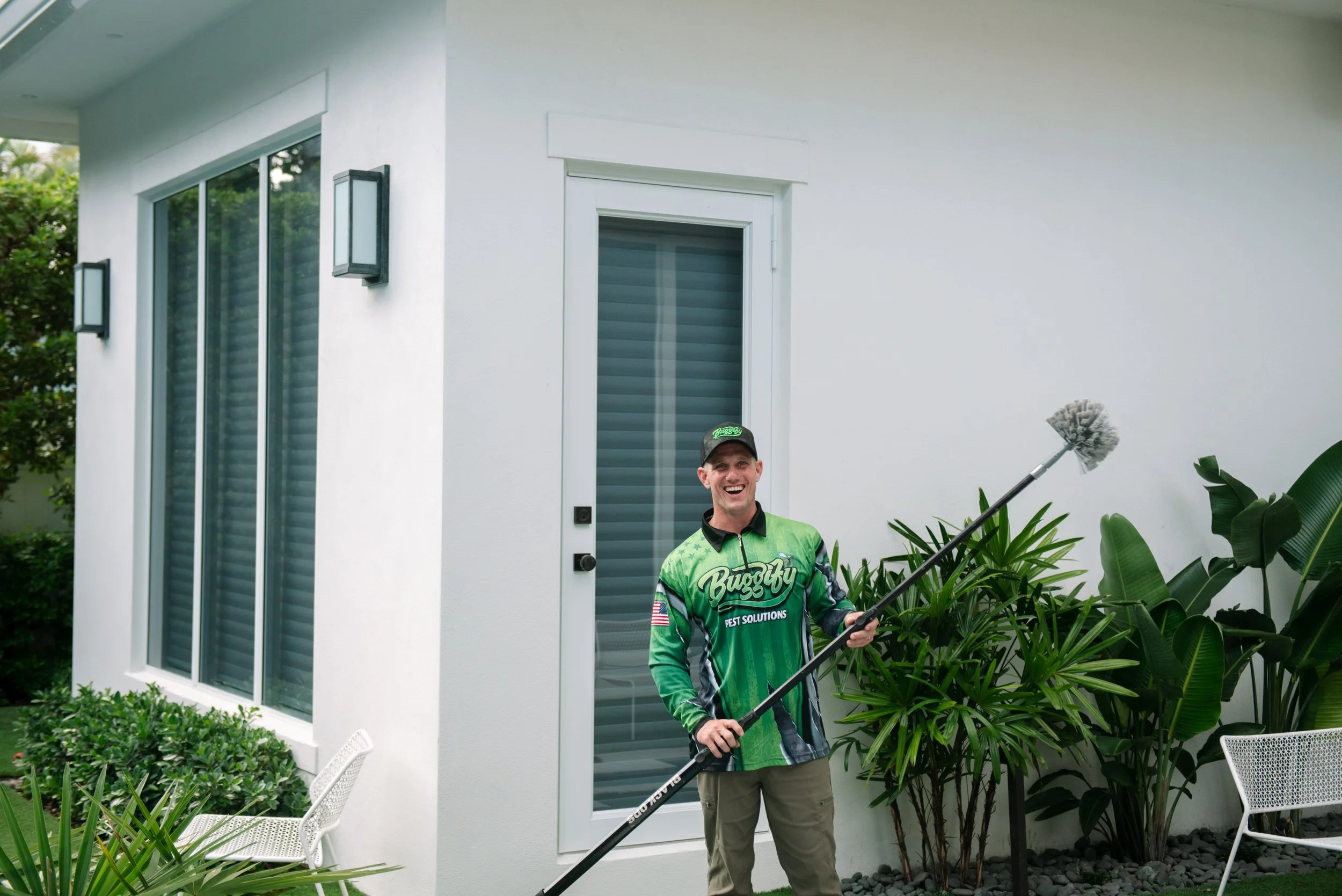
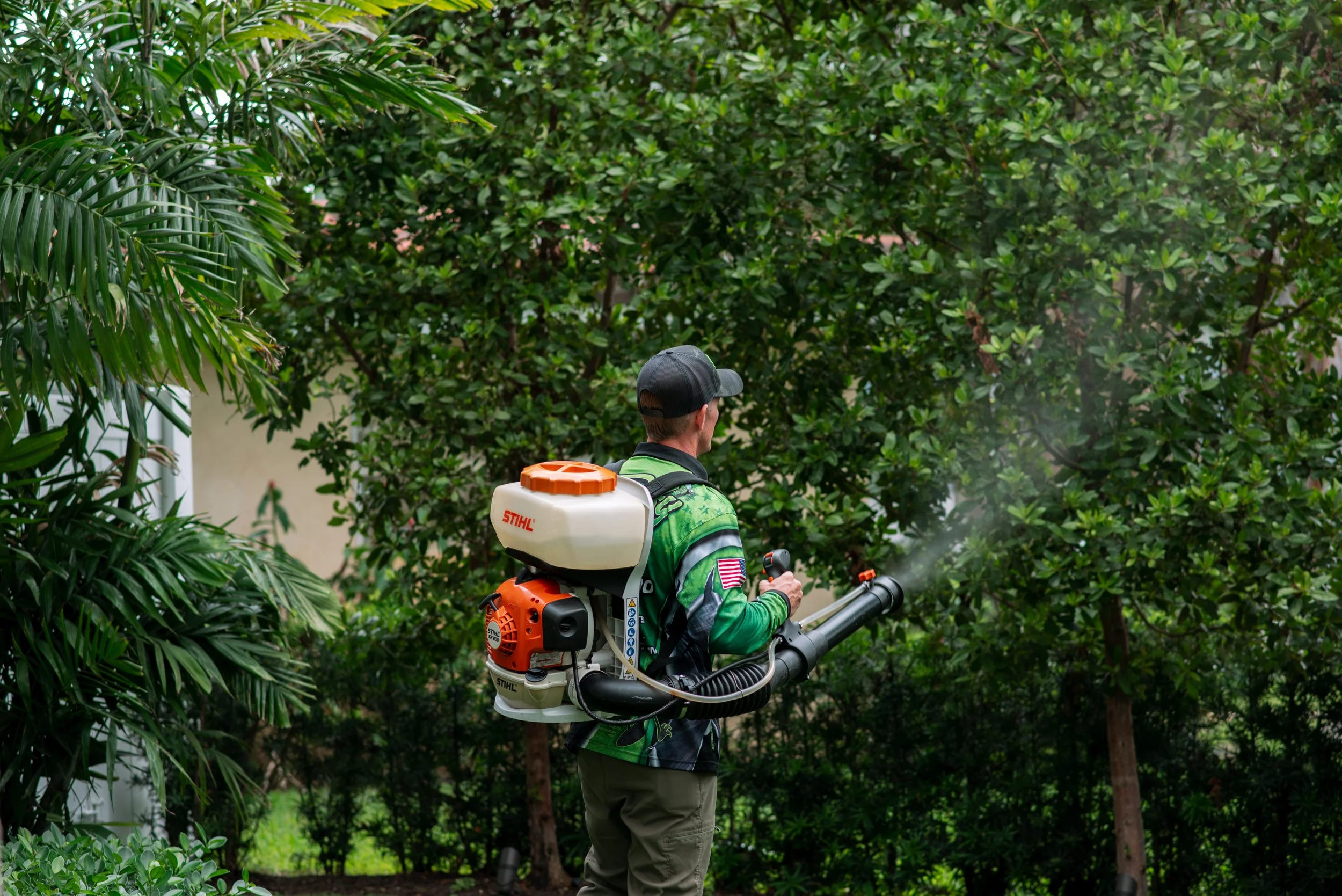
Tyler and one HOA maintenance staffer walked the 240 lots over three days, checking Sabal palm crowns, hedge lines, and shade-tree canopies for active nests. Eleven active nests were identified: 6 paper-wasp on palm crowns, 3 paper-wasp on hedge lines, and 2 bald-faced hornet aerial nests in oak canopies. All 11 were treated the following week using extended-reach applicators.
The trim cycle
The palm-trim crew moved through the community over 5 days with no stinging-insect incidents and no work stoppages. HOA moved the preemptive walkthrough to a standing pre-cycle standard for spring and pre-hurricane trim windows going forward.
Why Coral Springs wasp and hornet work has to time around HOA landscape cycles
Coral Springs residential is dominated by HOA-managed communities on annual or semi-annual landscape cycles. That scheduling drives a pattern most reactive stinging-insect work misses: nests establish on Sabal palm canopies, hedge lines, and shade-tree crowns during the March–May build period, and the June–October hurricane-prep window is exactly when landscape crews start hitting those nests with pole saws and chainsaws. A crew disturbing an established paper-wasp or bald-faced hornet nest triggers defensive swarm behavior that shuts down the work zone and generates a same-day emergency call.
The preemptive path is a walkthrough two weeks ahead of scheduled canopy work: identify active nests, treat them under controlled conditions before the crew arrives, and hand off a clean canopy. That approach cuts the emergency-call volume during the trim window and keeps landscape crews on schedule. When a landscape crew has already been stung and left the site, Tyler dispatches same-day, treats the disturbed colony under residual-fog conditions, and coordinates the crew's return timing on the property manager's schedule.
Parent Coral Springs city hub covers general pest scope, roof-rat protocol, Everglades-corridor mosquito work, and citywide HOA landscape uniformity. This Tier 3 page focuses on the stinging-insect coordination dimension the hub touches only briefly.
Every Coral Springs wasp, bee and hornet issue Buggify handles
Six work profiles that match Coral Springs' HOA-managed landscape and canopy stinging-insect load.
Sabal palm canopy paper-wasp and hornet nests
Concealed in the palm crown; pole-saw or bucket-truck access required. Preemptive coordination with HOA landscape crews reduces emergency call volume.
Hedge-line paper-wasp umbrella nests
Ficus, jasmine, and coco-plum hedge lines are standard paper-wasp habitat. Nest removal + residual on hedge surface prevents re-nesting for 30-60 days.
Shade-tree bald-faced hornet aerial nests
Layered paper-fiber aerial nests in oak, mahogany, and gumbo-limbo canopies. Extended-reach applicator; removal after colony deactivation.
Yellow-jacket ground and eave nests
Aggressive underground colonies near landscape edges; nighttime treatment. Eave-line paper-wasp/yellow-jacket clusters treated by dust application.
Honey bee cavity finds (species-tested)
Coral Springs honey bee finds get the same species-identification protocol as elsewhere in the service area; European colonies get live-relocation coordination; Africanized colonies get controlled treatment.
Post-landscape-crew emergency response
When a landscape crew has hit a nest and left the site, dispatch same day to treat the disturbed colony and coordinate the crew's return timing.
Five technical details specific to Coral Springs wasp, bee, and hornet work
HOA coordination workflow, canopy inspection technique, extended-reach applicator use, pollinator timing for hedge treatments, and post-crew emergency dispatch each drive the Coral Springs standard.
HOA Property-Manager Coordination Workflow
Two-week ahead scheduling on landscape cycles. Walk-through inspection with an HOA maintenance staffer. Written condition-of-treatment note per property. Coordinated timing on treatment application and landscape crew arrival.
Sabal Palm Crown Inspection Technique
Palm crowns conceal nests behind fronds; inspection requires a bucket truck or a pole camera for visibility. Nest orientation and species identification precede treatment application.
Extended-Reach Applicator Range
20-25 foot reach on aerial and canopy nests without ladder access. Foam and dust formulations for nest-cavity treatment; residual sprays for surface knock-down.
Pollinator-Timing on Hedge and Palm Treatments
Ficus and jasmine hedges are pollinator forage. Treatments timed outside foraging windows (early morning or dusk) on request; direct nest application avoids broadcast exposure.
Post-Landscape-Crew Emergency Dispatch
When a crew has hit a nest and left the site, same-day dispatch to treat the disturbed colony. Standard practice is to communicate with the property manager on treatment timing and the crew's return.
What Coral Springs wasp, bee, and hornet removal costs
Firm stinging-insect pricing follows an on-site inspection because access, nest location, hive size, and species drive the work required. A phone conversation gives a range and confirms whether emergency dispatch is appropriate.
Phone estimate
Free, Tyler gives a treatment range on the first call after confirming access, nest location, and species suspected. On-site inspection sets firm pricing.
Emergency dispatch note
Stinging-insect calls involving allergic occupants, children, pets, or aggressive swarm behavior get priority scheduling. Standard scheduling runs same-week.
Included in every job
Species identification (paper wasp, mud dauber, yellow jacket, hornet, honey bee, carpenter bee), nest removal, treatment residual, and a written condition-of-treatment note.
21-day return
If the nest re-establishes at the treated location within 21 days, Tyler returns at no additional charge.
Buggify vs. National Pest Chains
Seven-point comparison. Every row verifiable from how Buggify operates.
| Feature | Buggify in Coral Springs | National Pest Chains |
|---|---|---|
| Who answers when you call? | Tyler Craig, the licensed operator | Call center or booking bot |
| Same technician every visit | Yes, Tyler runs every job | Different rotating techs |
| Live-bee relocation policy | Coordinated with a beekeeper before removal for honey bee finds | Kill-and-remove default |
| Africanized-bee protocol | Bee identification before treatment; DNA-testing referral available | Standard chemical treatment regardless |
| Allergy notification | Written allergy-aware protocol for occupants before treatment | Not standard |
| Return-visit policy on stinging insects | Included when a nest re-establishes within 21 days at no charge | Extra visit fee typical |
| Contract lock-in | None. Bills per visit; cancel anytime. | Annual contracts common |
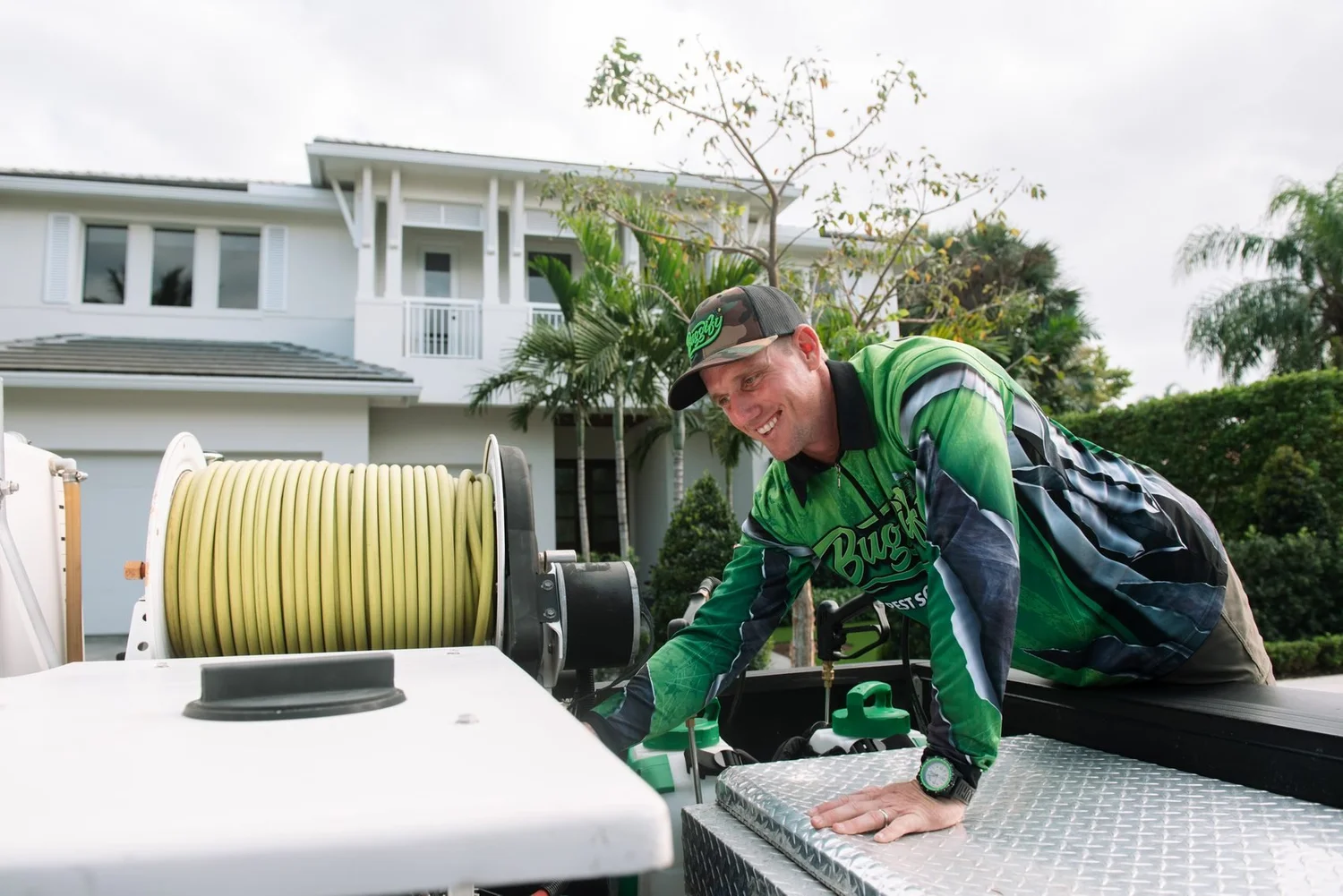
Read what Coral Springs customers say on Google directly
Real Google reviews from Coral Springs residents drive most of Buggify's new stinging-insect calls. Tyler answers, talks through the situation, and quotes a range on the first phone call. The live widget below pulls current reviews directly from Google, with a five-star average across all pest categories, with wasp and bee removal jobs mentioned frequently by name.
Three things Buggify will never do to you
Three things Buggify will never do to you (full list of seven on Why Choose Buggify):
Quote a real treatment price without inspecting the property first. Phone gives a range; firm pricing comes after an on-site walkthrough.
Indoor spraying when the source is outside. Most Coral Springs pest pressure is driven by outdoor harborage; indoor-only work is a short-term cover-up.
Long-term contracts that lock you in. Bi-monthly plans bill per visit and can be canceled anytime, no fees.
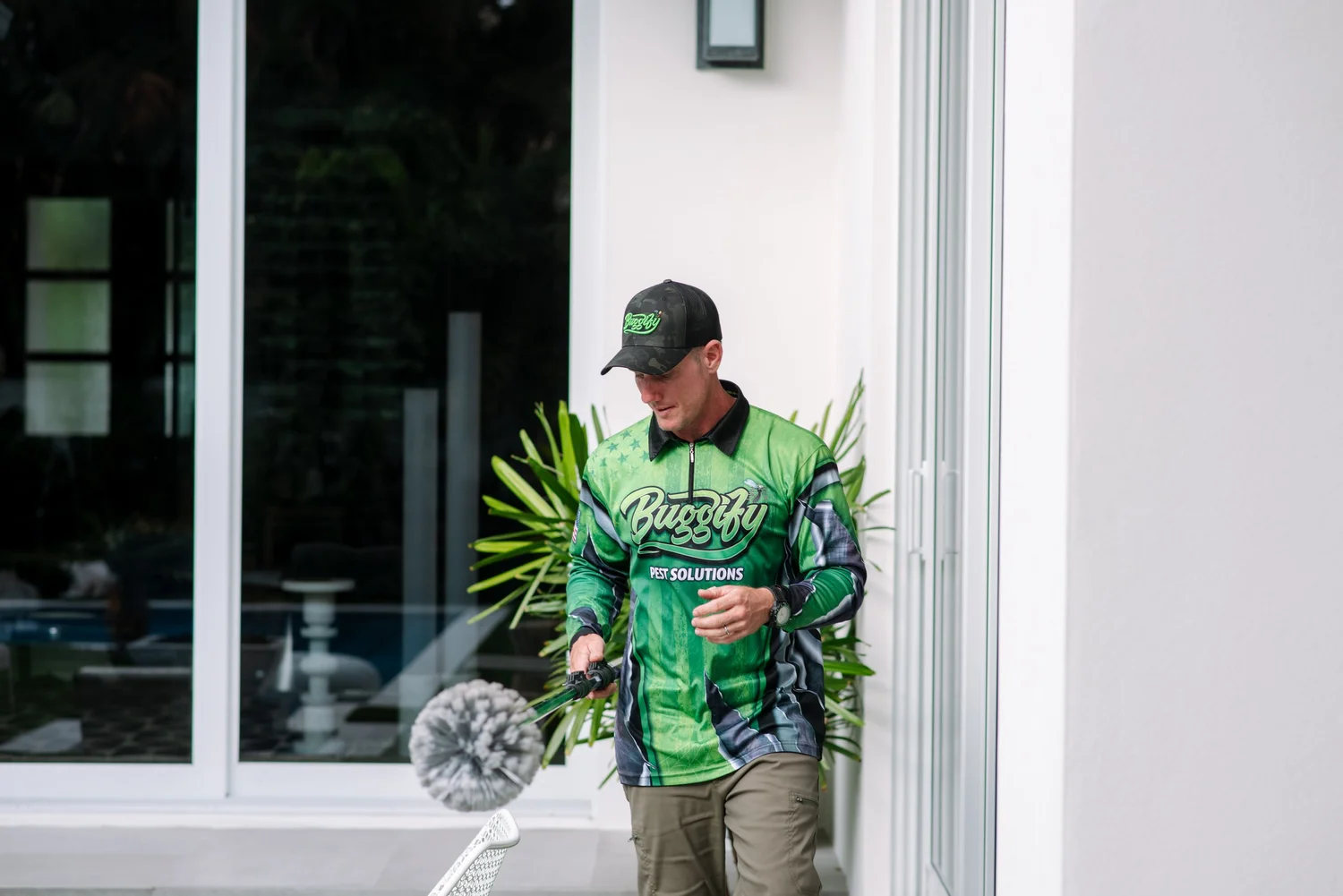
Call (561) 672-0200. Tyler answers, gives you a price range on the first call, and books your Coral Springs appointment into the next dispatch window (standard scheduling runs same-week; stinging-insect emergencies get prioritized).
Coral Springs wasp, bee and hornet FAQ
Can Tyler coordinate directly with our HOA property manager?
Yes. HOA property manager coordination is standard on Coral Springs work. Two-week ahead scheduling on landscape cycles, walk-through inspection with an HOA maintenance staffer, and written condition-of-treatment notes per treated property are the baseline workflow.
What's the response time on a Coral Springs stinging-insect emergency?
Coral Springs is a 35-45 minute drive from the West Boca shop. Stinging-insect emergencies with allergic occupants get same-day dispatch when we hear about them before noon. Standard scheduling runs the same week.
Will treatment damage our palm trees or landscape hedges?
No. Targeted nest treatment is applied to the specific nest site, not broadcast across the palm or hedge. Palm and hedge health is not affected by direct nest application. Broadcast treatment of a palm or hedge is not the treatment approach.
How far in advance should we schedule a preemptive walkthrough?
Two weeks ahead of a planned landscape cycle is the working standard, enough time to identify active nests, coordinate treatment application before the landscape crew arrives, and let treatment take effect. Emergency post-crew calls dispatch same-day.
Do you handle honey bee finds in Coral Springs?
Yes, with the same species-identification protocol as elsewhere in the service area. European colonies emerging from accessible cavities receive live-relocation coordination with a partner beekeeper. Africanized colonies or colonies in inaccessible locations get controlled chemical treatment.
Direct line to the technician serving Coral Springs
Phone: (561) 672-0200 (Tyler answers) · Mon–Fri 8 am – 5 pm
Email: Getbuggify@gmail.com
Address: 22617 Middletown Dr., Boca Raton, FL 33428 (West Boca shop, primary dispatch)
License: FL DACS #JB268060 · Certified Operator: Tyler Craig
Call (561) 672-0200 or submit the form below for a free phone estimate. Tyler answers directly. Coral Springs dispatch is owner-operator across a route from the West Boca shop, so appointments are pre-scheduled rather than drop-in; most standard jobs book for the same week.