

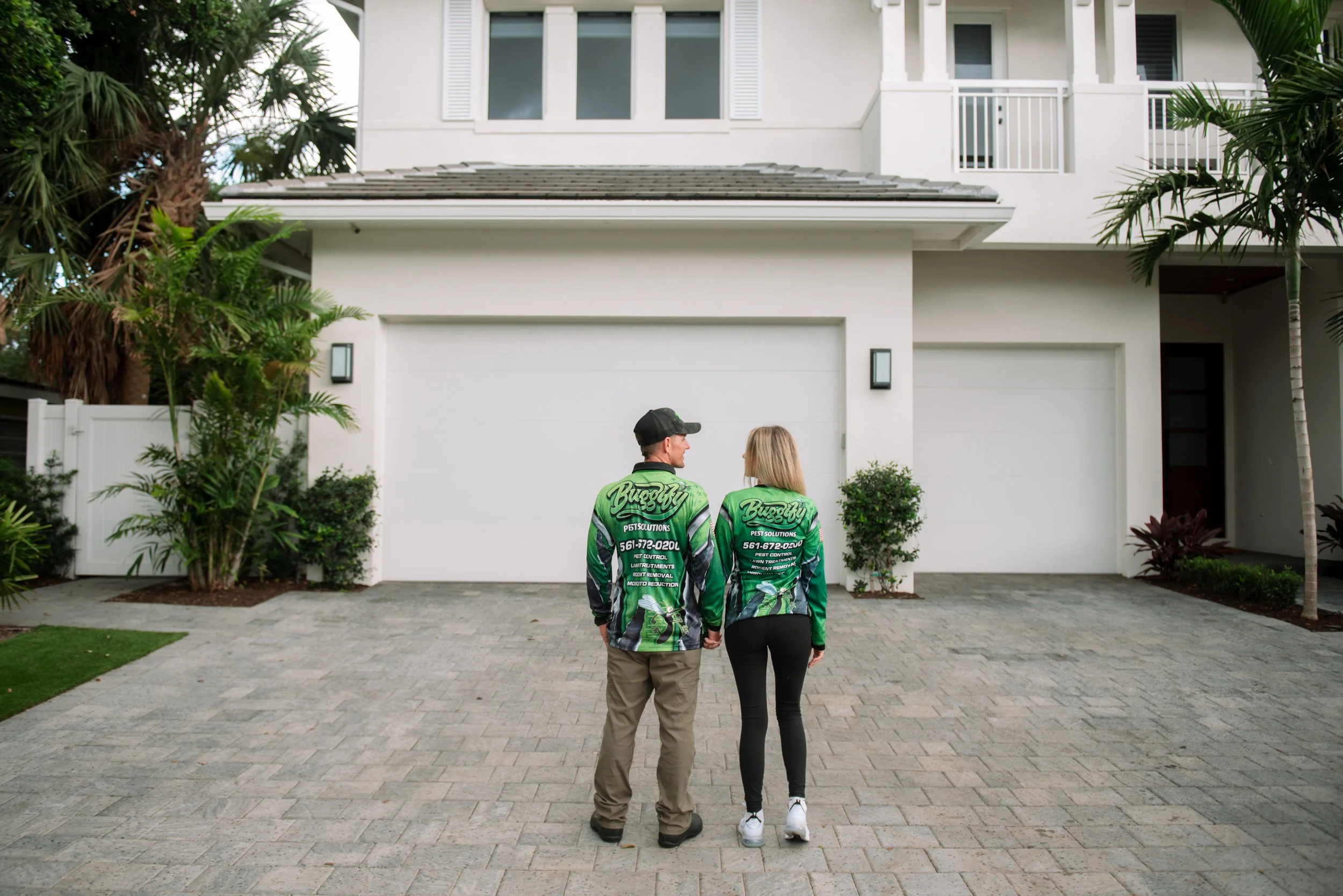
Rodent Control in Coral Springs
Roof rat trap-out + copper-mesh exclusion built to meet Coral Springs' Code Compliance rules. Owner-operated by Tyler Craig.
- FL DACS License #JB268060 · Certified Operator Tyler Craig
- Bayer Authorized Applicator (Termidor)
- $1M general liability insurance
- Google 5.0 Rated · live review feed
- Family-owned · 1,000+ South Florida homes served since 2018
- Pet-safe and family-safe treatments by default
- Free phone estimates · no long-term contracts
Coral Springs was master-planned by Coral Ridge Properties starting in 1963 and reached residential build-out around 2003, meaning the housing stock is roughly 20-60 years old, with the earliest Era-1 communities (oldest Era-1 communities) now carrying 45+ year old barrel-tile roofs. That inventory drives the city's rodent picture: roof rats dominate, hip-cap mortar has aged past its service life on the earliest neighborhoods, and Coral Springs' strict aesthetic code (Code Compliance Department, coralsprings.gov) means the exclusion sealing has to look right, not just work. Buggify's protocol on this page covers Tyler's Coral Springs rodent approach: a borescope inspection to find the actual entry point, a 4-6-week trap-out to clear the active population, and copper mesh + polyurethane exclusion in colors and finishes that meet Coral Ridge Properties standards.
Aesthetic-Code-Aware Exclusion
Coral Springs Code Compliance enforces exterior paint color, roofing, and landscaping. Tyler's exclusion sealing colors and materials match Coral Ridge Properties standards, no code violations.
Era-1 Barrel-Tile Specialty
Ramblewood, Cypress Run, Whispering Woods, Running Brook Hills, North Springs, 1970s-80s barrel tile now 45+ years old. Original hip-cap mortar is failing. Tyler's fix is the exclusion, not another bait refill.
Borescope Soffit-Fascia Inspection
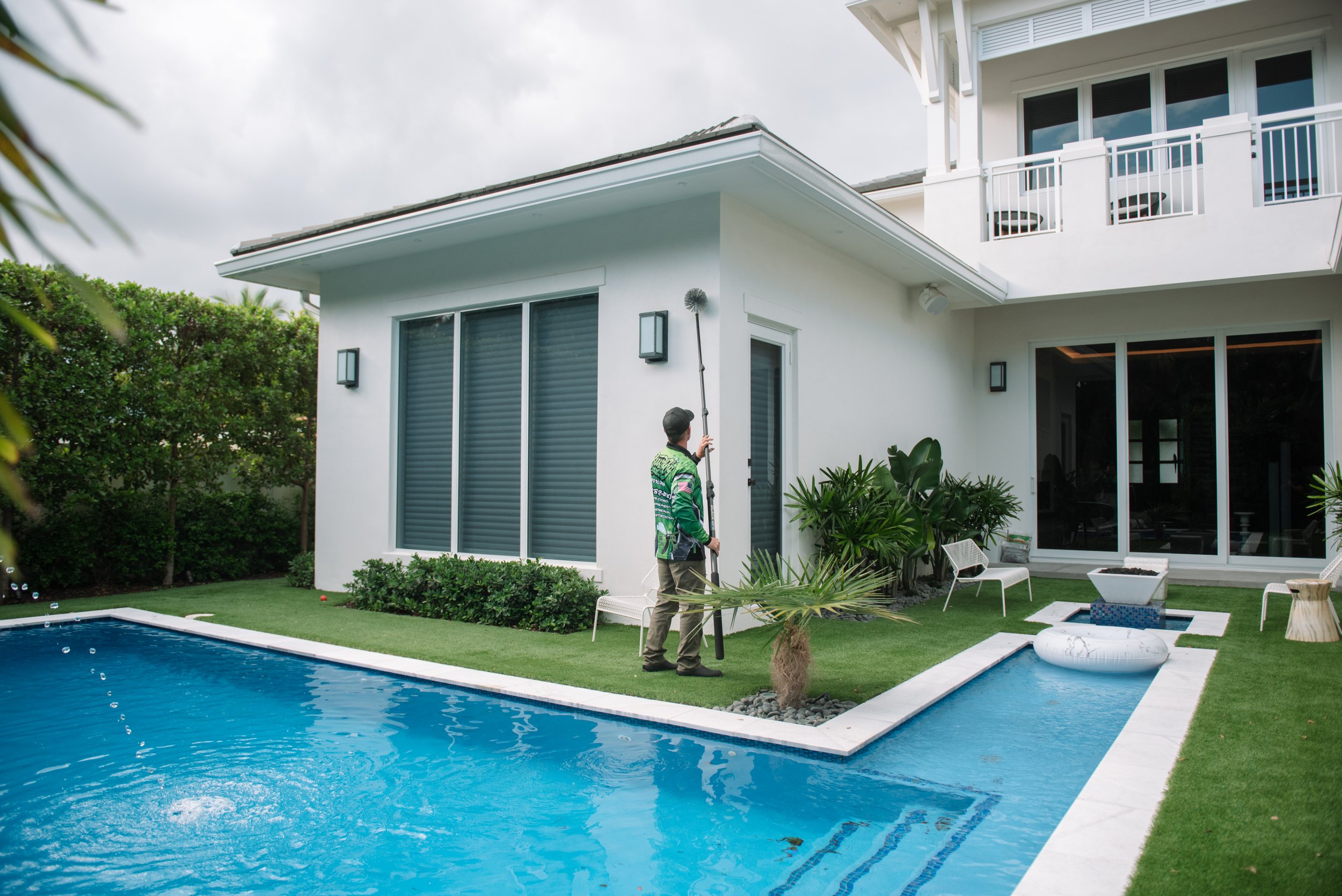
Tyler runs a borescope along the soffit-fascia line to find the actual roof rat entry point, not just the activity. Coral Springs's mature tree canopy creates hidden runways; visual-only inspection misses most of them.
4-6 Week Trap-Out Cycle
Roof rat populations cleared in a typical 4-6 week trap-out. National chains often lock Coral Springs homeowners into a year of bait-only quarterly refills.
Same Technician Every Visit
Tyler runs every Coral Springs rodent job start to finish. No rotating route techs, no callback queue.
No Multi-Year Bait Subscription
Bills per visit. Cancel anytime, no fees. Tyler quotes the actual job, not a bait-refill cycle.
Four Coral Springs conditions that shape rodent work
Coral Springs' master-planned era structure, strict aesthetic code, Everglades-edge geography, and 50+ park + Sportsplex system define the rodent protocol.
Coral Ridge Properties Era Structure (Housing Age Sorted by Neighborhood)
Coral Ridge Properties laid out Coral Springs in defined developer waves. Era 1 (1970s-80s) covers Ramblewood, Cypress Run, Whispering Woods, Maplewood, Running Brook Hills, and North Springs, homes now 40-55 years old with failing original tile hardware. Era 2 (1990s-2000s) covers Eagle Trace, Heron Bay, Turtle Run, Wyndham Lakes, Hidden Hammocks, Westchester, Kensington, and The Isles, 20-35 year old newer stock with different entry geometry. Era 3 (2000s luxury infill through 2003 build-out), the newest sections with fewer age-related entries but complex rooflines.
Strict Code Compliance on Exterior Materials + Colors
The Code Compliance Department (coralsprings.gov) enforces roofing material requirements, exterior paint color regulations, fence rules, and landscaping standards. Tyler's exclusion protocol accounts for this; copper-mesh insertion is deeply recessed and covered with color-matched polyurethane sealants that blend into approved roofline colors. Routine perimeter treatment and interior work don't trigger code review; only exterior structural modifications do.
Everglades West Edge + Sawgrass Expressway Drainage
Coral Springs' west and north edges border the Everglades and thread Sawgrass Expressway drainage swales. This creates a Norway rat corridor along outer North Springs, western Eagle Trace, and Heron Bay properties, as well as canal-bank burrow activity, in addition to the citywide roof rat pressure. The dual rodent protocol applies to approximately 8-12% of Coral Springs jobs.
50+ Municipal Parks + Coral Springs Regional Sportsplex
The city runs 50+ municipal parks across 675 acres, including Mullins Park (70 acres, the largest), Sandy Ridge Sanctuary (38 acres, conservation), and the Coral Springs Regional Sportsplex. Park-adjacent properties experience periodic rodent movement along park perimeters; Tyler tracks known park-edge activity zones in his job records, so those inspections begin with a targeted exterior scan of the park-facing property line.
Why Coral Springs rodent pressure looks different from a coastal Broward market
Coral Springs' rodent profile is shaped by three facts that don't apply to older coastal cities. First: the city is master-planned. Coral Ridge Properties bought 3,869 acres from the Lyons family in 1961 and laid out communities in defined waves, Era 1 (1970s-80s: Ramblewood, Cypress Run, Whispering Woods, Maplewood, Running Brook Hills, North Springs), Era 2 (1990s-2000s: Eagle Trace, Heron Bay, Turtle Run, Wyndham Lakes, Hidden Hammocks, Westchester, Kensington, The Isles), and Era 3 (2000s luxury infill through 2003 build-out). Roof-rat pressure varies along those era lines: the oldest tile roofs generate the highest activity because 45+year-old hip-cap mortar has failed and soffit-fascia gaps have widened.
Second: Coral Springs has a documented strict aesthetic code. The Code Compliance Department enforces roofing material requirements, exterior paint colors, fence rules, landscaping standards, and even sign layouts (the city is famously home to the first McDonald's that didn't display the Golden Arches). For rodent exclusion, this means the copper-mesh insertion and polyurethane sealing at soffit-line entry points need to blend into the approved roofline color, not stand out as bright copper strips. Tyler's Coral Springs exclusion protocol accounts for that.
Third: Coral Springs sits directly east of the Everglades and threads Sawgrass Expressway drainage swales through the city's north and west edges. That combination creates a natural rodent corridor along the outer neighborhoods (North Springs, western Eagle Trace, Heron Bay), Norway rat ground-burrow activity along canal banks in addition to the standard roof-rat pattern. On those properties, Tyler runs a dual rodent protocol rather than the single-species roof-rat approach that fits inland Broward.
Every Coral Springs rodent issue Buggify handles
Standard Coral Springs rodent scope follows Buggify's roof-rat-first protocol with era-specific adjustments and dual work on canal-adjacent western neighborhoods.
Era-1 barrel-tile roof rats (oldest Era-1 communities)
The oldest Coral Springs communities feature 1970s-80s barrel-tile roofs with original hip-cap mortar that has aged for 45+ years of South Florida UV and hurricane exposure. Roof rats enter at failed hip-cap joints, widened soffit-fascia separations, and plumbing-vent penetrations where the boot has cracked. Treatment: borescope inspection across affected soffit segments, snap-trap deployment in the attic runway zones, copper-mesh insertion + color-matched polyurethane at entry points. Bait-only protocols fail here because the entry hasn't been closed.
Era-2 tile-roof + gable-vent entries (Eagle Trace, Heron Bay, Turtle Run, Wyndham Lakes, Kensington)
1990s-2000s master-planned communities have newer barrel-tile roofs but more complex rooflines, multiple gable-vent penetrations, roof returns, and dormer transitions. Entry is more often at gable-vent screening (mesh corroded or absent) and at soffit-line joints where two roof segments meet. Tyler's Era-2 protocol emphasizes gable-vent hardware-cloth screening as a specific line item in the exclusion quote.
Norway rat ground-burrow work (North Springs + Sawgrass corridor)
The city's north and west edges border Sawgrass Expressway drainage swales and open Everglades-adjacent land. Norway rats burrow along canal banks, under slabs at exterior utility penetrations, and around ground-level plumbing chases. Dual rodent protocol on these properties: standard borescope + soffit exclusion for roof rats plus ground-level snap traps + slab-crack sealing for Norway rats. Approximately 8-12% of Coral Springs rodent jobs need this dual approach.
Multi-family + townhouse rodent (University Drive / Sample Road corridor)
The University Drive and Sample Road commercial-residential band (near Coral Square Mall and the downtown intersection) has a higher concentration of townhouse and multi-family stock than the master-planned single-family communities. Rodent work at these properties involves coordination with neighboring units (shared attic partitions, shared soffit lines) and HOA notification. Tyler handles the fieldwork and HOA communication.
Attic and wall-cavity exclusion (the long-term Coral Springs fix)
Post-trapping exclusion is what ends the cycle. Copper mesh at soffit-fascia gaps, hardware cloth at gable + plumbing vents, marine-grade polyurethane at slab cracks over ~1/8 inch, weather-stripping at garage-door thresholds. Color-matched sealants so the work meets Coral Ridge Properties aesthetic standards. Exclusion sometimes runs as a separate visit after the trap-out (scope-dependent) and is custom-quoted by home size and entry count.
Ramblewood roof-rat job: 45-year-old hip-caps and a national-chain quarterly bait quote
The call
A Ramblewood homeowner (original owner since 1979) started hearing scratching above the master bedroom around 10 pm every night. She'd already had a national pest company quote a $1,200/year quarterly bait-station contract with a two-year minimum. The company hadn't mentioned exclusion at all. Tyler answered her call and offered a same-week on-site inspection.
The inspection
75-minute inspection. Tyler ran the borescope along the front, south, and west soffit-fascia line. Found grease-rub trails and active droppings at a hip-cap junction where the original 1979 mortar had crumbled out over the past three-plus decades, visible from the ground once he knew where to look. Secondary entry at a cracked plumbing-vent boot on the south elevation. Attic droppings concentrated over the master bedroom (matched the reported activity).
The protocol
Phase 1: 4 snap traps in the attic runway. Phase 2: monitoring visits at week 1 and week 3. Population cleared by week 4. Phase 3 (week 5): copper-mesh insertion at the failed hip-cap junction, color-matched polyurethane over the copper (blended to the barrel-tile terracotta), hardware-cloth screening at the plumbing-vent penetration, marine-grade polyurethane at the boot crack. Final monitoring at week 6 confirmed no return activity.
The result
Trap-out + exclusion = $1,450 total ($350 initial + $250 per monitoring visit × 2 + $600 exclusion sealing). Cheaper than the first year of the two-year bait-only contract, and permanent. Homeowner moved to the Full Home Protection bi-monthly plan for ongoing monitoring.
Four technical details specific to Coral Springs rodent work
Buggify's Coral Springs rodent protocol depth covering era-specific tile diagnosis, color-matched exclusion, dual-species canal work, and multi-family coordination.
Era-1 Hip-Cap Mortar Diagnosis on 45+ Year Old Barrel Tile
Coral Springs' Era-1 barrel-tile roofs (Ramblewood, Cypress Run, Whispering Woods, Running Brook Hills, North Springs) were laid with hip-cap mortar formulations from the 1970s. That mortar is at 45+ years of South Florida UV + hurricane cycling and has crumbled at the joints on a majority of original-roof homes. Tyler's diagnostic borescope pass focuses on hip-cap junctions first; that's the highest-yield entry point on Era-1 homes. Roof replacement solves it; targeted mortar + copper-mesh exclusion is the interim fix that costs a fraction of a re-roof.
Attic Monitoring Cadence Calibrated to Era-1 vs Era-2 Roof Age
Era-1 Coral Springs homes (Ramblewood, Cypress Run, Whispering Woods, Running Brook Hills) with 45+ year old original tile carry active roof-rat pressure at a materially higher rate than Era-2 homes (Eagle Trace, Heron Bay, Turtle Run). Tyler's Complete-plan attic monitoring cadence reflects that. Era-1 attics get quarterly attic checks bundled into the bi-monthly plan; Era-2 attics get semi-annual checks. Same pest coverage; different monitoring frequency because the failure surface has aged differently.
Post-Named-Storm Rodent-Entry Re-Inspection
Named tropical storms and hurricanes displace tiles, widen soffit-fascia separations, and lift screening across Coral Springs' tile-roof inventory. Rodent-entry geometry changes overnight. Tyler's Complete-plan post-storm protocol includes a within-72-hour re-inspection offer for active plan customers after any Broward-County-named-storm event. Checks for freshly lifted tiles, opened soffit joints, damaged gable vents, and water-pooling zones that shift outdoor harborage. Prevents the 3-4 week lag between storm and first rodent activity report.
Multi-Family Neighbor-Unit Coordination (University Drive Corridor)
Townhouse and multi-family stock along University Drive and Sample Road shares attic partitions and soffit lines across units. Rodent work in one unit that ignores the shared building envelope solves nothing; the activity moves next door and returns. Tyler's multi-family protocol coordinates with HOA property management, inspects across shared attic partitions when access allows, and quotes exclusion at the building-envelope level rather than the unit level. Job scope and pricing scale accordingly.
Coral Springs rodent job pricing
Standard Buggify rodent pricing structure applies in Coral Springs, with era-specific complexity affecting the exclusion band.
Initial Visit,$200-600
Borescope inspection + snap-trap deployment + first monitoring visit. Lower end for typical mice / smaller roof-rat jobs; upper end for multi-story luxury-infill homes and dual-species (roof + Norway) jobs on the Sawgrass corridor.
Attic / Wall-Cavity Work,$750-1,500
Trap-out plus attic access work in larger master-planned homes. Higher end on Era-2 estates with multiple attic partitions (Eagle Trace, Heron Bay, Wyndham Lakes).
Exclusion Sealing,$400-1,600+
Era-1 barrel-tile hip-cap and soffit repair typically $500-900 (multiple entry points from decades of mortar failure). Era-2 gable-vent hardware-cloth work $400-700. Full whole-home exclusion (multiple penetration types + code-compliant color-matching) $1,000-1,600+.
Complete Plan Includes Rodent Monitoring
Ongoing rodent monitoring bundles into the Complete (Premium) bi-monthly plan. Full Home Protection covers monitoring without active exclusion sealing. Basic plan doesn't include rodent scope.
Buggify vs. National Pest Chains
Six-point comparison. Every row verifiable from how Buggify operates.
| Feature | Buggify in Coral Springs | National Pest Chains |
|---|---|---|
| Aesthetic-code-aware exclusion | Standard, sealing colors match Coral Ridge Properties standards | Bright-copper mesh left visible; Code Compliance can flag it |
| Borescope soffit-fascia inspection | Standard on every Coral Springs rodent inspection | Often skipped, visual-only ladder inspection |
| Era-1 barrel-tile hip-cap expertise | Ramblewood / Cypress Run / North Springs specialty since 2018 | Generic tile-roof approach |
| Trap-out vs bait-only | Snap-trap primary; bait secondary | Bait-station refill subscription common |
| Same technician every visit | Tyler runs every Coral Springs rodent job | Rotating route techs |
| Contract structure | Bills per visit, cancel anytime, no fees | Multi-year bait contracts common |
Read what Coral Springs customers say on Google directly
Coral Springs rodent customers value the era-aware inspection and the code-compliant exclusion finish, the two things that separate a proper long-term fix from a bait subscription that never ends. Most reviews reference Tyler's ability to explain which era their home falls in and what that means for entry-point patterns. Google 5.0 Rated · live review feed.
Three things Buggify will never do to you
Three things Buggify will never do to you (full list of seven on Why Choose Buggify):
Quote a real treatment price without inspecting the property first. Phone gives a range; firm pricing comes after an on-site walkthrough.
Indoor spraying when the source is outside. Most Coral Springs pest pressure is driven by outdoor harborage; indoor-only work is a short-term cover-up.
Long-term contracts that lock you in. Bi-monthly plans bill per visit and can be canceled anytime, no fees.
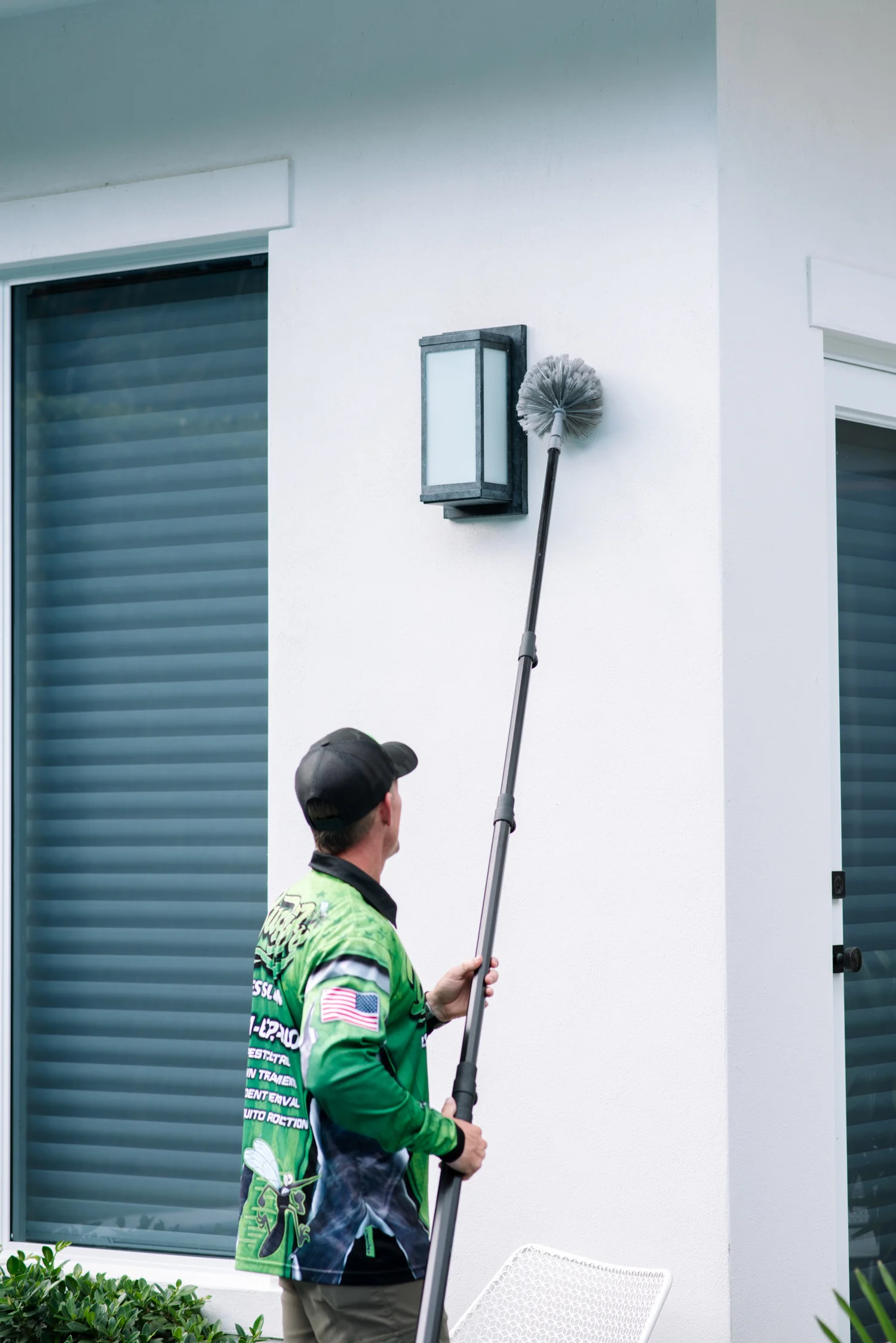
Call (561) 672-0200. Tyler answers, gives you a price range on the first call, and (in most cases) gets you on the Coral Springs schedule the same day or the next morning.
Six Coral Springs rodent questions Tyler hears most often
My home is in Ramblewood, and the roof is original 1979 tile. Do I need a full re-roof to fix the rodent problem?
Almost never. The targeted fix is copper mesh and polyurethane sealing at the failed hip-cap junctions and soffit-fascia gaps. Costs a fraction of a re-roof and holds for years. Re-roof is the answer if the underlayment has failed structurally, which is a separate roofing decision.
Will your exclusion work meet Coral Springs' Code Compliance requirements?
Yes. Tyler recesses the copper mesh deeply into the entry gap and covers it with color-matched marine-grade polyurethane. Finished work blends into the approved roofline color and doesn't trigger a code notice.
I'm in North Springs near the Sawgrass Expressway. Is my rodent problem different from the rest of Coral Springs?
Often yes. Sawgrass-corridor and Everglades-edge properties frequently have Norway rats along the canal banks in addition to the citywide roof rat pressure. Tyler's inspection identifies whether you have one or both species and runs the appropriate single-species or dual protocol.
My HOA-managed townhouse near Sample Road has rats, and my neighbor also does. Whose problem is it?
Structurally, it's a shared-building-envelope problem. Tyler coordinates with HOA property management, inspects across shared attic partitions when access allows, and quotes exclusion at the building-envelope level. Unit-only treatment doesn't hold in multi-family stock.
How much does a typical Coral Springs rodent job cost?
Trap-out $200-600 initial. Attic/wall-cavity work $750-1,500 if needed. Exclusion sealing $400-1,600+. Most Coral Springs rodent jobs run $1,200-2,800 total for trap-out + exclusion combined, with Era-1 hip-cap work usually at the higher end.
How long does the full trap-out plus exclusion take?
Typically 5-6 weeks total. The first 4 weeks are for trap-out and monitoring; weeks 5-6 cover exclusion sealing and a final monitoring visit. Faster in smaller homes with limited entry-point counts.
Direct line to the technician serving Coral Springs
Phone: (561) 672-0200 (Tyler answers) · Mon–Fri 8 am – 5 pm
Email: Getbuggify@gmail.com
Address: 22617 Middletown Dr., Boca Raton, FL 33428 (West Boca shop, primary dispatch)
License: FL DACS #JB268060 · Certified Operator: Tyler Craig
Call (561) 672-0200 or submit the form below for a free phone estimate. Tyler answers directly and gets you on the Coral Springs schedule the same day or next morning.