
Lawn Pest Control in Coral Springs
City park-adjacent sod webworm summer surge coordination. HOA landscape uniformity requirements drive consistent turf-health documentation across the community.
- FL DACS License #JB268060 · Certified Operator Tyler Craig
- Bayer Authorized Applicator (Termidor)
- $1M general liability insurance
- Google 5.0 Rated · live review feed
- Family-owned · 1,000+ South Florida homes served since 2018
- Pet-safe and family-safe treatments by default
- Free phone estimates · no long-term contracts
Coral Springs' lawn pest calls cluster around two overlapping conditions: the concentrated sod webworm activity that emerges every July-September on residential lawns adjacent to city park green space (Cypress Hammock, Sportsplex, Riverside), and the HOA landscape uniformity requirements that make lawn health a documented community standard rather than an individual homeowner preference. Sod webworm larvae feed at night at the base of St. Augustine and Zoysia grass blades and produce overnight turf damage that reads as sudden brown patches expanding across mown surfaces. Coral Springs residential lawns adjacent to city park green space experience additional adult-moth population pressure from park-side oviposition, extending the treatment window into early October in some years. HOA-managed residential is largely uniformity-controlled: architectural review responds to visible turf decline with lawn-health notices, and coordinated treatment documentation supports property-owner records. Parent Coral Springs city hub covers general pest scope and Everglades-corridor mosquito work in depth; this Tier 3 page focuses on the sod webworm and HOA-uniformity turf dimensions.
Park-Adjacent Sod Webworm Coordination
Cypress Hammock, Sportsplex, and Riverside park-adjacent residential lawns carry additional sod webworm ovipositing pressure.
HOA Landscape Uniformity Documentation
Coordinated treatment records support HOA architectural review compliance on turf-health notices.
Diagnostic-First Turf Assessment
Turf species and pest signature identified before chemistry selection.
Same Technician Every Visit
Tyler runs every Coral Springs lawn pest job.
Direct Line to Tyler
Mon-Fri 8 am - 5 pm.
No Contract Lock-In
Bills per visit.
Every Coral Springs lawn and ornamental pest issue Buggify handles
Three work profiles across Coral Springs residential lawn and ornamental landscape.
Sod webworm summer surge on St. Augustine and Zoysia
July-September larval activity with overnight turf damage. Park-adjacent lawns carry extended treatment window into early October. Larval inspection at grass-blade base confirms diagnosis.
Chinch bug pressure on St. Augustine turf
Recurring May-October chinch bug pressure. Diagnostic ID at sunlit-edge transition zone; targeted turf treatment; 30-day return policy on pressure recurrence.
Ornamental hedge whitefly and scale on ficus, hibiscus, ixora
Standard HOA-community hedge species. Underleaf inspection with systemic and foliar treatment options.
Why Coral Springs sod webworm season runs longer on park-adjacent lawns
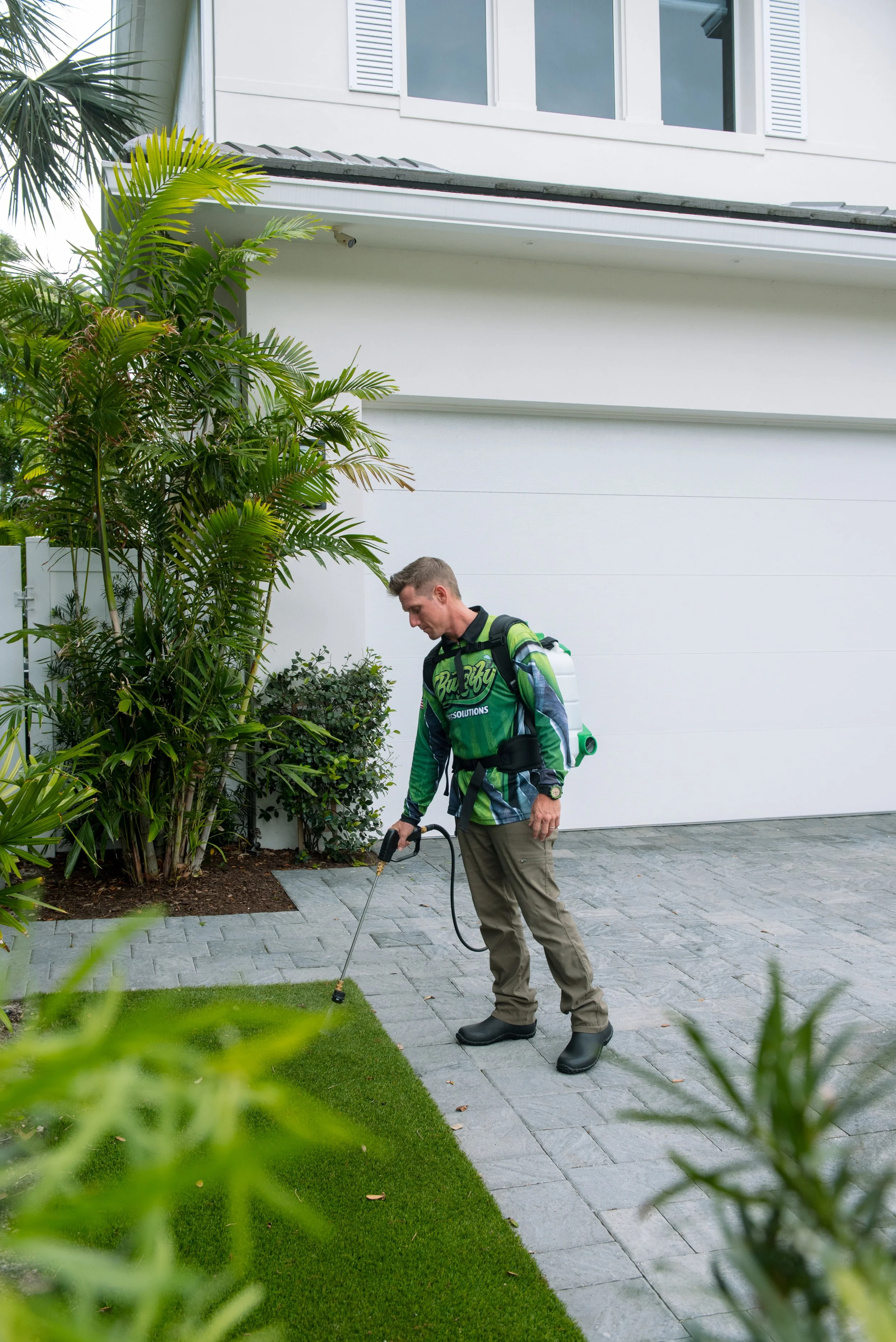
Sod webworm adult moths oviposit on residential turf during evening flight windows in July, August, and September. The larvae hatch and feed at night at the base of the grass blades, producing overnight brown-patch damage that reads as sudden lawn decline across mown surfaces. Coral Springs residential lawns adjacent to city park green space carry additional ovipositing pressure because the parks themselves function as reservoir habitat for the adult moth population. That reservoir extends the treatment window into early October some years, particularly for the Cypress Hammock, Sportsplex, and Riverside adjacent residential zones.
HOA-managed residential is largely landscape-uniformity-controlled. Architectural review committees respond to visible turf decline by issuing lawn-health notices that establish a treatment timeline expectation for the property owner. Coordinated treatment documentation from Buggify (turf species, pest identification, product selection, application method) supports property-owner response to any HOA lawn-health notice and provides a written record for architectural review submission.
Parent Coral Springs city hub covers general pest scope, roof-rat protocol, Everglades-corridor mosquito, and citywide HOA landscape uniformity as a broader theme. This Tier 3 page focuses on the sod webworm and HOA turf documentation dimensions.
Five Coral Springs conditions that shape lawn pest work
Coral Springs' park-adjacent green space, HOA landscape uniformity, Sabal palm inventory, Everglades-corridor humidity, and St. Augustine turf dominance each shape the lawn pest protocol.
City Park Green Space Reservoir
Cypress Hammock, Sportsplex, Riverside, and adjacent parks function as reservoir habitat for adult sod webworm moth populations.
HOA Landscape Uniformity Requirements
Architectural review committees respond to visible turf decline with lawn-health notices. Coordinated treatment documentation supports property-owner response.
Sabal Palm and Ornamental Palm Inventory
Palm scale monitoring on Sabal and queen palm inventory is a standard part of the Coral Springs ornamental package.
Everglades-Corridor Humidity
West-side Coral Springs residential borders the Everglades canal system; year-round humidity extends fungal disease pressure on turf.
St. Augustine Turf Dominance
Majority of Coral Springs residential is St. Augustine, driving recurring chinch bug and sod webworm pressure.
Three technical details specific to Coral Springs lawn pest work
Park-adjacency treatment window extension, HOA architectural review documentation workflow, and coordinated seasonal inspection scheduling.
Park-Adjacency Treatment Window Extension
Residential lawns within one-quarter mile of city park green space carry extended sod webworm treatment window into early October due to reservoir habitat pressure. Second-cycle treatment pre-scheduled on park-adjacent properties.
HOA Architectural Review Documentation Workflow
Written condition-of-treatment note documenting turf species, pest identification, product selection, and application method. Suitable for HOA architectural review submission on lawn-health notices.
Coordinated Seasonal Inspection Scheduling
July-October seasonal inspection cycle on park-adjacent properties to catch sod webworm larval activity at first appearance. Programs bill per visit; cancel anytime.
Cypress Hammock park-adjacent case: sod webworm treatment cleared October re-surge
The setup
A Coral Springs Cypress Hammock park-adjacent HOA homeowner had received a September lawn-health notice from the HOA architectural review committee. Two adjacent front-lawn zones showed overnight brown-patch damage that had appeared over consecutive nights.
The inspection
Tyler's on-site larval inspection at the grass-blade base of the damaged zone identified active sod webworm larvae in the transition zone between healthy and damaged grass. Diagnosis was confirmed as sod webworm; park adjacency was noted as extending the expected treatment window.
The treatment and re-surge coordination
Targeted late-larval treatment applied to the full front lawn. Return-visit inspection at 14 days confirmed clear. Mid-October re-surge was anticipated and pre-scheduled; second treatment applied at first sign of new larval activity. Full front lawn recovered by mid-November.
The HOA documentation
Written condition-of-treatment note documenting turf species (St. Augustine), pest identification (sod webworm), product selection, and application method. Homeowner submitted to HOA architectural review; lawn-health notice cleared.
The standing arrangement
Homeowner enrolled in a July-October seasonal sod webworm inspection cycle; HOA moved the property from lawn-health-notice status back to compliant standing.
What Coral Springs lawn pest control costs
Firm lawn and ornamental pricing follows a walkthrough because turf species, hedge count, palm inventory, and pest signature drive the work. A phone call establishes a range and identifies whether coordinated ornamental + turf visits will help.
Phone estimate
Free, Tyler walks through your yard footprint (approximate square footage, turf species if known, hedge count, palm inventory) and gives a treatment range.
Bi-monthly programs
Turf and ornamental care works best with a rotational treatment. Programs bill per visit; cancel anytime.
Included in every visit
Pest identification, targeted application, condition-of-yard note, and treatment product disclosure.
30-day return
If chinch bug, sod webworm, or whitefly pressure returns within 30 days of a treatment, Tyler returns at no additional charge.
Buggify vs. National Pest Chains
Seven-point comparison. Every row verifiable from how Buggify operates.
| Feature | Buggify in Coral Springs | National Pest Chains |
|---|---|---|
| Who answers when you call? | Tyler Craig, the licensed operator | Call center or booking bot |
| Turf ID first, treatment second | Confirms St. Augustine vs Zoysia vs Bermuda and identifies the specific pest before chemistry selection | Broadcast treatment without turf-species distinction |
| Pollinator-safe application windows | Whitefly and hedge treatments timed outside pollinator foraging windows on request | Standard-schedule application regardless |
| HOA landscape coordination | Written condition-of-treatment note suitable for HOA architectural review | Not standard |
| Return-visit policy on turf pests | Included when pressure returns within 30 days of a confirmed treatment | Extra visit fee typical |
| Contract lock-in | None. Bills per visit; cancel anytime. | Annual contracts common |
| Ornamental + turf coordination | One technician handles both zones as a connected landscape | Separate crews or vendors |
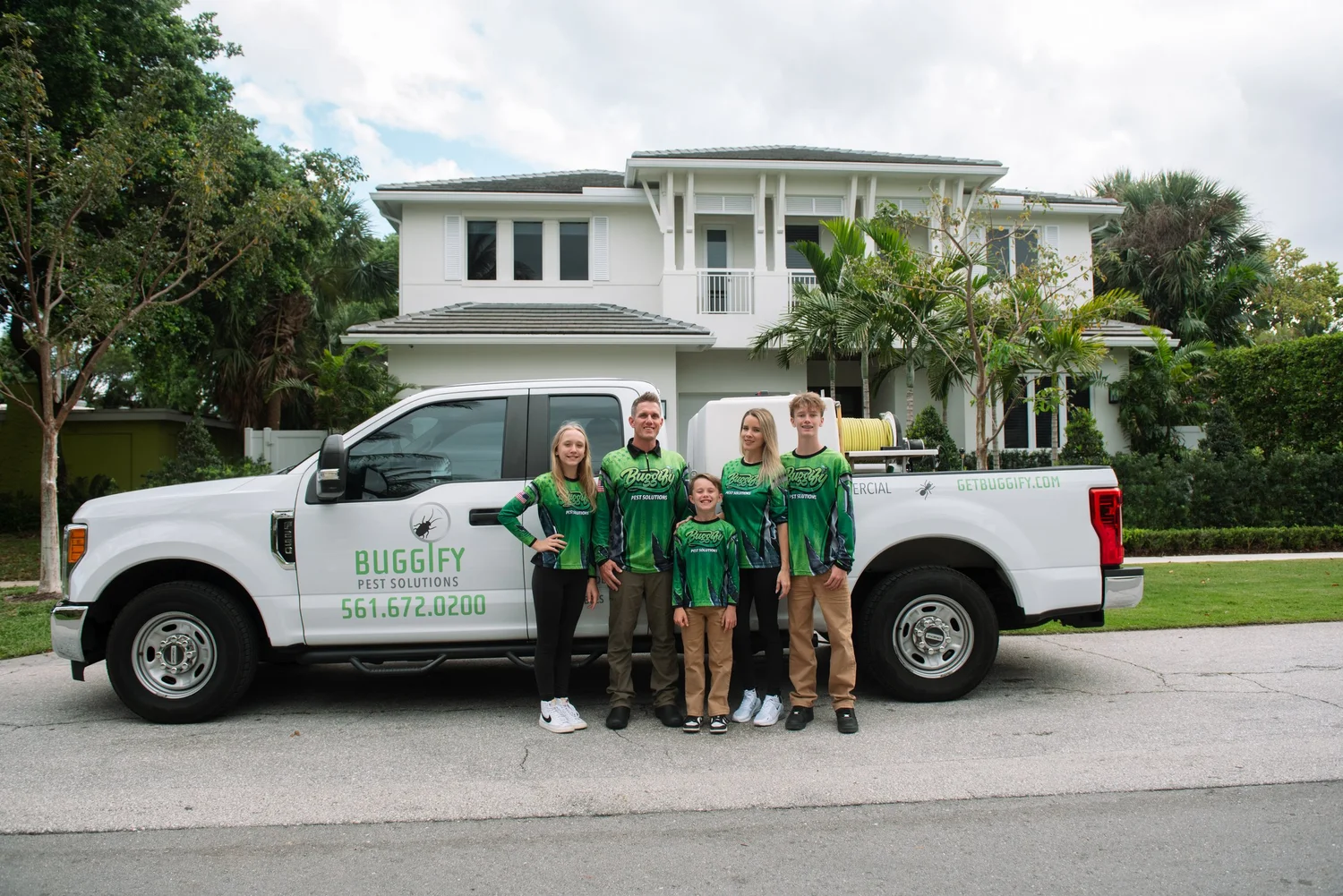
Read what Coral Springs customers say on Google directly
Real Google reviews from Coral Springs residents driving lawn and ornamental calls. Tyler walks the yard on the first visit, identifies the specific pest signature (chinch bug, sod webworm, ficus whitefly, palm scale), and matches chemistry to turf species. The live widget below pulls current reviews directly from Google.
Three things Buggify will never do to you
Three things Buggify will never do to you (full list of seven on Why Choose Buggify):
Quote a real treatment price without inspecting the property first. Phone gives a range; firm pricing comes after an on-site walkthrough.
Indoor spraying when the source is outside. Most of the pest pressure in Coral Springs is driven by outdoor harborage; indoor-only work is a short-term cover-up.
Long-term contracts that lock you in. Bi-monthly plans bill per visit and can be canceled anytime, no fees.
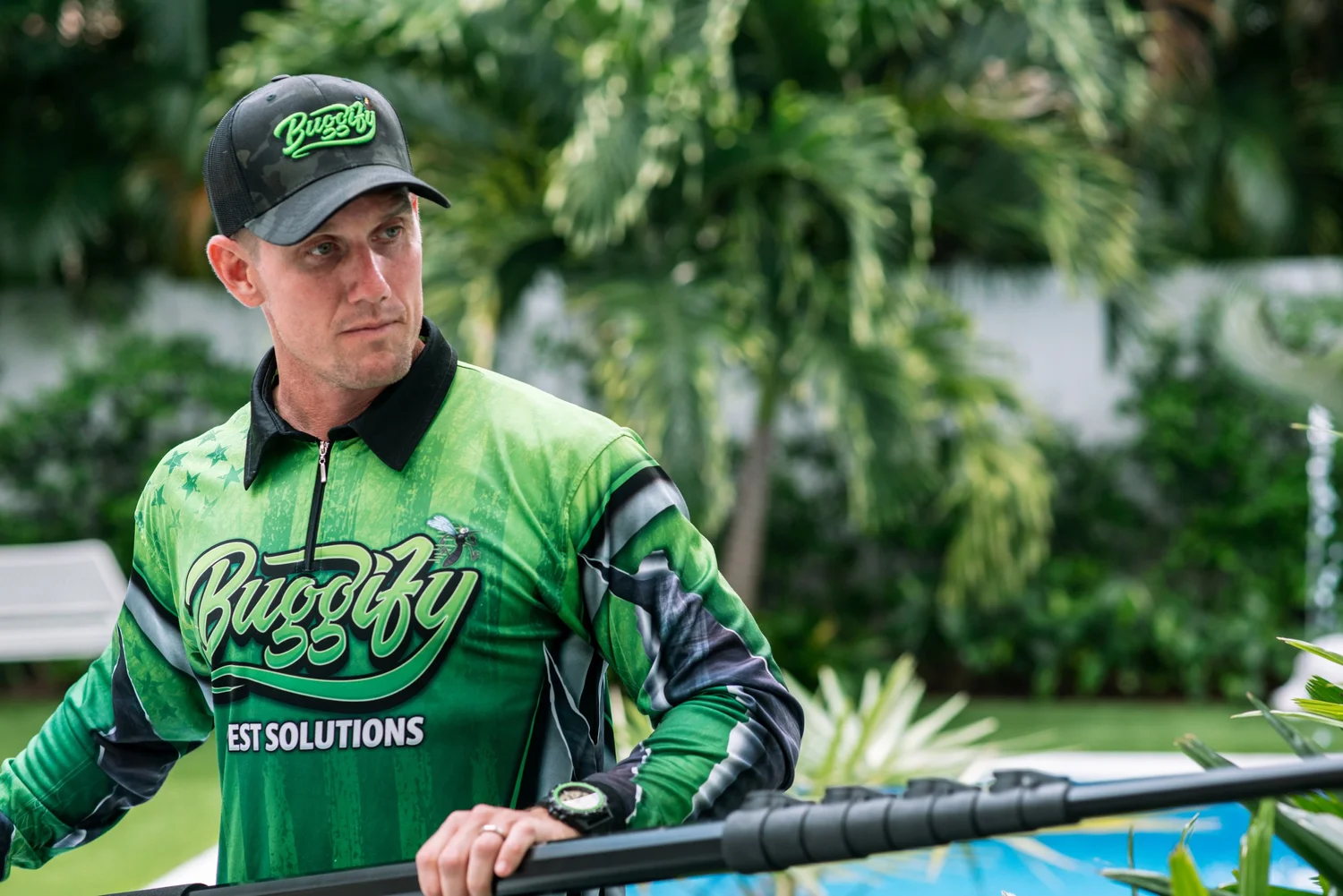
Call (561) 672-0200. Tyler answers, gives you a price range on the first call, and books your Coral Springs appointment into the next dispatch window (standard scheduling runs same-week; stinging-insect emergencies get prioritized).
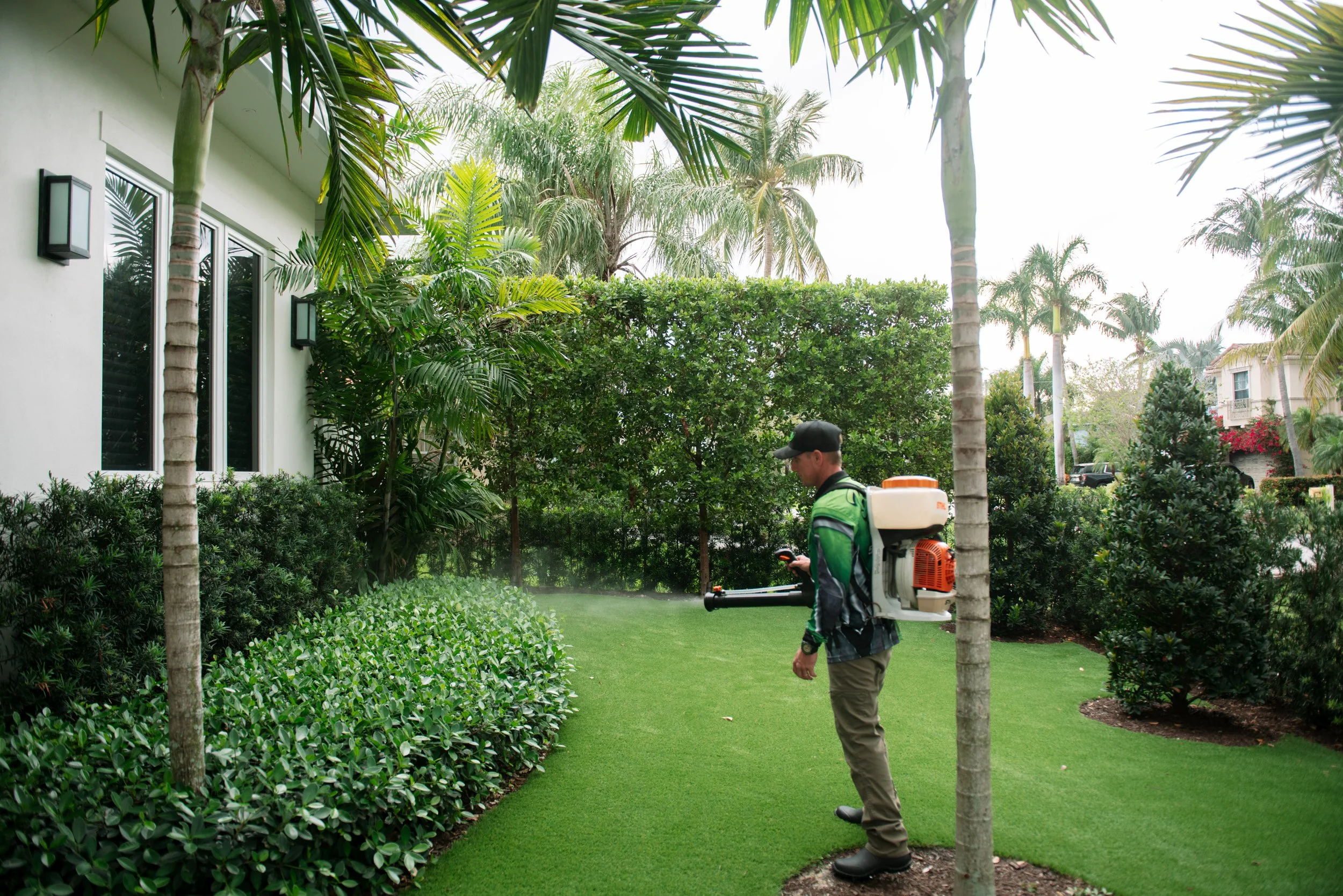
Coral Springs lawn pest FAQ
Why does my park-adjacent lawn get sod webworm damage more often than my inland neighbors?
City park green space functions as reservoir habitat for adult sod webworm moth populations during the July-September ovipositing window. Park-adjacent residential lawns experience increased moth pressure and, consequently, more larval activity, extending the treatment window into early October in some years.
Can you help me respond to an HOA lawn-health notice with treatment documentation?
Yes. A written condition-of-treatment note documenting turf species, pest identification, product selection, and application method is standard for any diagnostic call. Suitable for HOA architectural review submission and property-owner response to lawn-health notices.
What's the difference between sod webworm damage and chinch bug damage?
Chinch bug damage spreads outward from a sunlit edge as adult and nymph populations expand across weeks. Sod webworm damage appears overnight as sudden brown patches across mown surfaces from larval feeding. Diagnostic inspection at the grass-blade base confirms which is active.
How often do Coral Springs lawns need chinch bug or sod webworm treatment?
One to two treatment cycles per year on both is typical, timed to the May-October chinch bug pressure and July-October sod webworm activity. Park-adjacent properties often benefit from a coordinated seasonal inspection cycle rather than reactive treatment.
Do you work with Coral Springs HOA property managers on scheduled landscape cycles?
Yes. HOA property manager coordination is standard, especially on shared common-area work. Preemptive inspection ahead of scheduled landscape cycles cuts emergency-call volume during peak pest windows.
Will treatment residual affect our pollinator gardens or butterfly hosts?
Direct-application treatment targets the specific pest zone (turf, hedge base) and does not broadcast across adjacent pollinator gardens. Pollinator-safe timing on request for foliar work. Written condition-of-treatment note documents the specific application method and location.
Do you treat palm scale on Sabal and queen palms too?
Yes. Palm scale monitoring for Sabal, queen, and coconut palms is a standard part of the Coral Springs ornamental package. Systemic and foliar treatment options depend on palm species and infestation stage.
What about lawn fungal issues, is that the same as pest control?
Lawn fungal disease (brown patch, dollar spot, take-all root rot) is a separate diagnostic and treatment category from insect pest control. Diagnostic identification distinguishes fungal from insect pest; some diagnostic scenarios require a fungicide referral rather than an insect treatment.
Direct line to the technician serving Coral Springs
Phone: (561) 672-0200 (Tyler answers) · Mon–Fri 8 am – 5 pm
Email: Getbuggify@gmail.com
Address: 22617 Middletown Dr., Boca Raton, FL 33428 (West Boca shop, primary dispatch)
License: FL DACS #JB268060 · Certified Operator: Tyler Craig
Call (561) 672-0200 or submit the form below for a free phone estimate. Tyler answers directly. Coral Springs dispatch is owner-operator across a route from the West Boca shop, so appointments are pre-scheduled rather than drop-in; most standard jobs book for the same week.