

Do You Need to Be Home for Mosquito Treatment? It's About Access
Quick Answer: For a routine exterior mosquito visit, no, you don't need to be home. The technician needs access to the yard, not your front door. What actually stalls a visit is a locked gate.
Your mosquito visit is scheduled sometime between one and four on a Tuesday, and you have a two o'clock call you can't move. Or the side gate has a padlock the technician has never been given a code for. Or the dog has the run of the backyard from breakfast until dinner, and nobody wants to deal with that on a workday. These are the real questions before a mosquito treatment: not what product gets used or how long it lasts, but whether someone has to burn an afternoon off to let a stranger into the yard.
Once you take presence off the table, the real planning question is access. Below is what a routine visit actually requires, the specific things that block it, and when showing up in person still helps.
Most Routine Visits Do Not Require You to Be Home
A standard mosquito visit is exterior work. The technician walks the perimeter of your property, checks the spots where mosquitoes rest during the day, including under your shrubs, along your fence lines, and in your shaded beds, and treats those areas along with any breeding sources found in the yard. Nobody has to open a door, and nobody has to have a conversation, so if the yard is reachable, the visit happens whether you are at your desk, out running errands, or on the other side of town. That holds until something on the property blocks the technician's path to an area that needs treatment.
Locked Gates and Side Yards Are the Real Variable
Every visit covers a route: your front beds, the side yards, the fence line, the back perimeter, whatever foliage your mosquitoes rest in throughout the day, and any standing water or container sites around the property. The technician needs a clear path through each of those zones, and none of them run through your house. So the question that decides whether your visit is complete is not whether you were home for it. It is whether every zone on the route could be reached from outside.
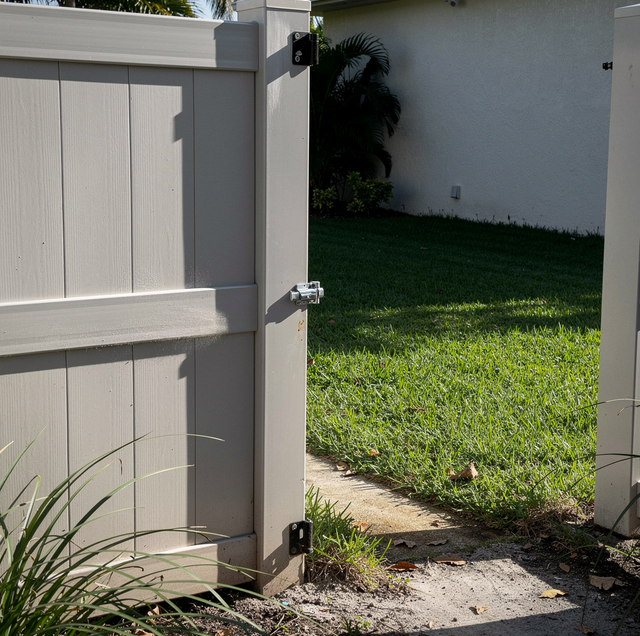
A locked side gate with no code on file is the single most common reason a routine visit ends up half finished. If the technician arrives and the only way into your backyard is through a gate that will not open, the front of the property gets treated, and the back does — not because nobody asked, but because there was no way through. The same applies to a locked pool cage door, a chained utility gate, or a side entrance boxed in by stored furniture or bins that block the path.
You never have to stand in the yard while the work is being done. What the visit needs is an open path before the technician arrives, whether that means leaving a gate unlatched for the afternoon, handing over a code, or saying which route to use. Settled once, that usually holds for the visits after it, monthly or bi-monthly, with nothing more from you.
Where a half-finished visit shows up is a week or two later, and rarely where you would look for it. The front of your yard reads fine while the fence line behind the locked gate never got touched, so the biting keeps coming from one direction, and the treatment looks like it stopped working. It did not stop working. It did not reach back there.
Gated Communities Add a Step, Not a Requirement to Be Home
A meaningful share of the properties a technician services in Boca Raton, Parkland, and other gated or HOA communities across the area sit behind a guardhouse or an entry code. That changes how the technician gets to the property. Whether you need to be there for the visit itself is untouched by it. For a recurring account, the usual arrangement is getting added to a resident's guest list or gate list so the technician can enter on the scheduled day without a phone call each time, or being given a code that works for the life of the service.
The one thing worth confirming with your community's front gate is how long a standing entry stays active, since some guardhouses require it to be renewed periodically. Once that is set, a visit inside a gated community runs the same as any other visit. The technician reaches the yard, works the route, and leaves.
Pets, Pool Cages, and What Sits in the Yard
If there is a dog with outdoor access, the technician either works around it or, if you have asked ahead of time, times the visit around when the dog is usually out: morning before a walk, or evening after it has come in for the night. That is a scheduling conversation. Your being there in person has nothing to do with it. Outdoor pet bowls, hoses, toys, and yard furniture do not need special handling before a visit; the technician steps around ordinary items without moving them and will flag anything that actually blocks a section of the route.
Screened pool enclosures are their own case. The screen changes where the treatment lands. The technician treats the screened zones where the cage is open to him and works the exterior perimeter where it is not. If the enclosure itself is locked and the interior landscaping needs attention, that is worth mentioning when you schedule, just as a locked gate is.
If you are home during the visit, stay clear of the treatment path while the technician is working. Backpack and fogging equipment throw a fine mist, and standing near the technician means walking through it.
When Being Home Actually Helps
There are visits where your presence changes the outcome. A first visit to a new property is one: walking the yard with the technician for a few minutes means pointing out the side yard he would not otherwise find, the shed with no clear path, or the corner where the mosquitoes seem worst for reasons a quick perimeter pass would never surface. A new or worsening problem is the other: if activity has picked up in one specific part of your yard, being there to show him exactly where saves a return trip. On a routine monthly or bi-monthly visit, though, standing in the yard adds nothing, because the technician already knows your property and your route from the previous visit.
What a Service Note Covers When You Were Out
A completed visit still leaves a record of what happened: the areas treated, any breeding sources found and addressed, and, if something could not be reached, what that was and why. A locked gate that stopped the back half of your yard from being treated is the kind of thing that belongs in that note, so you learn it there. The alternative is learning it from mosquitoes still working the fence line two weeks later.
That note is also where you would learn about anything outside the routine scope, from a zone held over to the next visit to a condition on the property that changed since the last one. Reading the note after a visit you were not home for is the fastest way to know whether anything needs your attention before the next one.
Frequently Asked Questions
He will not force a gate or climb one, so what happens next is administrative. The visit closes out as partial, and the note is where the mechanics live: which zones were reached, which were not, and why. That record is what your next appointment gets scheduled against, so the untreated half carries forward as an open item and does not quietly vanish between visits. If you want the missed section picked up before your next scheduled date, say so once you have read the note. A return for one held-over zone is booked as a short stop; it does not reset your interval, and it does not use up your next full visit.
The technician gets as far as the keypad and stops, and depending on which gate changed, your visit either runs partial or does not run at all. Boards rotate guardhouse codes on their own timetable, and households change theirs after a contractor finishes or a key goes missing, and neither of those events sends anyone on your service schedule a notice. The practical habit is passing the new code along the same day you change it, the way you would with anyone else who has standing access to your yard. A code changed on a Friday and shared the following Wednesday means one visit in between that never fully happened.
A pond edge, a fountain basin, or a decorative bowl in your front bed is handled differently from a plant saucer, because water that holds fish or drains toward something larger is not treated the way water sitting in a container is. Expect it to be noted, and expect the shallow, still margins to get looked at on every visit, since that is where larvae actually sit. The moving middle rarely holds any. What helps most is telling the technician which of your features run a pump year-round and which ones you shut off for the cooler months, because a fountain that stops circulating in November is a different site by December.
It changes the route order more than anything else. A corner lot gives you two street-facing sides and usually still only one gate, so the technician works both front exposures first and then has a single way through to everything behind them. That makes your one gate a tighter bottleneck than it would be on an interior lot: on a mid-block property a blocked gate loses you the back yard, and on a corner lot it can lose you everything behind both street frontages at once. If your gate opens onto the street side, say so when you set up access, because that route runs in a different order from an interior-side gate.
An open trench or a pulled-apart valve box changes the route and changes what is worth treating that afternoon. A strip of freshly turned soil that is about to be walked over, hosed down, and backfilled within the hour is not a surface anyone puts a residual on, so the technician treats around it and notes the section for next time. The part worth knowing is what the repair leaves behind: an excavation often holds pooled water for a day or two afterward, and that is exactly the kind of fresh site the next visit looks for.
Mostly the order of your route, and occasionally one section. A crew mid-trim on your hedge line is removing the exact foliage a residual would be going onto, so that hedge usually gets left for the next visit and noted. You do not need to reschedule either service. If your crew comes every other Thursday, saying so once is enough to get the two visits staggered on the calendar so they no longer collide in your yard.
Sort the access out once, and the rest of the season runs without you — no rescheduling, no missed sections, no guessing what got covered. Buggify Pest Solutions serves Boca Raton, West Boca, and communities across Palm Beach and northern Broward. Call Tyler: (561) 672-0200.
