

Does Peppermint Oil Repel Rats? Mothballs and the Rest
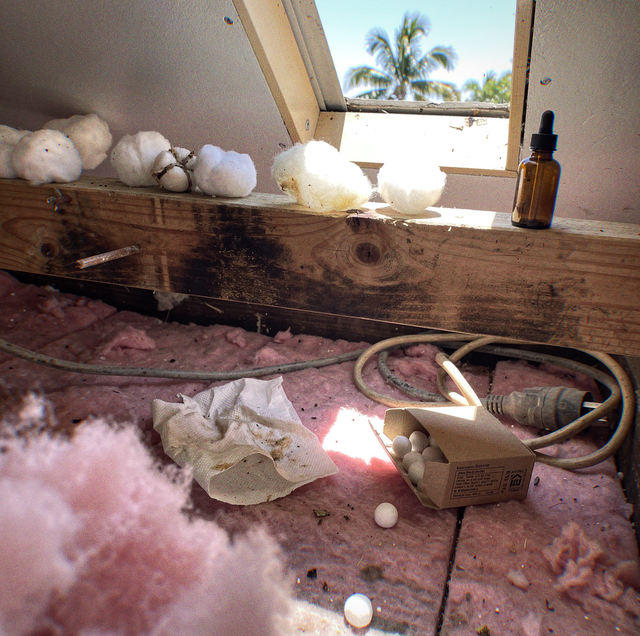
Every remedy on this list starts from something true. Rats do rely on smell more than on sight. Mothballs are a pesticide, and they do give off a vapor that kills insects. Ultrasound is real, and rodents hear it. Someone who reaches for one of these is reasoning forward from a fact that holds up. The break comes at the step between the premise and the promised result.
Quick Answer: University extension programs and state IPM publications do not list peppermint oil, mothballs, or ultrasonic devices as rat control methods. UC IPM's position is that an initial aversion to some odors does not last long enough to solve a rat problem.
They also persist because rat activity in a ceiling is not steady, so anything applied during a stretch when it drops collects the credit. And failures do not circulate. The attic that went quiet after a weekend of cotton balls gets talked about. The one still noisy at two in the morning does not.
Peppermint Oil and a Rat's Sense of Smell
Peppermint oil is usually recommended for suspected entry points, and the premise behind it is sound. The Internet Center for Wildlife Damage Management, run through university extension, describes rats as relying more on smell, taste, touch, and hearing than on vision, and notes that they use smell to identify territories and travel routes.
The UC Statewide IPM Program's Pest Notes on rats is where it turns. Rats have an initial aversion to some odors and tastes, that publication says, but no repellents have been found to solve a rat problem for more than a very short time, and no truly effective rat repellents are registered for use in California. That is a calibrated statement rather than a flat denial. It grants the aversion, then says it does not last.
Peppermint oil specifically is where the record thins out. No university IPM program lists it as a control method for rats, and the work circulated in its favor tends to be small arena testing under laboratory conditions rather than trials in occupied houses.
The Rest of the Remedy Shelf
Cayenne, ammonia, scented bar soap, dryer sheets, used cat litter, bottled predator scent, and the plug-in devices sold on the same shelf. They look like different ideas, and they are one: that something unpleasant enough to bother an animal can be held in one spot at a useful strength. The UC IPM finding covers the whole class, whether the issue is odor or sound.
Ammonia is usually explained as standing in for predator urine. In an enclosed part of a house, it is a hazard in its own right. Predator-scent products meet a simpler objection: rats and cats routinely occupy the same property. Bar soap and dryer sheets have no support in any extension publication.
Ultrasonic Devices, Briefly
UC IPM reaches the same conclusion by a different route. Rats are easily startled by unfamiliar noises but quickly become accustomed to repeated sounds, which is why frightening devices, including ultrasonic ones, are ineffective in homes and gardens. The Federal Trade Commission has separately warned makers and sellers that efficacy claims for these devices must be supported by scientific evidence, and a fuller answer on plug-in repellers sits in the article on why roof rats keep coming back.
Mothballs, Naphthalene, and What the Label Is for
The National Pesticide Information Center, run at Oregon State University under a cooperative agreement with EPA, describes mothballs as pesticides containing very high concentrations of naphthalene or paradichlorobenzene. They work by slowly turning from a solid into a gas that kills clothes moths and other fabric pests, and NPIC states that they are meant for closed, airtight containers where the fumes remain trapped around the fabric.
NPIC states that the label of any pesticide specifies exactly where and how it can be used, and that the use described on the label is for fabric pests inside a sealed container. Rodents are not on it. Using a pesticide in a way its label does not allow is not appropriate use, and that is as far as this article goes. NPIC also says plainly that mothballs are not wildlife repellents and that, when used in the open, they can harm people, pets, or wildlife that touch them, eat them, or breathe the vapors.
Mothballs scattered loose in an attic, a crawlspace, or a yard are pesticides left where children, dogs, and cats can reach them. NPIC is clear that open use can harm people, pets, and wildlife. Do not use them this way.
The Internet Center for Wildlife Damage Management answers the effectiveness side. Mothballs do annoy mammals, but high concentrations are needed before the annoyance amounts to anything, and reaching those levels indoors would drive the people out along with the animal. That source does not recommend them for nuisance wildlife, on safety grounds and because of what the product is labeled for, and notes how often professionals are called in after an owner found they had no effect.
Why Scent Deterrence Fails against an Established Route
Underneath every remedy above is one shared weakness. A repellent asks an animal to give up something it already holds.
The odor world a roof rat moves through is largely one the rat produced. Extension material on roof rat biology notes that smell is how these animals identify territories and mark travel routes, so the run it uses is already scented by the animal, in a way that means something to it. A new smell across one point of that run does not erase the marking along the rest of it.
Where it leads matters too. A ceiling cavity is dry, dark, and out of reach of most predators. Against a site like that, an odor is something the animal weighs rather than something that stops it.
So the question a repellent poses is not whether the animal can smell it, but whether the smell is worse than losing the site. An animal weighing those two is not being kept out. It is being asked, and it is free to answer no. That is the difference between a deterrent and a closed opening.
Where the Evidence Is Thin, and Where It Is Not
Thin: peppermint oil under real conditions. The study most people want does not exist, and an absence of recommendations from extension services is not the same as a trial returning a null result. The accurate position is that peppermint oil has not been shown to control a rat problem, not that it has been shown to do nothing.
Not thin: the general finding about odor repellents and rats, which is the published guidance of the largest state IPM program in the country and is unambiguous on durability. The mechanism behind it, an animal ceasing to respond to a stimulus it keeps meeting, is the one that publication also applies to sound. The mothball case is not an evidence question at all, being settled by what the product is registered and labeled to do.
The burden runs one way. It is not on a homeowner to prove a remedy fails. It is on the remedy to show that it works, and for this group that showing has not been made.
What Actually Ends the Activity
The guidance converges on one recommendation, and UC IPM states it directly: exclusion is the most successful and longest lasting strategy for rat control around structures. That is a different kind of claim from a repellent's: it does not rest on what the animal decides.
The work is a trapping period and a closure. A roof rat trap-out generally runs four to six weeks with monitoring every seven to ten days, and correct sealing typically holds ten years or more, a different order of durability from a bottle reapplied on a schedule nobody can define.
Frequently Asked Questions
An attic is built to move air. Intake low at the soffit line and exhaust higher up keep a current running through the space. A volatile compound released into moving air cannot maintain a concentration; it is continuously carried off and replaced by outside air, and South Florida heat speeds that loss. What gets called a barrier is a point source in a ventilated room, not a line across it.
It is strongest the moment it goes down and falls off, which is why the stretch right after an application is what people remember. The compound evaporates, so the concentration at the treated point drops steadily thereafter. What nobody can supply is the renewal schedule that would keep pace with it. A reapplication interval is the sort of direction that comes off an approved pesticide label, and nothing sold for rodent repellency carries one, so the timing is guesswork. There is no way to tell whether a fresh application is ahead of the decay or well behind it.
It is on the wrong side of the barrier. Anything placed at an opening is aimed at entry, and an animal with a nest inside made that trip some time ago. The treated point becomes something it passes going out and coming back, not a boundary. Litters push it further the wrong way, since roof rats reproduce every 21 to 25 days, and none of the new ones arrived through the treated opening.
A nest relocating to another section of the same attic, a litter maturing and dispersing, or activity shifting into a stretch of the night when nobody is awake to hear it: any of those leaves the same quiet ceiling a departure would. Quiet is what the claim almost always rests on, and it does not distinguish those cases. A trapping period does, because a trap set on the route either keeps producing or it stops.
Less, in the direction that matters. A living plant keeps its volatile compounds inside leaf tissue and releases them mainly when a leaf is crushed, at a small fraction of the rate of a concentrated extract poured onto a surface. An undisturbed mint bed is not a treated area. There is also a trade-off the other way, since dense low planting against a wall adds cover at grade.
As a regulatory matter, they are often not much different than the packaging implies. Peppermint oil is among the active ingredients EPA allows in products sold under its minimum-risk exemption, and EPA states that it does not conduct pre-market review of those products or their labels. So an effectiveness claim on a shaker of granules has generally not undergone the evaluation that registered pesticide claims go through.
Trade the remedy shelf for a read of the roofline — an inspection ends with a closure plan instead of a reapplication schedule. Buggify Pest Solutions serves Boca Raton, West Boca, and communities across Palm Beach and northern Broward. Call Tyler: (561) 672-0200.
