

Buzzing Inside Your Wall? How to Know It's a Wasp Nest
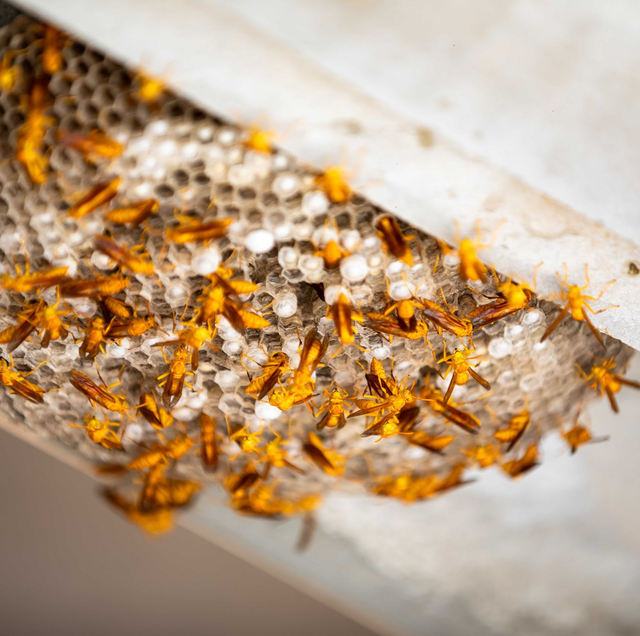
You hear it before you see anything: a low, steady hum coming from somewhere inside the wall, loudest on a warm afternoon, faint enough that you keep stopping to ask whether you imagined it. Then you notice the traffic outside. A thin, purposeful line of wasps is slipping in and out of one small spot on the exterior, a crack in the stucco, a weep hole at the base of the brick veneer, the little gap where a cable or hose bib passes through the wall. The insects are outside. The sound is inside. That combination almost always means the same thing: a colony has moved into the hollow space between your walls.
Working out whether wasps are truly nesting in that void, and not just landing on the wall, changes everything about what you should do next. It also happens to be the moment when the most common first move is the wrong one. Below are the signs that point to an in-wall nest, why wasps pick these hidden cavities, the two things you should not do while you figure it out, and what a professional does to clear one safely.
The Signs a Nest Is Actually Inside the Wall
Any single sign can be a coincidence. When several stack up together, you are looking at an established colony behind the drywall, not a few wasps exploring.
- A buzz or vibration that seems to come from the wall itself: Not from a window or a vent, but from inside the surface, sometimes strong enough to feel with a palm flat against the drywall. It tends to rise on warm afternoons when the colony is most active and drop off after dark.
- Steady two-way traffic at one small opening: Watch the outside of the house. If wasps stream in and out of a single point, a weep hole, a soffit vent, a fascia gap, a stucco crack, or the gap around a pipe or conduit, in a consistent flight line rather than scattered around the yard, that opening is a nest entrance.
- More wasps than usual turning up in one particular room: A few stragglers pushing out through an electrical outlet, a light fixture, a return-air grille, or a baseboard gap means the wall void where the nest sits connects to your living space. They are following light and airflow inward.
- A damp or greasy-looking stain bleeding through drywall or a ceiling: As the colony grows, larvae, chewed pulp, and moisture build up inside the cavity. A soft, discolored patch spreading on the wall or ceiling is a late sign that the nest is large and pressing against the interior surface.
- The activity climbs week over week: A handful of wasps in spring that becomes a busy, humming entrance by late summer is the pattern of a colony that has settled in and is adding workers. Passing wasps do not intensify like that.
Why Wasps End Up Inside a Wall
A wall void is close to ideal shelter from a wasp's point of view. It is dark, dry, insulated against temperature swings, easy to defend because there is only one way in, and roomy enough to expand into. Soffits, attic corners, and the hollow behind exterior cladding all offer the same thing.
The wasps you find doing this are usually yellow jackets, most often the Eastern and German species. A founding queen finds a gap, sometimes no wider than a pencil, and starts a small papery comb inside the cavity. As her first workers mature, they take over the building, chewing wood and plant fiber into pulp and enlarging the nest layer by layer through the season. This is the key point for identifying an in-wall problem: paper wasps build open, umbrella-shaped combs out in the open under eaves and railings, and mud daubers build mud tubes on exposed surfaces. Neither hides a nest inside a sealed void. So a colony that lives entirely behind the wall and only shows itself at one entry hole is almost always a cavity-nesting yellow jacket, which matters because those are the ones that sting repeatedly and defend the nest as a group.
The Two Moves That Make an In-Wall Nest Worse
Once people are sure wasps are in the wall, the instinct is to shut them in or drown them out. Both backfire, and both are worth understanding before you touch anything.
Do not seal the entry hole: Caulking, foaming, or stuffing the opening feels like the obvious fix, and it is the single worst thing you can do to a live in-wall colony. Trapped workers do not give up. They move toward light, cooler air, and any weakness they can find, and the softest surface available is usually the drywall on the inside. Yellow jackets chew pulp for a living, so working through interior wallboard is well within their ability. Seal the outside exit, and you often turn a colony that was leaving the house into one chewing its way into the bedroom. You also lock hundreds of foraging workers out, agitated, circling the spot where their entrance used to be.
Do not empty a spray can into the hole: A blast of aerosol reaches only the wasps near the mouth of the void. It never touches the brood and the bulk of the colony deep inside, and a crushed or dying wasp releases an alarm scent that tells the rest to defend. You provoke the nest without ending it. Worse, on the chance you do knock down a large share of adults, you are left with a nest packed with dead larvae and workers rotting inside a closed cavity. That decay smells for weeks, can push a grease stain through the wall, and draws a second wave of scavengers into the void: carpet and larder beetles, ants, and rodents that feed on the remains.
How to Confirm It's Inside, Not Just Passing By
Before you conclude anything, spend a few minutes watching the suspected entry at dawn or dusk, when the colony is home, and the flight line is easiest to read. Genuine nest traffic is two-way and repetitive at the same point, wasps leaving empty and returning to the same gap. Insects that are only foraging land in different spots and do not funnel through one hole. A light tap on the interior wall near the sound will often make the hum swell for a second as the colony reacts, which helps you locate roughly where the nest sits. If what you find outside is a single mud tube or an open paper comb, it is not an in-wall colony at all and is handled differently.
What a Professional Does With a Void Nest
The safe method looks nothing like the DIY version, and the sequence is what keeps it safe. First, locate the nest precisely. That can mean listening and tapping along the wall, following the exterior flight line to the exact entry, and in trickier cases using an inspection camera fed through a small opening to confirm the void and its size before anything is applied. Second, treat the cavity through the existing entrance with an insecticidal dust rather than a liquid. Dust is chosen deliberately: it hangs in the void and clings to the bodies of workers walking through the entry, and they carry it back onto the comb and the brood deep inside where a stream of liquid would never reach, so the whole colony goes down over the following days instead of just the wasps at the door. Third, and this is the part homeowners skip, the entrance is left open while the colony dies off, so treated workers keep passing through it and spreading the material. Only once all activity has fully stopped is the old nest removed where it can be reached and the entry sealed with proper exclusion, so a new queen next season does not reuse the same convenient gap.
Reading the Wall Right
The reliable tell is the split you started with: sound on the inside, a steady stream of wasps at one small opening on the outside. When those two line up and the traffic is building, treat it as a live colony in the void and leave the entrance alone. Nearly every in-wall situation that turns into an opened-up wall, a rotting-nest smell, or wasps loose in the house started with someone sealing the hole or spraying it. The nest itself is a fixable problem. Trapping it, or half-killing it, is what makes it a much bigger one.
Frequently Asked Questions
A single overwintered queen usually starts the comb in spring, raises her first small batch of workers over several weeks, and hands off the building to them by early summer. From there the colony scales fast, often reaching several hundred to a couple of thousand wasps by late summer or fall. Because the early traffic is so light, most people do not notice the nest until it is already well established, which is why a faint, growing hum deserves a look rather than a wait.
It depends heavily on climate. In places with a true cold winter, the colony dies off at season's end, and the surviving queens leave to overwinter elsewhere, and yellow jackets do not reuse the same paper nest the next year. In mild, warm regions, the same colony can stay active far longer and occasionally carries through the winter, so waiting is not reliable. Either way, an abandoned nest left in the void still draws a new queen to a proven site and feeds secondary pests, so an empty wall cavity is worth clearing, not ignoring.
Yes, and it is the specific reason not to seal the outside hole. Yellow jackets chew wood and plant fiber into pulp as their normal building behavior, so working through building material is routine for them. Standard half-inch interior drywall offers far less resistance than the exterior stucco or masonry they first entered through, so once the outside exit is blocked, trapped workers can open a fresh path through the interior wallboard in a matter of hours to a day or two, not weeks. They head inward specifically because that soft surface, plus the light and airflow leaking from the living space, is the easiest way out. With the exterior entrance left open, they have no reason to breach the drywall at all, which is exactly why the open-hole rule matters.
The insects at the entrance tell you which problem you have, and one look-alike changes the plan entirely. Yellow jackets are smooth, hard-bodied, and brightly banded, and they stream in and out of a single gap. Honey bees also nest in wall voids and must be handled very differently. An in-void honey bee colony shows fuzzy, rounded, amber-and-black bodies rather than shiny ones, often hundreds coming and going on warm, sunny days, and over time it gives off a sweet, waxy honey odor or bleeds a slow honey-colored stain through the drywall as the comb grows. Honey bees build wax comb and cannot simply be knocked down: killing a hive in a wall leaves pounds of comb and honey to melt, stain, and draw pests, so a bee colony calls for live removal by a beekeeper or a licensed removal specialist. If the bodies are smooth and the nest is grey paper rather than wax, you are dealing with a cavity-nesting yellow jacket, sometimes a hornet, which stings repeatedly and mounts a group defense.
An insecticidal dust stays put in the cavity and coats the workers that walk in and out through the entrance, which carry it back onto the comb and the brood deep inside where a liquid stream would never reach. The technique matters as much as the material: the dust has to go in as a light film, because a heavy pile repels the workers, who then wall it off and route around it, leaving the colony untreated. It is also a professional-only product applied with a calibrated duster at the right entry point, not something a homeowner should puff into a wall void by hand, where the wrong amount or the wrong spot scatters an agitated colony without reaching the nest. A liquid stream, by contrast, only wets the surface near the opening and misses the core of the colony, which is why professionals reach for dust on voids.
If the void is reachable from an accessible soffit or attic space, removing the old comb and dead brood is worth doing because a decaying nest is what produces the grease stain, the weeks-long odor, and the carpet beetles, ants, and rodents that come to feed on the remains. A fully treated nest sealed inside a truly inaccessible cavity is sometimes left in place, with the entry then closed off so nothing new moves in. Which route makes sense depends on how the wall is built and where the nest sits.
Hear a steady buzz in the wall or see wasps working a single gap outside? Have the void nest located and treated before someone seals it in or gets stung, a licensed technician finds the entry, treats the colony with the right method, and leaves it open until it is safe to close. Buggify Pest Solutions serves Boca Raton, West Boca, and communities across Palm Beach and northern Broward. Call Tyler: (561) 672-0200.
