
Wasp, Bee & Hornet Removal in West Boca Raton
Africanized-bee species testing on aged tile-roof soffit swarms. Same technician (Tyler) on every job. Dispatch from the Middletown Drive shop is the fastest we run.
- FL DACS License #JB268060 · Certified Operator Tyler Craig
- Bayer Authorized Applicator (Termidor)
- $1M general liability insurance
- Google 5.0 Rated · live review feed
- Family-owned · 1,000+ South Florida homes served since 2018
- Pet-safe and family-safe treatments by default
- Free phone estimates · no long-term contracts
West Boca Raton's stinging-insect profile is defined by two overlapping conditions: aging tile-roof soffit voids in properties built through the 1980s–90s that offer sheltered nesting cavities, and continuous Africanized honey bee monitoring pressure across all of South Florida. Africanized colonies are visually indistinguishable from European honey bee colonies at the entrance, so a swarm found in a soffit or attic void requires species identification before any removal technique is chosen, a defensive Africanized colony reacts to vibration and CO₂ within seconds of a person approaching, and treatment sequencing matters. Tyler's protocol for any West Boca honey bee find is a species-identification pass first, live-relocation coordination with a beekeeper partner when the colony reads as European, and a controlled treatment approach when it reads as Africanized or when the colony is inaccessible for relocation. Dispatch runs from Middletown Drive, which has the shortest drive time in the service area, so West Boca stinging-insect calls flagged as allergic-occupant emergencies are typically on-site the same day.
Africanized-Bee Species Testing
European honey bee colonies get live-relocation coordination with a beekeeper; Africanized colonies get a controlled treatment approach. Species identification always comes first.
Aged Tile-Roof Soffit Void Specialty
West Boca's 1980s–90s tile-roof stock has soffit voids that are prime honey bee and paper-wasp cavity habitat. Access pathway matters.
15-20 Minute Dispatch (Home Market)
West Boca is Tyler's home dispatch market. Emergency stinging-insect calls involving allergic occupants get same-day response.
Same Technician Every Visit
Tyler runs every West Boca stinging-insect job, no rotating crew.
Direct Line to Tyler
Mon–Fri 8 am – 5 pm.
No Contract Lock-In
Bills per visit. Cancel anytime, no fees.
Why West Boca wasp and bee work leads with species identification
The single most consequential decision on a West Boca honey bee find is what species you're actually treating. Africanized honey bees (Apis mellifera scutellata hybrids) look identical to European honey bees at the hive entrance. Neither the size nor the coloration of individual workers tells you anything reliable in the field. What DOES tell you is behavior at the colony under mild disturbance, brood pattern once combs are exposed, and, when a definitive answer matters, DNA testing on collected workers through the University of Florida honey bee lab.
Africanized colonies defend aggressively at low provocation thresholds. A colony that reacts to a five-foot approach with defensive worker recruitment is not a live-relocation candidate; live relocation requires a colony a beekeeper can transport without endangering neighbors along the route. So the West Boca protocol has two decision points: (1) is this a honey bee colony or a paper-wasp/yellow-jacket nest, and (2) if honey bee, is behavior consistent with European lineage or with Africanized? The second decision drives the treatment approach.
Parent West Boca city hub covers general pest scope, tile-roof rodent work, and Lake Worth canal drainage mosquito breeding. This Tier 3 page focuses on the species-identification dimension the hub does not address at length.
Africanized species-test case: soffit swarm turned out European, live-relocated
The find
A West Boca homeowner in the Boca Chase area noticed heavy honey bee activity at a soffit vent near the front gable. Bees were entering and exiting continuously, and the homeowner had blocked the porch light for two nights to reduce activity around the front door. Tyler's initial phone assessment flagged the location and behavior as consistent with a swarm that had cavity-established, not a passing swarm cluster. Field visit next morning.
The species test and decision
On-site inspection at 30-foot working distance revealed steady worker movement without defensive recruitment on approach. Tyler collected 12-15 workers into an ethanol vial for morphometric analysis (wing venation angle, worker size measurement), behavior, and preliminary morphometrics, all of which read European. Tyler called the partner beekeeper, coordinated a live-relocation visit the following morning, and the colony was cut out through the soffit access panel, transferred to a nucleus hive box, and relocated to a permitted apiary. The soffit void was sealed with copper mesh and polyurethane after all bees were transferred.
Five West Boca conditions that shape stinging-insect work
West Boca's tile-roof stock, aging soffit voids, honey bee monitoring pressure, close-in dispatch, and HOA landscape practices each shape the wasp and bee protocol.
1980s–90s Tile-Roof Soffit Void Inventory
Most West Boca residential from that era has soffit voids that are prime cavity nesting habitat for honey bees and social wasps. Cavity access is the first inspection point.
Continuous Africanized Honey Bee Monitoring
South Florida sits within the established Africanized honey bee range. Species testing is not optional; it drives the removal approach.
Dense Palm and Landscape Cover
Sabal palms, queen palms, and shade trees on West Boca residential properties support aerial nesting by paper wasps and bald-faced hornets.
HOA Landscape Trimming Cycles
Boca Chase, Boca Grove, and other HOA communities schedule seasonal palm and hedge trimming that disturbs paper-wasp nests and generates removal calls in cycle.
Middletown Drive Home-Base Dispatch
West Boca is Tyler's home dispatch market. Emergency stinging-insect calls with allergic occupants get same-day response, the closest response window in the service area.
Five technical details specific to West Boca wasp, bee, and hornet work
Species testing, live-relocation coordination, soffit-void access, allergy-aware notification, and Africanized DNA-referral protocols each drive the West Boca stinging-insect standard.
Honey Bee Species Identification Protocol
Behavior observation at approach distance, worker morphometrics on a small sample (wing venation and worker size), and the UF Honey Bee Lab are the recognized authorities for DNA testing when a definitive answer is required. Species identification decision drives whether the colony gets live-relocation coordination or controlled chemical treatment.
Live-Relocation Coordination With Beekeeper Partner
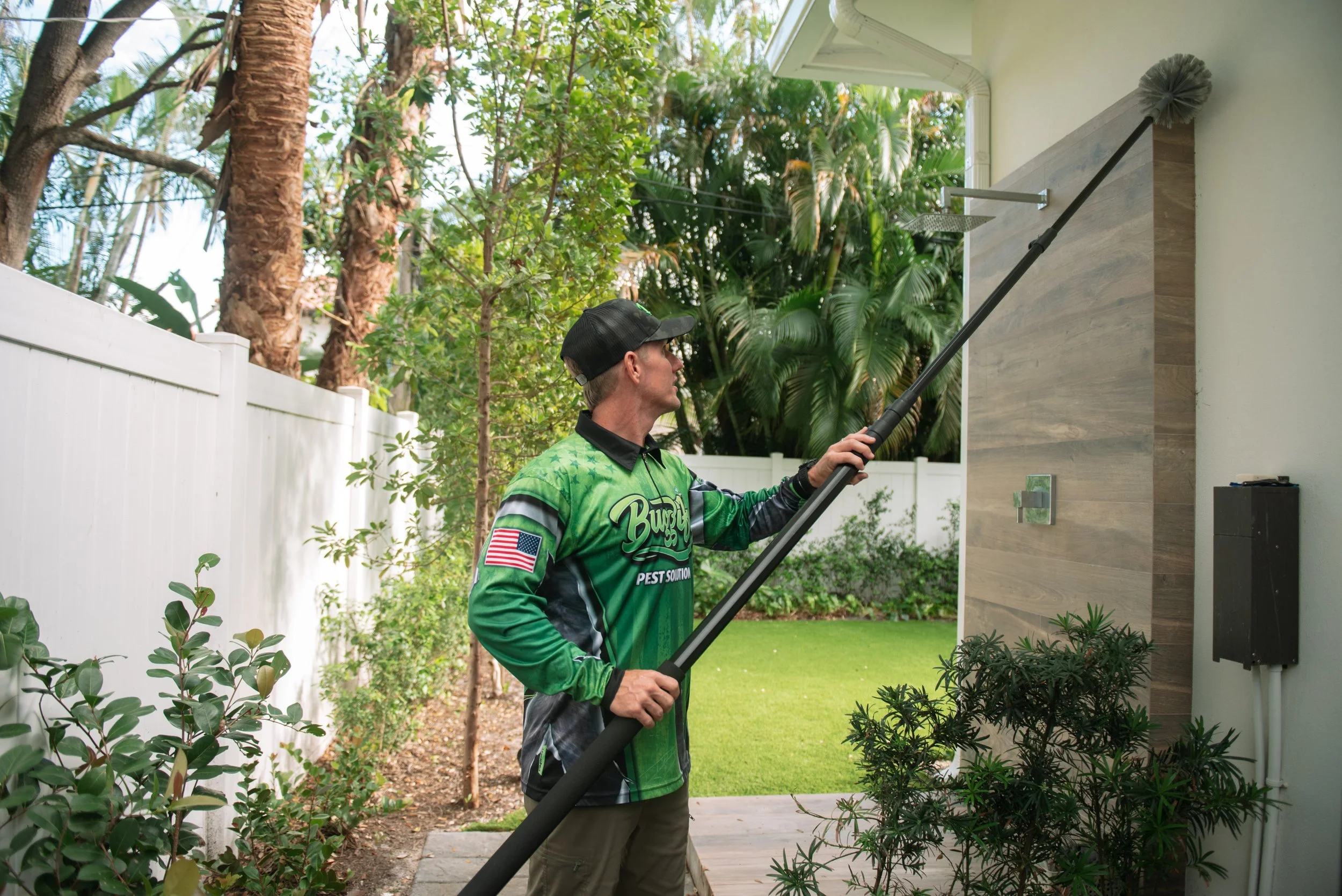
European honey bee cavity colonies routinely get live-relocated by a coordinating beekeeper, cut-out through soffit access, transferred to a nucleus hive box, and relocated to a permitted apiary. Buggify coordinates access, timing, and cavity sealing after transfer; the beekeeper handles the bees.
Soffit Void Access on 1980s–90s Tile Roofs
West Boca's aged tile-roof soffit stock has aluminum-clad or stucco-clad soffit panels. Access for cavity treatment or cut-out requires removing a soffit panel or drilling a bee-vac access hole; cavity sealing after treatment prevents re-cavity by successor colonies.
Allergy-Aware Occupant Notification
Before any treatment on a property with an occupant listed as bee/wasp allergic, Tyler notifies the occupant of the treatment window, entrance-avoidance timing, and post-treatment re-entry safety. Written condition-of-treatment note attached to the invoice.
21-Day Re-Establishment Return Policy
Stinging-insect nest sites sometimes re-establish if the underlying cavity or attractant condition isn't sealed. If a treated nest location re-establishes within 21 days, Tyler returns at no additional charge to re-treat and address the access condition.
Every West Boca wasp, bee and hornet issue Buggify handles
Six work profiles that match the West Boca stinging-insect load. Species identification precedes the specific treatment approach in every case.
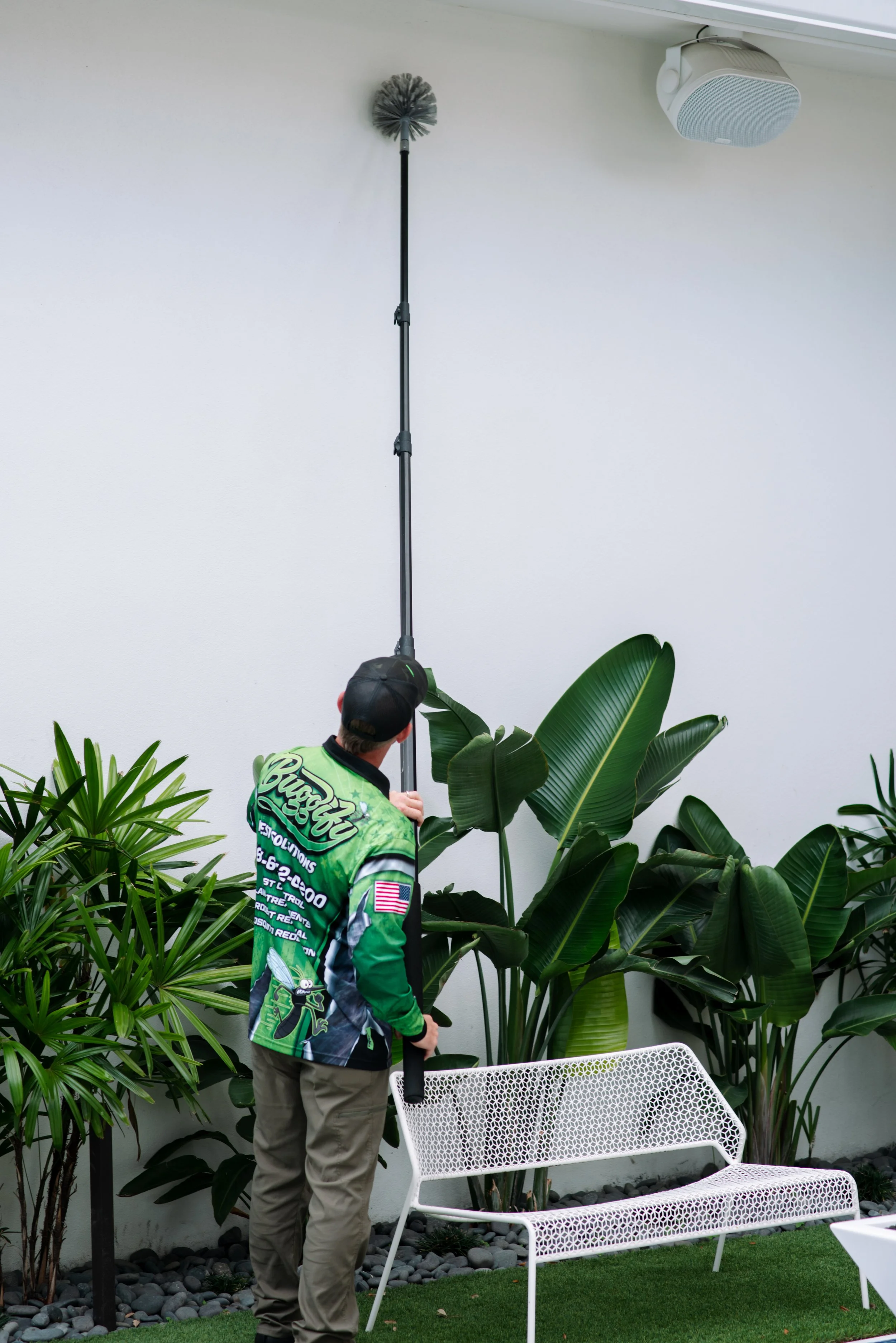
Honey bee soffit-void colonies (species-tested first)
Aged tile-roof soffit voids are the standard West Boca honey bee cavity. Species identification precedes any decision on live relocation vs treatment. European lineage → beekeeper coordination; Africanized or inaccessible → controlled chemical treatment with occupant notification.
Paper-wasp lanai and pool-cage nests
Umbrella-shaped Polistes nests on lanai ceiling corners, pool-cage frames, and patio-furniture undersides. Nest removal + residual on nearby surfaces prevents re-nesting for 30-60 days.
Yellow-jacket ground and eave nests
Aggressive underground yellow-jacket colonies near landscape edges, plus eave-line paper-wasp/yellow-jacket clusters. Nighttime treatment on ground nests; dust application on eave sites.
Bald-faced hornet aerial nests
Grey papier-mâché aerial nests in landscape trees and eave corners. Extended-reach spray applicator; removal after colony deactivation.
Carpenter bee wood-boring on cedar and pine trim
Fascia-board and pergola bore holes; distinguishing carpenter bee from termite frass matters. Residual dust in the tunnel + entry-hole sealing.
Mud dauber and cicada killer nuisance
Solitary wasp species that don't defend nests but leave mud tubes on stucco or ground burrows on turf. Removal + surface cleaning.
What West Boca wasp, bee, and hornet removal costs
Firm stinging-insect pricing follows an on-site inspection because access, nest location, hive size, and species drive the work required. A phone conversation gives a range and confirms whether emergency dispatch is appropriate.
Phone estimate
Free, Tyler gives a treatment range on the first call after confirming access, nest location, and suspected species. On-site inspection sets firm pricing.
Emergency dispatch note
Stinging-insect calls involving allergic occupants, children, pets, or aggressive swarm behavior get priority scheduling. Standard scheduling runs same-week.
Included in every job
Species identification (paper wasp, mud dauber, yellow jacket, hornet, honey bee, carpenter bee), nest removal, treatment residual, and a written condition-of-treatment note.
21-day return
If the nest re-establishes at the treated location within 21 days, Tyler returns at no additional charge.
Buggify vs. National Pest Chains
Seven-point comparison. Every row verifiable from how Buggify operates.
| Feature | Buggify in West Boca Raton | National Pest Chains |
|---|---|---|
| Who answers when you call? | Tyler Craig, the licensed operator | Call center or booking bot |
| Same technician every visit | Yes, Tyler runs every job | Different rotating techs |
| Live-bee relocation policy | Coordinated with a beekeeper before removal for honey bee finds | Kill-and-remove default |
| Africanized-bee protocol | Bee identification before treatment; DNA-testing referral available | Standard chemical treatment regardless |
| Allergy notification | Written allergy-aware protocol for occupants before treatment | Not standard |
| Return-visit policy on stinging insects | Included when a nest re-establishes within 21 days at no charge | Extra visit fee typical |
| Contract lock-in | None. Bills per visit; cancel anytime. | Annual contracts common |
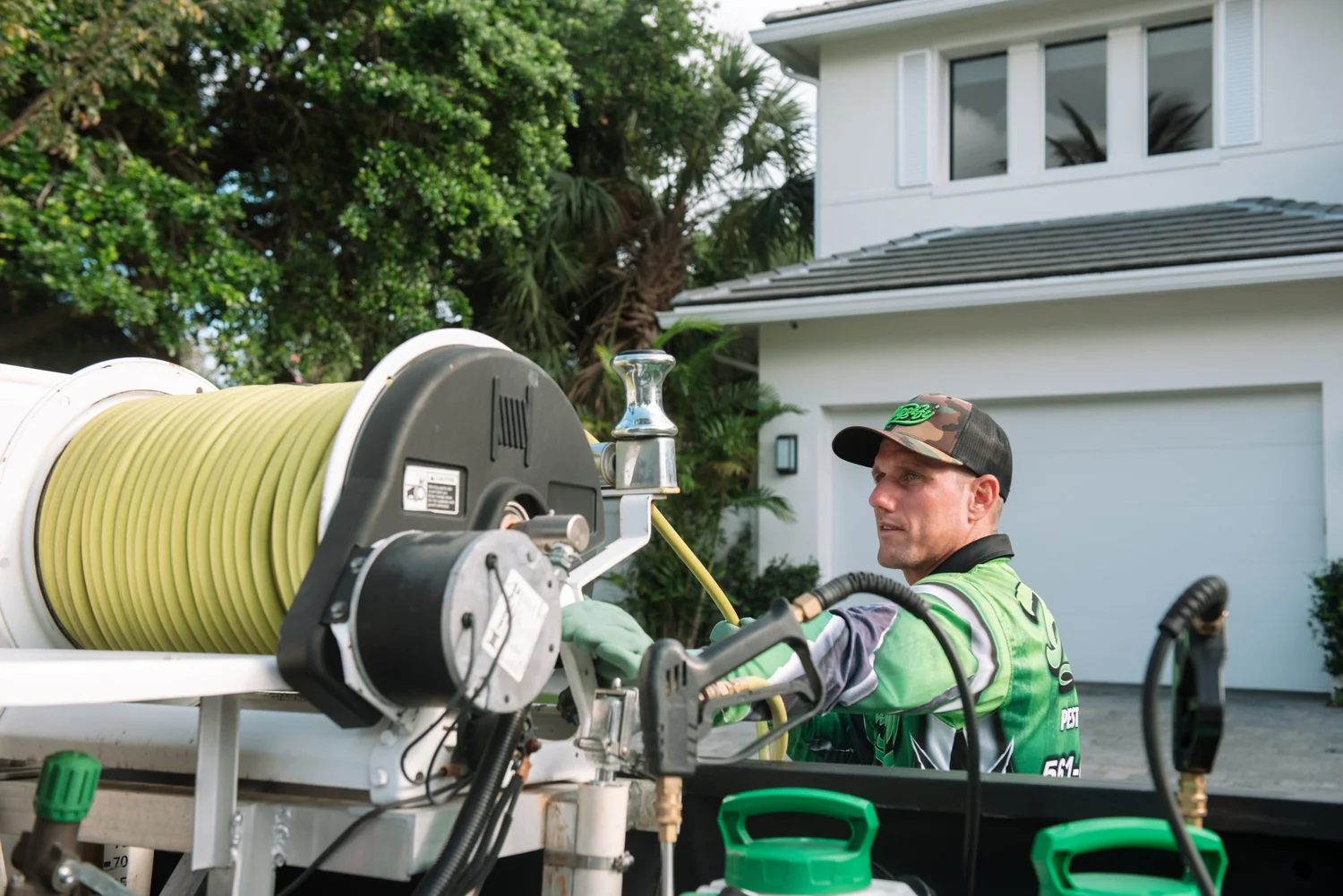
Read what West Boca Raton customers say on Google directly
Real Google reviews from West Boca Raton residents drive most of Buggify's new stinging-insect calls. Tyler answers, talks through the situation, and quotes a range on the first phone call. The live widget below pulls current reviews directly from Google, with a five-star average across all pest categories, with wasp and bee removal jobs mentioned frequently by name.
Three things Buggify will never do to you
Three things Buggify will never do to you (full list of seven on Why Choose Buggify):
Quote a real treatment price without inspecting the property first. Phone gives a range; firm pricing comes after an on-site walkthrough.
Indoor spraying when the source is outside. Most West Boca Raton pest pressure is driven by outdoor harborage; indoor-only work is a short-term cover-up.
Long-term contracts that lock you in. Bi-monthly plans bill per visit and can be canceled anytime, no fees.
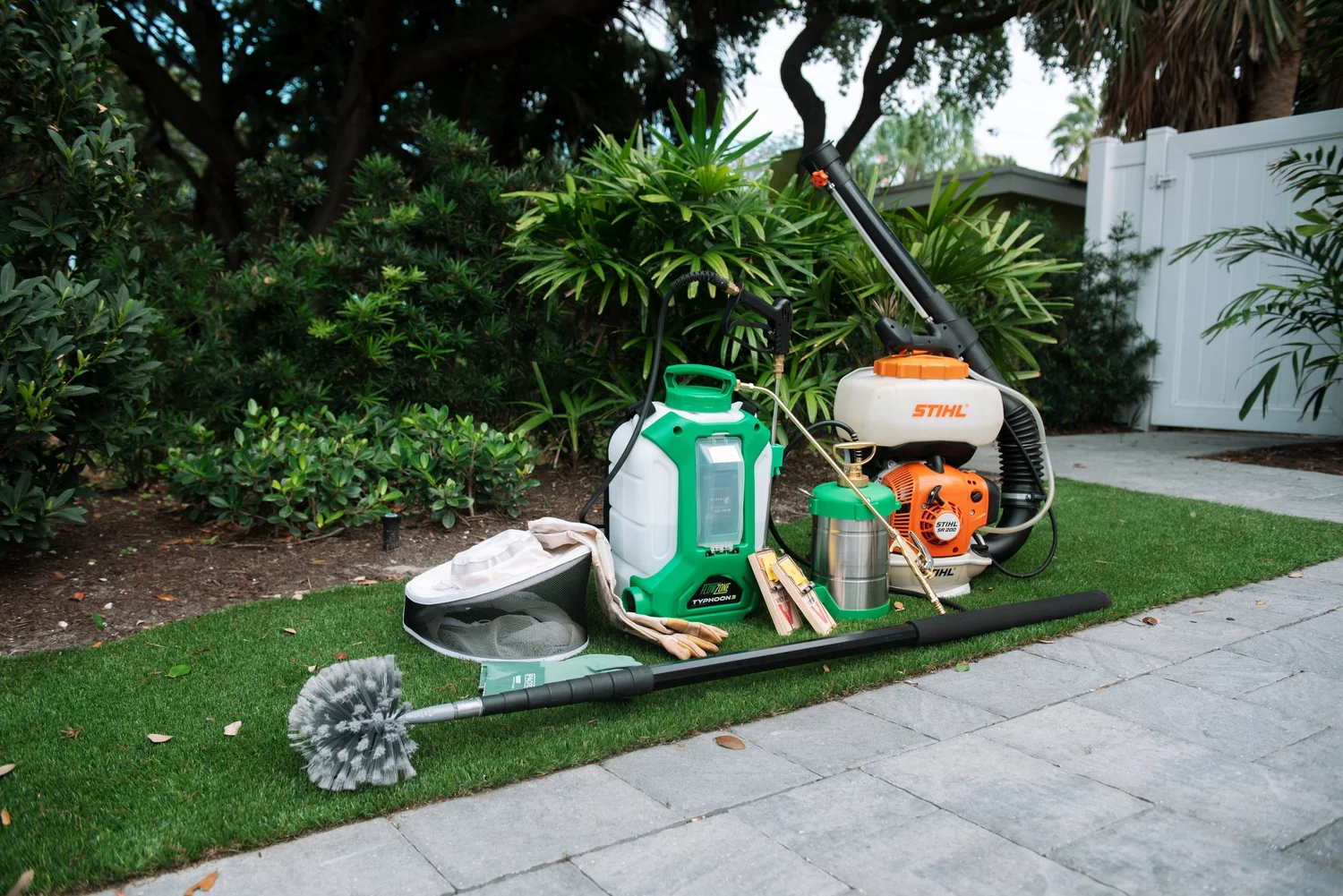
Call (561) 672-0200. Tyler answers, gives you a price range on the first call, and (in most cases) gets you on the West Boca Raton schedule the same day or the next morning.
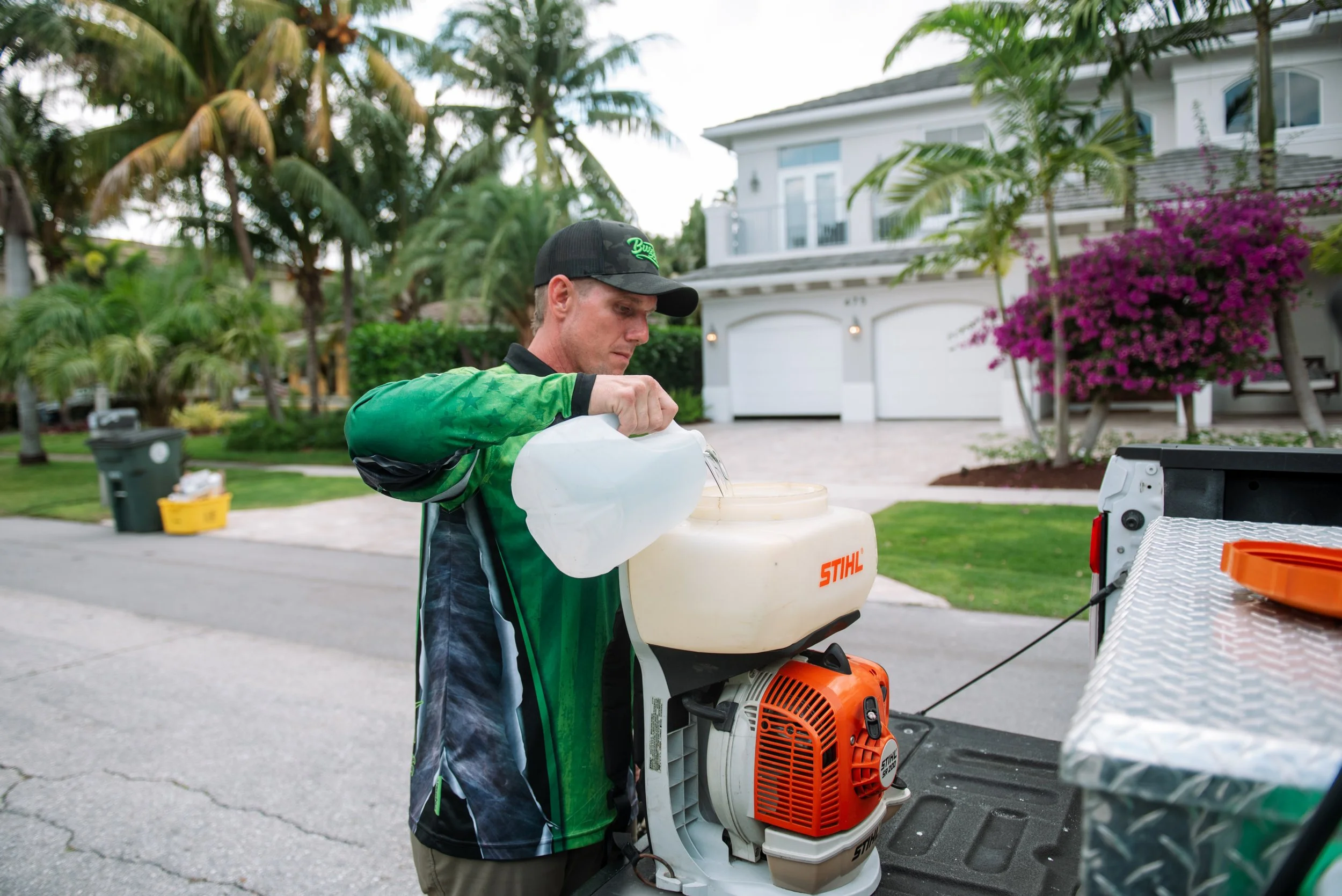
West Boca wasp, bee and hornet FAQ
How fast can Tyler get to a West Boca stinging-insect emergency?
West Boca is the closest dispatch market to Tyler's Middletown Drive shop, about a 15- 20-minute drive. Stinging-insect calls involving allergic occupants, small children, or aggressive swarm behavior get same-day response when we hear about them before mid-afternoon. Standard non-emergency scheduling runs same-week.
How do you tell an Africanized colony from a European colony?
Behavior observation on approach is the first pass; Africanized colonies recruit defensive workers at low provocation thresholds. Worker morphometrics (wing venation angle, size) on a small sample of collected workers gives a second-pass indication. DNA testing through UF's honey bee research program gives a definitive answer when the removal decision requires it.
Do you kill bees or relocate them?
European honey bee colonies exiting accessible cavities receive live-relocation coordination with a partner beekeeper whenever the colony is transportable and the location supports cut-out access. Africanized colonies and colonies in inaccessible or unsafe locations get controlled chemical treatment. The decision is made at the species identification stage.
What about carpenter bees drilling into my fascia boards?
Carpenter bees bore into softwood fascia, pergola beams, and cedar trim. Treatment is a residual dust in the bore hole followed by physical sealing of the entry point after the tenant is dead. Distinguishing carpenter bee bore holes from termite entry points matters; bore direction, hole size, and frass character are the diagnostic cues.
Will your treatment kill honeybee pollinators visiting my flowers?
No, targeted treatments are applied to the nest site or cavity entrance, not to the yard broadly. Pollinators foraging on flowering plants elsewhere on the property are not exposed to the treatment residual. Pollinator-safe application timing is available on request for hedge and lawn treatments.
Do you handle wasp nests in a hedge or shrub without killing the hedge?
Yes, direct nest treatment with targeted product application does not damage the surrounding hedge or shrub. Broadcast spraying of the shrub is not the treatment approach; targeted nest application is.
Direct line to the technician serving West Boca Raton
Phone: (561) 672-0200 (Tyler answers) · Mon–Fri 8 am – 5 pm
Email: Getbuggify@gmail.com
Address: 22617 Middletown Dr., Boca Raton, FL 33428 (West Boca shop, primary dispatch)
License: FL DACS #JB268060 · Certified Operator: Tyler Craig
Call (561) 672-0200 or submit the form below for a free phone estimate. Tyler answers directly and gets you on the West Boca Raton schedule the same day or next morning.