
Wasp, Bee & Hornet Removal in Margate
Multi-family townhome shared-eave wasp coordination + mid-century soffit-vent hive access on the aged 1960s-80s building envelope.
- FL DACS License #JB268060 · Certified Operator Tyler Craig
- Bayer Authorized Applicator (Termidor)
- $1M general liability insurance
- Google 5.0 Rated · live review feed
- Family-owned · 1,000+ South Florida homes served since 2018
- Pet-safe and family-safe treatments by default
- Free phone estimates · no long-term contracts
Margate's mid-century multi-family stock creates a specific stinging-insect coordination profile: townhome and low-rise condo buildings from the 1960s-80s share continuous eave-line, and soffit-vent runs across two to four units per building segment. A paper-wasp or hornet nest at any single unit's eave line is often within physical reach of adjacent-unit residents, which means treatment access, entrance-avoidance timing, and post-treatment safety windows must be coordinated across every affected unit, not just the reporting unit. Standard single-unit workflow, 'we'll treat your eave tomorrow morning', leaves adjacent-unit occupants unnotified and creates avoidable exposure situations. The Margate protocol coordinates with HOA property management on multi-unit stinging-insect work; written pre-treatment notification distributes to every unit in the physical treatment radius. Additionally, the aged mid-century soffit-vent inventory (unscreened or degraded-screen vents in the original construction) creates hive-access cavities that occasionally receive honey bee spring-migration establishment. Parent Margate city hub covers the 55+ shared-attic rodent coordination, mid-century humidity mosquito, and multi-family German cockroach inter-unit work in depth; this Tier 3 page focuses on the multi-family shared-eave and soffit-vent stinging-insect dimension.
Multi-Family Shared-Eave Coordination
Townhome and low-rise condo shared eave lines require coordinated notification across every unit in the treatment radius.
Mid-Century Soffit-Vent Hive Access
Aged 1960s-80s soffit-vent inventory creates cavity access for honey bee spring migration. Cut-out access and post-transfer sealing.
HOA Property-Manager Notification Distribution
Written pre-treatment notification distributed through HOA property management to all affected units.
Same Technician Every Visit
Tyler runs every Margate multi-family stinging-insect job.
Direct Line to Tyler
Mon–Fri 8 am – 5 pm.
No Contract Lock-In
Bills per visit.
Five Margate conditions that shape stinging-insect work
Multi-family shared-eave architecture, mid-century soffit-vent inventory, HOA property-manager coordination requirements, humidity-extended active season, and multi-family common-area landscape all shape the wasp and bee protocol.
Multi-Family Shared-Eave Architecture
Townhome and low-rise condo eave-line runs continuously across 2-4 units per building segment. Treatment radius requires multi-unit notification coordination.
Mid-Century Aged Soffit-Vent Inventory
1960s-80s soffit vents (unscreened, degraded screen, missing baffle) provide hive access cavities that occasionally receive honey bee spring migration establishment.
HOA Property-Manager Coordination Requirements
Multi-family common-area and shared-envelope work coordinated with property management, not directly with individual residents.
Humidity-Extended Active Season
Mid-century humidity retention in shaded eave-line and vented-attic zones extends the paper-wasp active season on the specific micro-habitat.
Multi-Family Common-Area Landscape
Shared landscape zones under HOA maintenance contracts. Nest work on common-area landscape coordinated with property management and HOA landscape crew schedules.

Multi-family case: 5-unit shared-eave paper-wasp treatment with HOA notification distribution
The trigger
A Margate townhome cluster reported an active paper-wasp umbrella nest at a shared eave-line. Inspection identified two additional active nests along the continuous eave-line spanning five townhome units in the same building segment.
The coordination
HOA property manager coordinated written pre-treatment notification to all five units 48 hours ahead of the scheduled treatment window. Entrance-avoidance timing (2 hours during treatment application) and post-treatment re-entry safety (4 hours) specified for each unit.
The treatment window
Tyler dispatched at the pre-communicated window, mid-morning weekday. Three nest sites treated during a single 90-minute access pass along the shared eave line. Direct nest application; no broadcast on adjacent siding or landscape.
Every Margate wasp, bee and hornet issue Buggify handles
Five work profiles across multi-family, single-family, and mid-century Margate residential.
Multi-family shared-eave paper-wasp coordination
Townhome and low-rise condo shared eave-line nests. HOA property-manager notification distribution to all units in treatment radius; coordinated treatment window.
Mid-century soffit-vent hive-access honey bee work
Aged 1960s-80s soffit-vent inventory (unscreened or degraded-screen) provides cavity access for spring migration establishment. Cut-out through soffit-vent removal, live relocation coordination for European colonies, post-transfer sealing with copper mesh.
Common-area yellow-jacket ground nests
Multi-family common-area landscape ground nests treated during low-traffic hours with resident notification through property management.
Single-family Margate paper-wasp and hornet work
Non-multi-family Margate residential work follows the standard single-property stinging-insect protocol.
Building-envelope-level nest prevention
Post-treatment recommendations at the building-envelope level for shared eave-lines: screen replacement, cavity sealing, landscape trim adjacent to eave-line.
Three technical details specific to Margate wasp, bee, and hornet work
Multi-unit notification distribution, mid-century soffit-vent cut-out technique, and building-envelope-level prevention recommendations.
Multi-Unit Notification Distribution Workflow
HOA property-manager coordination on notification distribution to every unit in the physical treatment radius, not just the reporting unit. 24-48 hours ahead. Entrance-avoidance timing and post-treatment re-entry safety specified per unit.
Mid-Century Soffit-Vent Cut-Out Technique
Original 1960s-80s soffit vents are typically stamped aluminum with degraded or missing internal baffles. Cut-out for hive access removes the soffit-vent panel intact for reinstallation; live-relocation coordination on European colonies; post-transfer sealing with copper mesh behind reinstalled panel.
Building-Envelope Prevention Recommendations
Post-treatment recommendations at the shared eave-line envelope: screen replacement across the run (not just the treated cavity), landscape trim adjusted to reduce eave-line vegetation contact, and cavity sealing on adjacent unbuilt-into soffit vents. Documented in written condition-of-treatment note.
Why Margate multi-family stinging-insect work has to coordinate across units
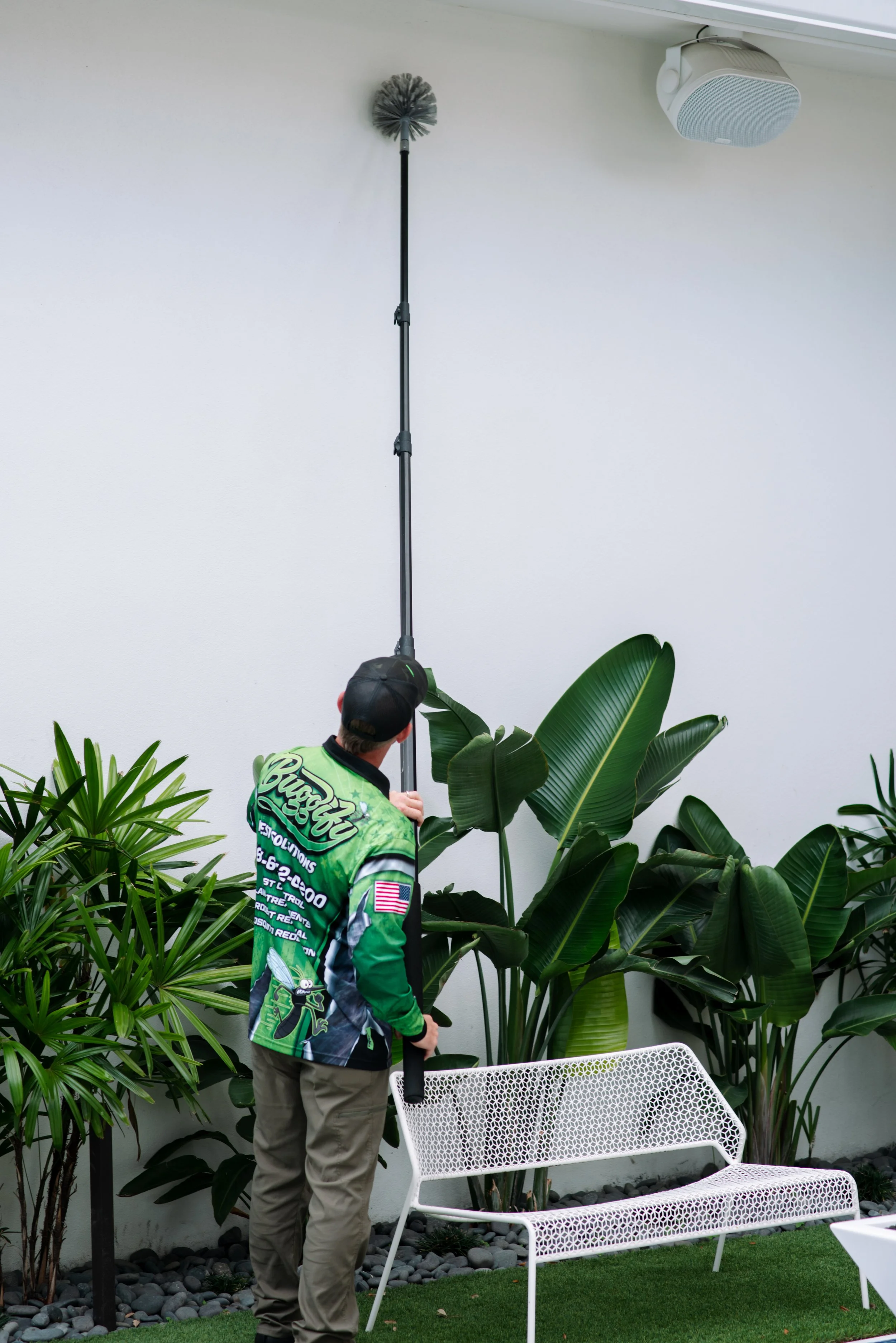
Standard single-family stinging-insect workflow treats the reporting property as the boundary of the notification and treatment radius. Margate's multi-family mid-century stock breaks that assumption. Townhome and low-rise condo buildings share continuous eave-line runs across 2-4 units per building segment. A paper-wasp nest reported by one unit is often at an eave section physically within reach of the adjacent unit's front door or patio, and the treatment window, with residual application, aerosol drift potential, and disturbed-colony defensive behavior, affects every occupant in that shared physical space.
The working standard on Margate multi-family work is HOA-coordinated notification distribution to every unit in the physical treatment radius, not just the reporting unit. Written pre-treatment notification through the HOA property manager specifies affected units, treatment window, entrance-avoidance timing, and post-treatment re-entry safety. This is the same protocol used on 55+ community work but applied at the shared-eave physical-radius level rather than at the occupant-allergy level.
Parent Margate hub covers 55+ shared-attic rodent coordination, mid-century humidity mosquito, and multi-family German cockroach inter-unit work. This Tier 3 page focuses on the multi-family shared-eave and mid-century soffit-vent stinging-insect dimension.
What Margate wasp, bee, and hornet removal costs
Firm stinging-insect pricing follows an on-site inspection because access, nest location, hive size, and species drive the work required. A phone conversation gives a range and confirms whether emergency dispatch is appropriate.
Phone estimate
Free, Tyler gives a treatment range on the first call after confirming access, nest location, and suspected species. On-site inspection sets firm pricing.
Emergency dispatch note
Stinging-insect calls involving allergic occupants, children, pets, or aggressive swarm behavior get priority scheduling. Standard scheduling runs same-week.
Included in every job
Species identification (paper wasp, mud dauber, yellow jacket, hornet, honey bee, carpenter bee), nest removal, treatment residual, and a written condition-of-treatment note.
21-day return
If the nest re-establishes at the treated location within 21 days, Tyler returns at no additional charge.
Buggify vs. National Pest Chains
Seven-point comparison. Every row verifiable from how Buggify operates.
| Feature | Buggify in Margate | National Pest Chains |
|---|---|---|
| Who answers when you call? | Tyler Craig, the licensed operator | Call center or booking bot |
| Same technician every visit | Yes, Tyler runs every job | Different rotating techs |
| Live-bee relocation policy | Coordinated with a beekeeper before removal for honey bee finds | Kill-and-remove default |
| Africanized-bee protocol | Bee identification before treatment; DNA-testing referral available | Standard chemical treatment regardless |
| Allergy notification | Written allergy-aware protocol for occupants before treatment | Not standard |
| Return-visit policy on stinging insects | Included when a nest re-establishes within 21 days at no charge | Extra visit fee typical |
| Contract lock-in | None. Bills per visit; cancel anytime. | Annual contracts common |
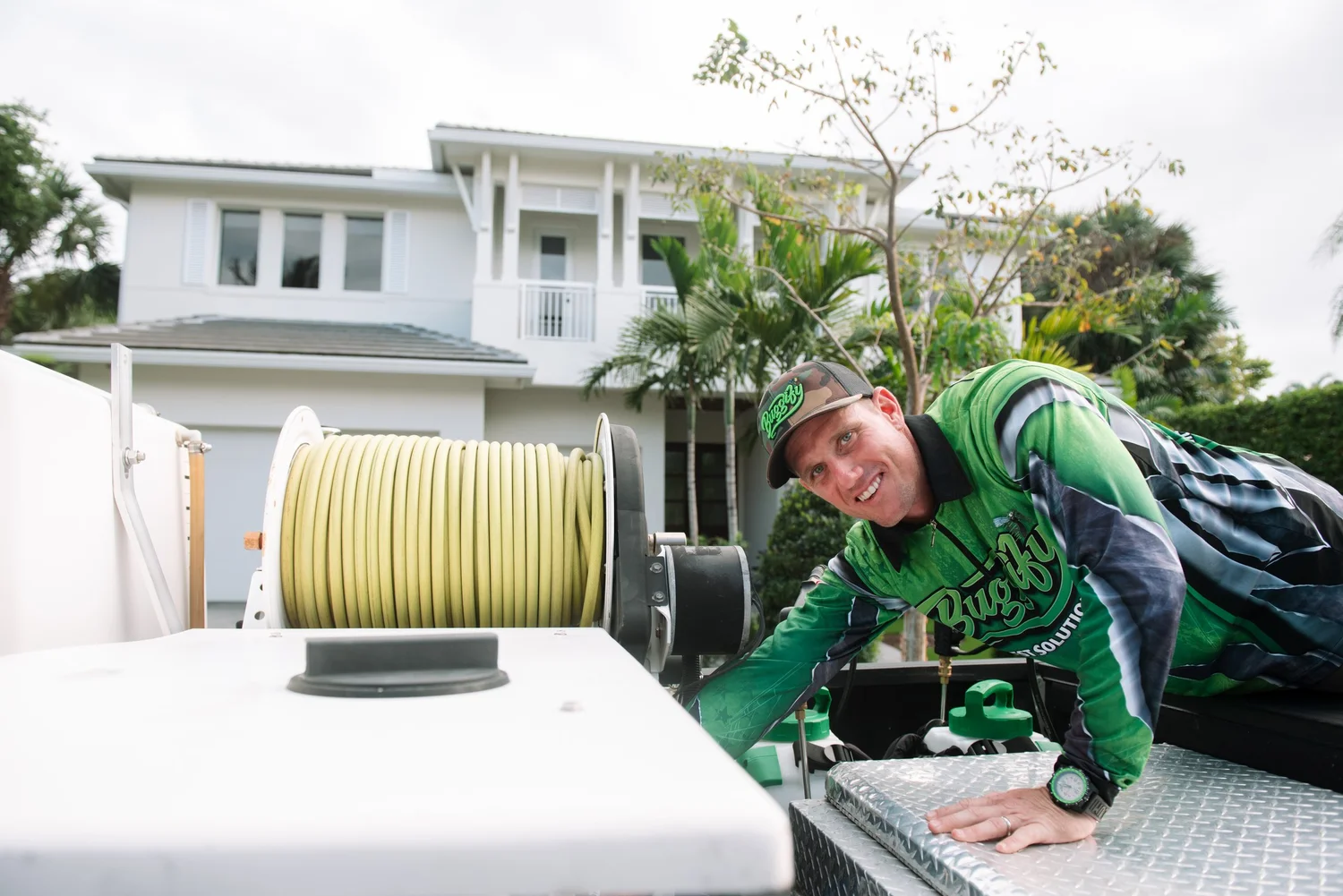
Read what Margate customers say on Google directly
Real Google reviews from Margate residents drive most of Buggify's new stinging-insect calls. Tyler answers, talks through the situation, and quotes a range on the first phone call. The live widget below pulls current reviews directly from Google, with a five-star average across all pest categories, with wasp and bee removal jobs mentioned frequently by name.
Three things Buggify will never do to you
Three things Buggify will never do to you (full list of seven on Why Choose Buggify):
Quote a real treatment price without inspecting the property first. Phone gives a range; firm pricing comes after an on-site walkthrough.
Indoor spraying when the source is outside. Most Margate pest pressure is driven by outdoor harborage; indoor-only work is a short-term cover-up.
Long-term contracts that lock you in. Bi-monthly plans bill per visit and can be canceled anytime, no fees.
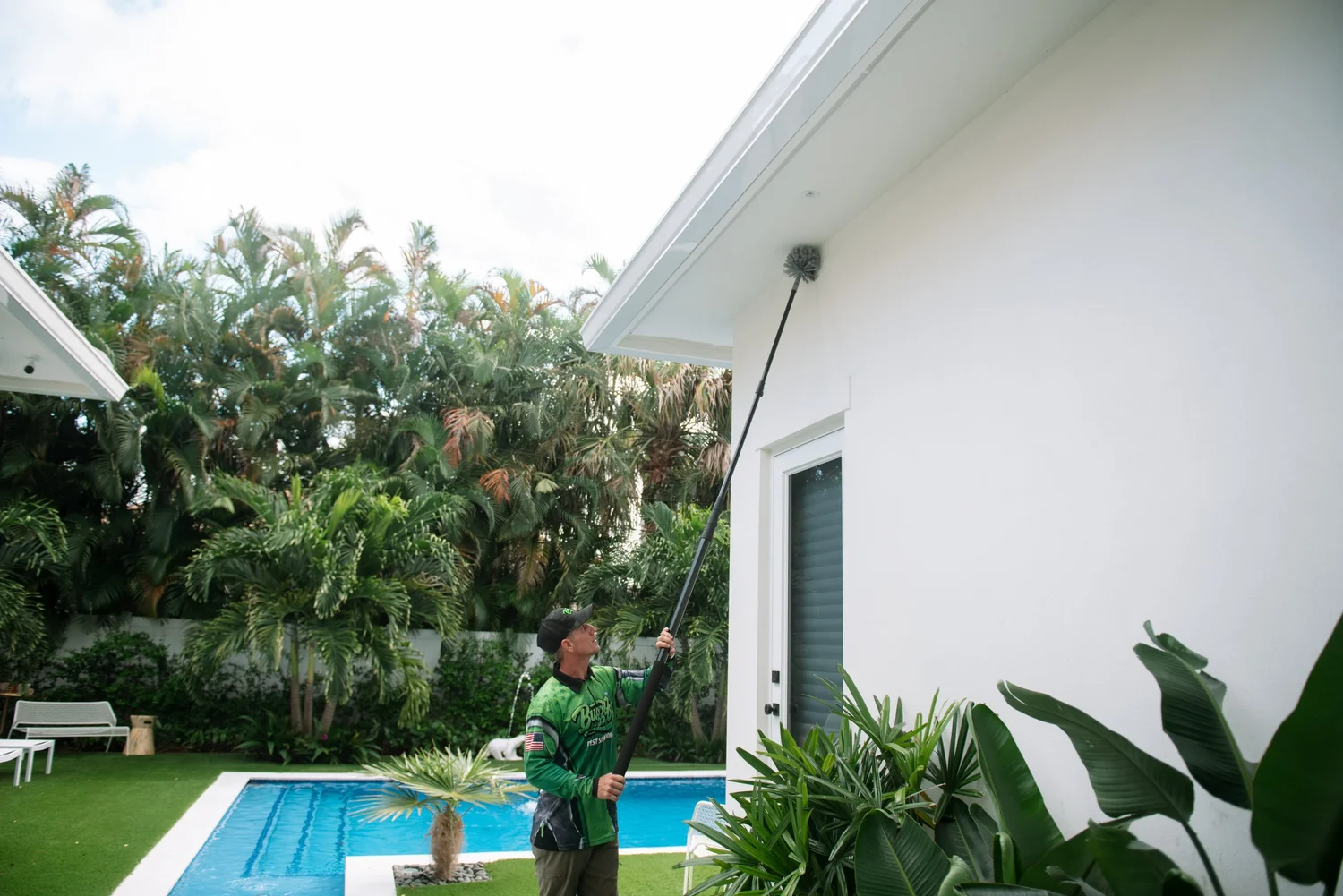
Call (561) 672-0200. Tyler answers, gives you a price range on the first call, and books your Margate appointment into the next dispatch window (standard scheduling runs same-week; stinging-insect emergencies get prioritized).

Margate wasp, bee and hornet FAQ
Why do you notify all units in a townhome cluster instead of just my unit?
Multi-family shared eave-line architecture means the physical treatment radius spans multiple units. Adjacent units share the airspace during treatment application, and the disturbed-colony defensive-behavior window affects every occupant in that shared space. Written pre-treatment notification through HOA property management to all units within the physical radius is the standard practice.
Who decides when the treatment happens on a multi-family building?
The treatment window is set through HOA property management coordination. Property management confirms unit-occupant notification and any specific unit accommodation (mobility, medical, work-from-home schedules) before the treatment window is finalized.
How do you handle honey bee finds in mid-century soffit vents?
Cavity access assessment on the aged soffit-vent panel; original 1960s-80s vents are typically removed intact for cut-out access. European colony species confirmation triggers beekeeper coordination for live cut-out and relocation to a permitted apiary. Post-transfer sealing with copper mesh behind the reinstalled soffit-vent panel prevents the establishment of successor colonies.
Can you treat a wasp nest at our unit's eave if the adjacent unit isn't home?
Multi-unit notification protocol requires that every unit in the physical treatment radius has been notified through property management before the treatment window opens, regardless of whether specific occupants are present that day. Property management confirms notification distribution and any specific unit accommodation before treatment.
Will your treatment residual travel from our eave to the adjacent unit's front door?
Direct nest application at the specific nest site confines residual to that location. Adjacent-unit front doors and shared common areas are not treatment zones and do not receive residual application. Written condition-of-treatment note documents the specific treatment location and product selection.
How often does mid-century soffit-vent honey bee work come up in Margate?
Occasionally, spring migration cavity establishment in aged soffit vents is not the most common stinging-insect call but does recur across the Margate mid-century inventory during March–May swarm season. Preventive screen replacement for aged, unscreened vents significantly reduces the recurrence rate.
Do you coordinate with the HOA landscape crew if a nest is on common-area landscape?
Yes. Common-area landscape nest work coordinates timing with the HOA landscape crew's schedule to avoid crew-vs-treatment conflicts. Preemptive walkthrough ahead of scheduled trim windows cuts post-crew emergency-call volume.
Will treating the nest damage our building's shared eave or fascia?
No, direct nest application does not damage the eave or fascia surface. Any structural repair (screen replacement, cavity sealing) is documented as a post-treatment recommendation for HOA maintenance follow-up; Buggify does not perform structural repair as part of the stinging-insect treatment scope.
Direct line to the technician serving Margate
Phone: (561) 672-0200 (Tyler answers) · Mon–Fri 8 am – 5 pm
Email: Getbuggify@gmail.com
Address: 22617 Middletown Dr., Boca Raton, FL 33428 (West Boca shop, primary dispatch)
License: FL DACS #JB268060 · Certified Operator: Tyler Craig
Call (561) 672-0200 or submit the form below for a free phone estimate. Tyler answers directly. Margate dispatch is owner-operator across a route from the West Boca shop, so appointments are pre-scheduled rather than drop-in; most standard jobs book same-week.