
Lawn Pest Control in Deerfield Beach
Century Village 55+ retention-pond edge fire ant management. Golf-course-adjacent residential chinch bug transfer patterns from course-side turf pressure.
- FL DACS License #JB268060 · Certified Operator Tyler Craig
- Bayer Authorized Applicator (Termidor)
- $1M general liability insurance
- Google 5.0 Rated · live review feed
- Family-owned · 1,000+ South Florida homes served since 2018
- Pet-safe and family-safe treatments by default
- Free phone estimates · no long-term contracts
Deerfield Beach's lawn pest work concentrates around two specific residential-community conditions: the retention-pond edge fire ant activity across Century Village and other 55+ community common areas, and the chinch bug transfer patterns on golf-course-adjacent residential lawns where course-side turf pressure feeds continuously onto adjacent residential St. Augustine. Retention-pond edges are prime fire ant colony habitat because the moisture gradient and disturbed-soil edge zone support colony establishment; the 55+ community occupant population makes aggressive fire ant colony management important for daily-use pedestrian pathways, mailbox areas, and common-area seating zones. Golf-course-adjacent residential properties experience continuous chinch bug population pressure from gaps in course-side turf treatment, requiring more frequent inspection cycles than inland properties. The Deerfield protocol coordinates common-area work with 55+ community property management and reads golf-course-adjacent residential as connected to the course landscape pressure profile. Parent Deerfield city hub covers the golf-course retention pond mosquito, preserve-corridor stinging-insect scope, and county biological control coordination in depth; this Tier 3 page focuses on the retention-pond fire ant and golf-adjacent chinch bug dimensions.
Retention-Pond Fire Ant Specialty
Century Village and 55+ community retention pond edges are prime habitat for fire ant colonies. Coordinated common-area treatment.
Golf-Course-Adjacent Chinch Bug
Continuous chinch bug transfer from course-side turf onto adjacent residential St. Augustine. More frequent inspection cycles.
55+ Community Coordination
Written pre-treatment notification and post-treatment safety windows for common-area work.
Same Technician Every Visit
Tyler runs every Deerfield lawn pest job.
Direct Line to Tyler
Mon-Fri 8 am - 5 pm.
No Contract Lock-In
Bills per visit.
Why Deerfield 55+ community lawn pest work runs on a common-area coordination workflow
Century Village and adjacent 55+ residential communities concentrate common-area pedestrian pathways, mailbox areas, seating zones, and retention-pond perimeters that see daily foot traffic. Fire ant colony establishment in any of those zones poses a direct exposure risk to occupants, who may have reduced reaction time or increased medical vulnerability to fire ant stings. The working standard on Deerfield 55+ community common-area fire ant work is a coordinated inspection and treatment sequence with property management, written pre-treatment occupant notification 24-48 hours ahead, and documented post-treatment safety windows for occupant re-entry to treated zones.
Golf-course-adjacent residential in Deerfield absorbs continuous chinch bug pressure from course-side turf. The course landscape typically runs its own treatment cycle that may leave transient population buildup periods where chinch bug activity migrates across the property line onto adjacent residential St. Augustine. Adjacent-residential inspection cycles run monthly rather than seasonal on the more heavily affected properties, catching pressure buildup before visible turf damage develops.
Parent Deerfield hub covers golf-course retention-pond mosquito breeding, preserve-corridor stinging-insect scope, and county biological-control coordination. This Tier 3 page focuses on the retention-pond fire ant and golf-adjacent chinch bug dimensions.
Every Deerfield Beach lawn and ornamental pest issue Buggify handles
Six work profiles across 55+ community common areas, golf-course-adjacent residential, and standard Deerfield residential.
55+ community common-area fire ant colony management
Retention pond edge, pedestrian pathway, mailbox area, and seating zone: fire ant colony mapping and treatment. Coordinated with community property management.
Golf-course-adjacent residential chinch bug monitoring
Monthly inspection cycles for more heavily affected adjacent residential properties. Continuous transfer pressure from course-side turf drives more frequent treatment cadence.
Standard Deerfield residential St. Augustine chinch bug
Standard May-October chinch bug diagnostic and treatment on non-golf-adjacent Deerfield residential.
Sod webworm and grub work across Deerfield residential
July-September sod webworm activity; grub monitoring on Zoysia and St. Augustine. Targeted treatment during peak activity windows.
Ornamental hedge whitefly and scale coordination
Standard hedge species (ficus, hibiscus, ixora) inspection and treatment across Deerfield residential.
Palm scale on Sabal and queen palm inventory
Systemic and foliar treatment options depending on palm species and infestation stage.
Century Village retention-pond case: 14 fire ant colonies cleared with coordinated common-area workflow
The scope
Century Village property management identified accelerating fire ant activity along a 300-yard retention pond edge adjacent to pedestrian pathways and common-area seating zones. Fourteen distinct active mounds identified in initial property-management walkthrough.
The pre-notification
Written pre-treatment notification distributed through community property management to occupants of buildings within 200 yards of the treatment zone, 48 hours ahead of the treatment window. Entrance-avoidance timing (2 hours during treatment application) and post-treatment safety window (4 hours) specified per building.
The treatment window
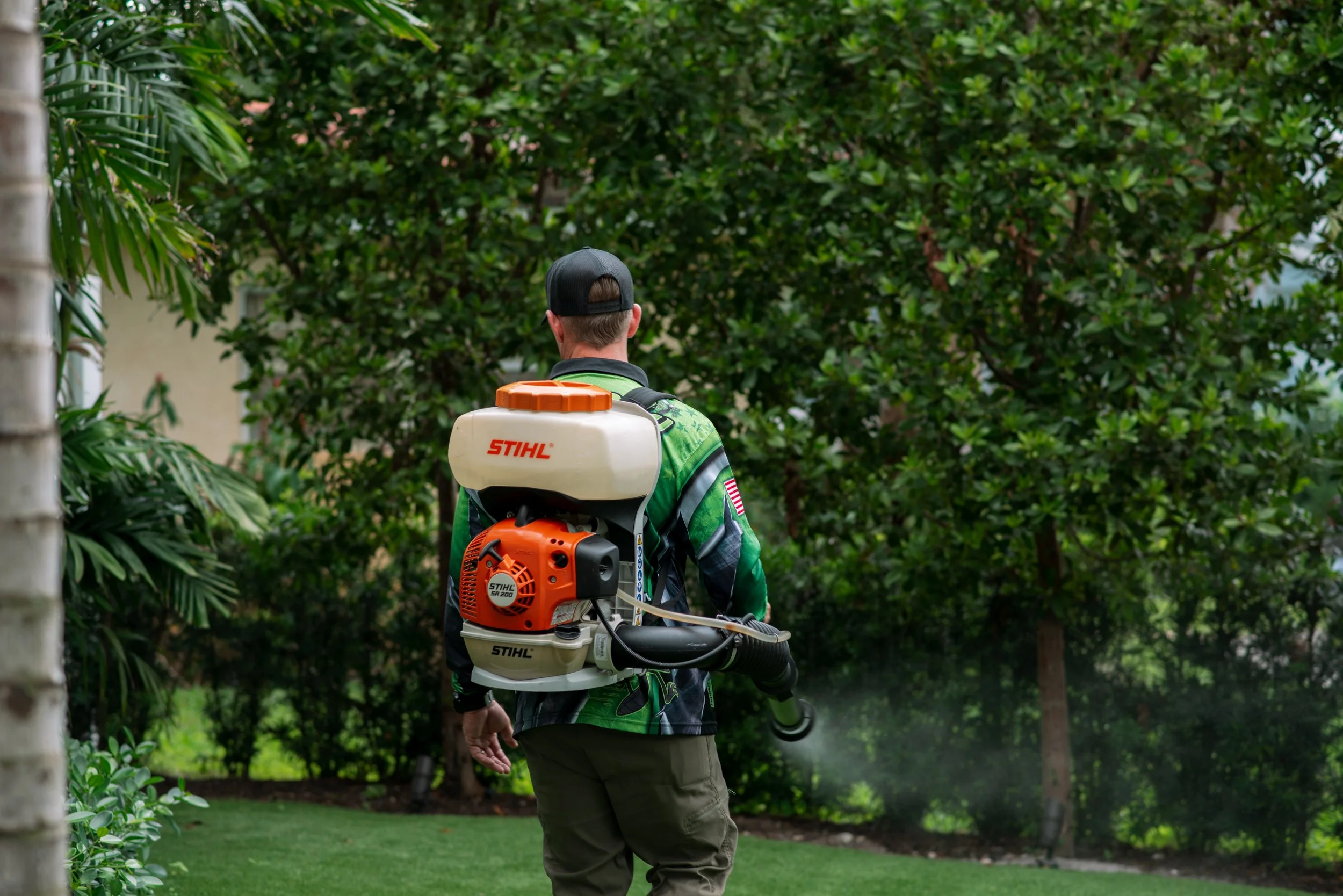
Tyler dispatched at the pre-communicated window (weekday mid-morning). Fourteen mounds treated with targeted mound application; broadcast bait treatment applied across the 300-yard retention-pond edge to catch satellite colonies. Treatment radius confined to the specific zone; no application on adjacent pedestrian pathways or common-area seating during the immediate residual window.
The post-treatment documentation
Written condition-of-treatment note documenting mound identification, product selection, application method, and post-treatment safety windows filed with property management. No occupant reactions reported.
The standing arrangement
Property management moved the retention-pond edge fire ant inspection to a semi-annual standing arrangement with pre-notification protocol as the community common-area treatment standard.
Five technical details specific to Deerfield Beach lawn pest work
55+ common-area coordination workflow, golf-adjacent monthly inspection cadence, retention-pond edge fire ant technique, preserve-adjacent chemistry selection, and post-treatment community documentation standards.
55+ Common-Area Coordination Workflow
Written pre-treatment notification distributed through community property management 24-48 hours ahead. Entrance-avoidance timing and post-treatment safety windows specified per building. Written condition-of-treatment note filed with property management records.
Golf-Adjacent Monthly Inspection Cadence
Adjacent-residential properties absorbing continuous chinch bug pressure from course-side turf benefit from monthly inspection cycles rather than seasonal. Pressure buildup caught before visible turf damage develops.
Retention-Pond Edge Fire Ant Technique
Full-perimeter colony mapping followed by targeted mound treatment and broadcast bait application. Semi-annual inspection cycle standard on 55+ community retention-pond edges.
Preserve-Adjacent Chemistry Selection
Deerfield Island Preserve edge lots use rapid-degradation-targeted formulations for lawn pest treatments as well as stinging-insect work. Stewardship-driven chemistry standards apply across pest categories.
Post-Treatment Community Documentation
Written condition-of-treatment note documenting product selection, application method, treatment zone, and post-treatment safety window. Filed with community property management for records and available on occupant request through property management.
Five Deerfield Beach conditions that shape lawn pest work
Century Village 55+ concentration, retention-pond edge habitat, golf-course adjacency, preserve-adjacent chemical restrictions, and mid-century St. Augustine turf inventory each shape the lawn pest protocol.
Century Village 55+ Community Concentration
Common-area pedestrian pathways, mailbox areas, and seating zones require coordinated pre-notification and post-treatment safety documentation.
Retention-Pond Edge Fire Ant Habitat
Moisture gradient and disturbed-soil edge zone at retention pond perimeters support fire ant colony establishment. Semi-annual inspection standard on 55+ community edges.
Golf-Course Adjacency Pressure Transfer
Adjacent residential St. Augustine absorbs continuous chinch bug pressure from course-side turf. Monthly inspection cycles on heavily affected properties.
Preserve-Adjacent Chemical Restrictions
Deerfield Island Preserve edge lots follow county chemical-restriction guidance on lawn pest treatments too, not just stinging-insect work.
Mid-Century St. Augustine Turf Inventory
Older residential zones have long-established St. Augustine turf with a long history of deep chinch bug populations. Recurring seasonal pressure is the norm.
What Deerfield Beach lawn pest control costs
Firm lawn and ornamental pricing follows a walkthrough because turf species, hedge count, palm inventory, and pest signature drive the work. A phone call establishes a range and identifies whether coordinated ornamental + turf visits will help.
Phone estimate
Free, Tyler walks through your yard footprint (approximate square footage, turf species if known, hedge count, palm inventory) and gives a treatment range.
Bi-monthly programs
Turf and ornamental care works best with a rotational treatment. Programs bill per visit; cancel anytime.
Included in every visit
Pest identification, targeted application, condition-of-yard note, and treatment product disclosure.
30-day return
If chinch bug, sod webworm, or whitefly pressure returns within 30 days of a treatment, Tyler returns at no additional charge.
Buggify vs. National Pest Chains
Seven-point comparison. Every row verifiable from how Buggify operates.
| Feature | Buggify in Deerfield Beach | National Pest Chains |
|---|---|---|
| Who answers when you call? | Tyler Craig, the licensed operator | Call center or booking bot |
| Turf ID first, treatment second | Confirms St. Augustine vs Zoysia vs Bermuda and identifies the specific pest before chemistry selection | Broadcast treatment without turf-species distinction |
| Pollinator-safe application windows | Whitefly and hedge treatments timed outside pollinator foraging windows on request | Standard-schedule application regardless |
| HOA landscape coordination | Written condition-of-treatment note suitable for HOA architectural review | Not standard |
| Return-visit policy on turf pests | Included when pressure returns within 30 days of a confirmed treatment | Extra visit fee typical |
| Contract lock-in | None. Bills per visit; cancel anytime. | Annual contracts common |
| Ornamental + turf coordination | One technician handles both zones as a connected landscape | Separate crews or vendors |
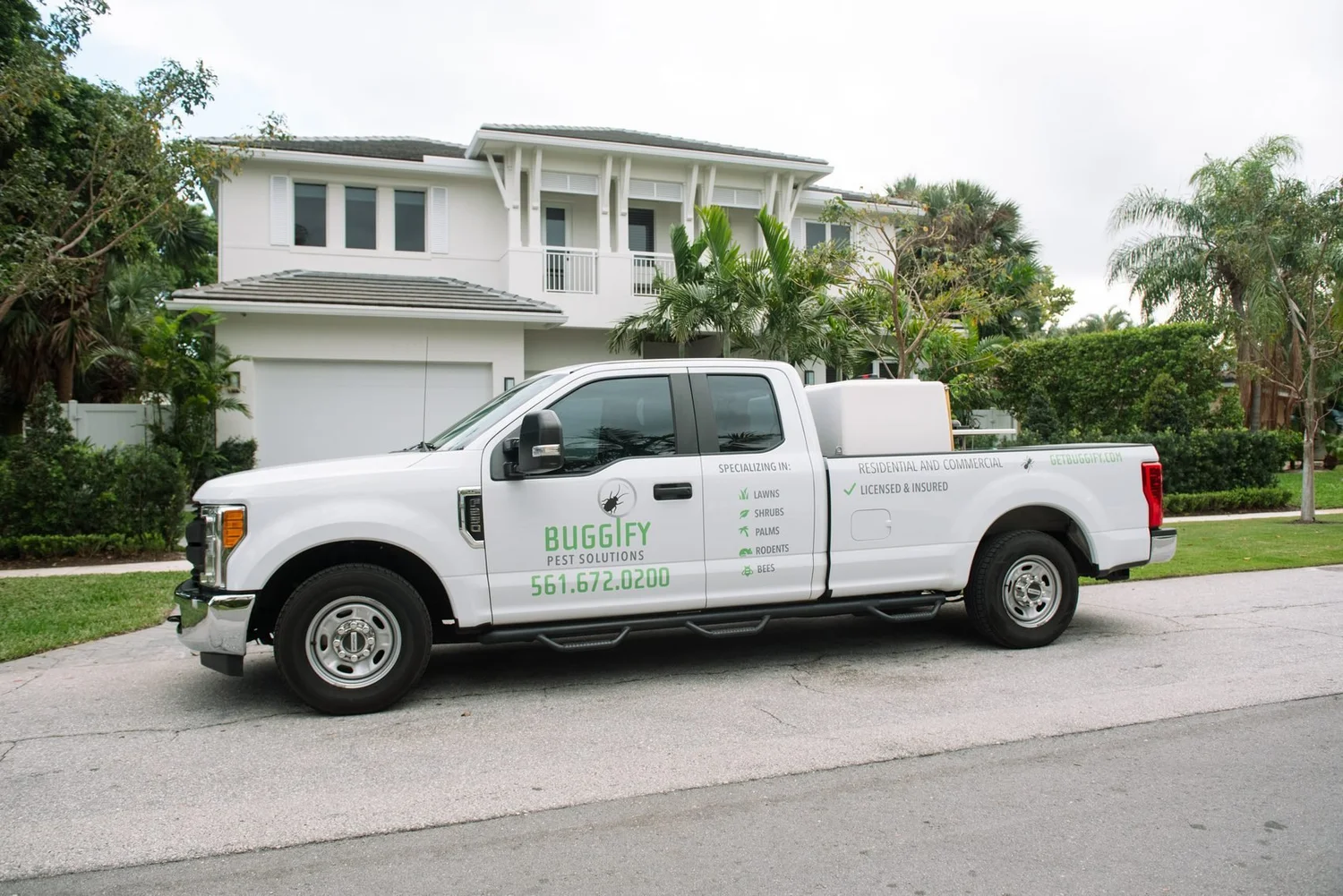
Read what Deerfield Beach customers say on Google directly
Real Google reviews from Deerfield Beach residents driving lawn and ornamental calls. Tyler walks the yard on the first visit, identifies the specific pest signature (chinch bug, sod webworm, ficus whitefly, palm scale), and matches chemistry to turf species. The live widget below pulls current reviews directly from Google.
Three things Buggify will never do to you
Three things Buggify will never do to you (full list of seven on Why Choose Buggify):
Quote a real treatment price without inspecting the property first. Phone gives a range; firm pricing comes after an on-site walkthrough.
Indoor spraying when the source is outside. Most Deerfield Beach pest pressure is driven by outdoor harborage; indoor-only work is a short-term cover-up.
Long-term contracts that lock you in. Bi-monthly plans bill per visit and can be canceled anytime, no fees.
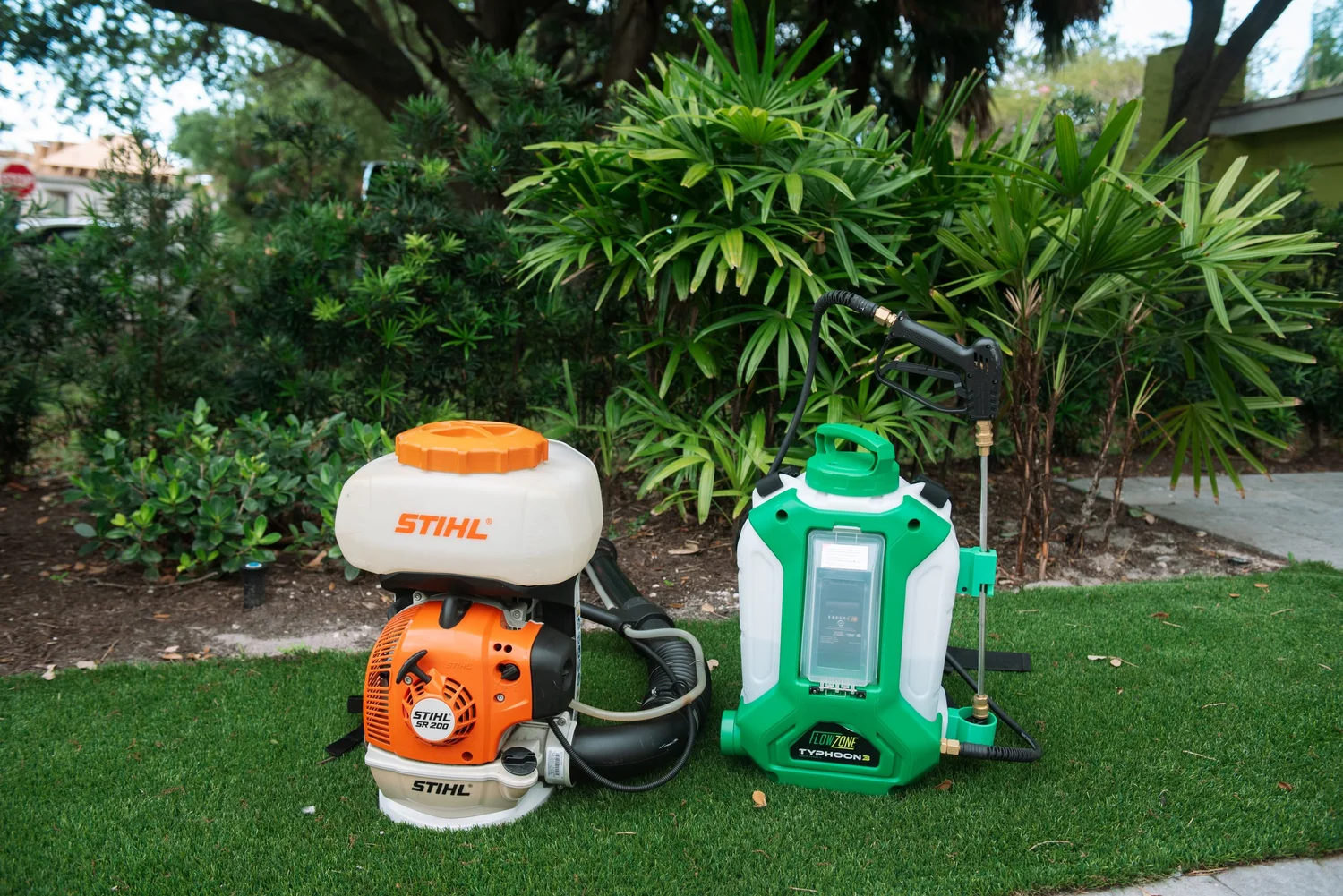
Call (561) 672-0200. Tyler answers, gives you a price range on the first call, and books your Deerfield Beach appointment into the next dispatch window (standard scheduling runs same-week; stinging-insect emergencies get prioritized).
Deerfield Beach lawn pest FAQ
Do you notify Century Village residents before treating common-area fire ant colonies?
Yes. Written pre-treatment notification distributed through community property management 24-48 hours ahead. Notification includes entrance-avoidance timing and post-treatment safety windows for occupant re-entry to treated zones.
Why does my golf-course-adjacent lawn get chinch bug worse than my inland neighbor's?
Course-side turf treatment gaps produce a transient buildup of chinch bug populations that migrate across the property line onto adjacent residential St. Augustine turf. Continuous transfer pressure means that adjacent residential lawns require more frequent inspection and treatment cycles than inland properties.
How often do 55+ community retention-pond edges need fire ant inspection?
Semi-annual inspection is the standard for 55+ community retention pond edges. Full-perimeter colony mapping followed by targeted mound treatment and broadcast bait application catches new colony establishment before pedestrian pathway exposure develops.
Will chemical restrictions near Deerfield Island Preserve affect my lawn treatment options?
Yes. Preserve-adjacent lots use rapid-degradation, targeted formulations for lawn pest treatments that match Buggify's preserve-adjacent stewardship standards. A written condition-of-treatment note documents chemistry selection and application method for county or HOA records.
Can you coordinate with our golf community property management regarding scheduled landscape cycles?
Yes. Property manager coordination on scheduled landscape cycles, common-area treatment windows, and post-treatment documentation is standard on golf-community work in Deerfield.
Direct line to the technician serving Deerfield Beach
Phone: (561) 672-0200 (Tyler answers) · Mon–Fri 8 am – 5 pm
Email: Getbuggify@gmail.com
Address: 22617 Middletown Dr., Boca Raton, FL 33428 (West Boca shop, primary dispatch)
License: FL DACS #JB268060 · Certified Operator: Tyler Craig
Call (561) 672-0200 or submit the form below for a free phone estimate. Tyler answers directly. Deerfield Beach dispatch is owner-operator across a route from the West Boca shop, so appointments are pre-scheduled rather than drop-in; most standard jobs book for the same week.