

The sharp, oily odor a roach leaves when it is stepped on or squeezed is the woods cockroach's defense, and it belongs to a roach that spends every stage of its life outdoors and does little more than pass through a house once it gets inside. The species itself is not the question worth answering. What decides whether the sighting is worth a call is whether it happens once or happens again at the same door, and the two cases point to different explanations.
Why a Woods Roach Ends Up Indoors at All
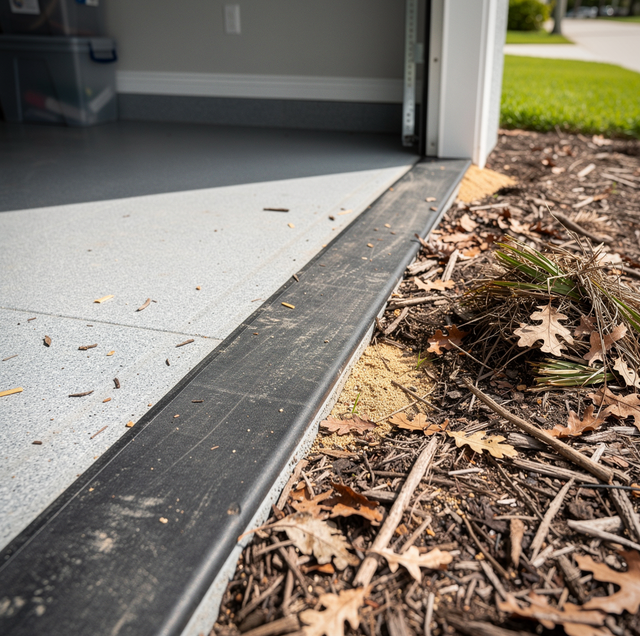
The woods cockroach spends its life outdoors, under damp mulch, fallen fronds and leaves, stacked yard debris, and the layer of dead plant matter that collects along a fence line or garden bed. It doesn't forage toward a structure the way a flying roach can; it reaches a door gap, a garage threshold, or a torn weep-hole screen by wandering along the ground, not by seeking the house out. Two opposite weather patterns can push more of them across that kind of gap. Heavy rain floods the leaf litter or mulch bed it was sitting in, and it moves toward the nearest dry, dark opening, which can be a garage or a door sill only a few inches above grade. A dry stretch can produce the same result from the other direction: as the leaf litter it depends on for moisture dries out, it leaves the bed in search of damper cover, and a door gap along that route is one place it can end up. Either condition can put one indoors. Neither means the leaf litter bed itself has moved any closer to the house.
A garage door's rubber bottom seal can sit tight across the middle and still leave a gap at one end where the slab dips, so look along its full width before ruling that door out as the entry point.
Telling the Four Look-Alikes Apart
Flight and outdoor habitat are the two traits that separate the woods roach from the three roaches it gets confused with:
| Species | Can It Fly | Where It Lives Outdoors | What an Indoor Sighting Means |
|---|---|---|---|
| Woods cockroach | No; it carries only short, non-functional wing pads | Leaf litter, mulch, garden timbers | A one-time wanderer; it does not set up indoors |
| American cockroach | Short glides, especially at dusk | Storm drains, irrigation boxes, wet mulch | A forager passing through; repeats point to a nearby harborage and the drain or gap it uses |
| Smokybrown cockroach | Yes, drawn to porch and window lights | Tree canopy, gutters, attic voids | An entry signal at the roof edge or attic vents |
| German cockroach | Has wings but does not use them to travel | Indoors only, kitchens and bathrooms | An established colony, treated on entirely different terms |
Of the four, the German cockroach is the one that builds its colonies indoors; the other three live outdoors and enter a house from there.
Why It Dies Inside Instead of Settling In
A wanderer who crosses a threshold gains nothing once inside. The woods cockroach relies on humidity trapped in a leaf-litter bed or a mulch pile to avoid drying out, and conditioned indoor air does not retain that kind of moisture. Nothing indoors replaces that microhabitat: there is no comparable pocket of damp, decaying material behind a baseboard or under a cabinet for it to retreat into, and it is not built to dig into drywall or insulation the way some other insects can. It also does not have a reproductive strategy that would let it start over indoors; laying viable eggs and carrying the next generation through several molts requires the same humid, organic setting it just left, not a dry tile floor or an air-conditioned closet. Diet closes off the last option: outdoors it feeds on decaying plant matter and fungi in the leaf litter, and no kitchen, bathroom or closet offers that food source, so even a wanderer that avoids drying out finds none of that food once it is inside.
The Smell: What It Is and Why Not to Crush One
The smell is a defense, not a sign of decay or infestation. The insect releases an oily, strong-smelling liquid when it is pinned or crushed, and the odor says nothing about the room it was crossing. Sweeping it into a dustpan and carrying it outside gives it less reason to spray than stepping on it does, and it changes nothing about the decision at hand: whether this is the only sighting or one of several at the same spot.
The Decision Rule: One Sighting Versus a Repeat
What matters is not how the insect died or whether it smelled; it's whether the same door or the same room produces a second one. A single woods cockroach found once, especially right after a hard rain or during a dry stretch, is consistent with an isolated wanderer crossing a gap it happened across. That event does not call for treatment, because there is no colony behind it to remove and no indoor harborage to find. A repeat at the same door or in the same room is a different signal. It can mean the opening the first one used has not been closed, and that something on the other end of it- a mulch or debris bed pushed up against the slab, a thin door sweep, a garage threshold seal that has opened up- is still producing wanderers and pointing them at the same spot. At a garage threshold or an exterior door with a worn sweep, the inspection starts with the bed or debris pile nearest that door and widens from there.
When It Becomes a Job: Outdoor Source Reduction
Once a pattern is confirmed, the fix sits outside, not on the doorstep where the roach was found. An inspection that starts at the reported door or room and works outward toward the nearest bed, timber pile, or mulch line identifies which specific pocket of leaf litter is active, rather than treating the yard as one undivided area. The work on that source is pulling leaf litter and mulch back from the slab and treating the bed itself; a worn sweep on the door or an opening beneath the garage threshold that the inspection turns up is a repair to line up alongside it. No indoor population was ever there for a spray to reach.
An indoor insecticide put down for a single wanderer leaves a residue that crawling children and pets can pick up from floors and baseboards, with no colony behind it to justify the exposure; leave any indoor product decision to a technician.
Adding that outdoor check to the every-8-weeks visit puts the same beds and door line under inspection on a schedule rather than only after a sighting. The inspection is what separates a one-time wanderer from a source still feeding the same door, since the bed responsible is not always the one nearest that door.
Frequently Asked Questions
Yes. It lives in exactly that kind of damp, decaying material, so one can ride in on a potted plant, an armload of firewood or a garden-center bag of mulch. A sighting right beside something recently carried in points to that item, and it does not count toward a repeat at a door.
No. The rule tracks the same access point over time, not a tight window. Another wanderer can use the same garage threshold during the next hard rain or dry stretch weeks later, and that later sighting still ties back to the same gap.
Yes. A glue board set flat along the wall just inside the suspected door catches a flightless wanderer crossing the floor overnight, and it keeps a record between visits. A board that stays empty through a hard rain or a dry stretch points away from that door as the repeat.
Not quite: the sighting counts the same way, but the gap behind it differs. On a sliding door, the openings to check are the weatherstrip along the bottom of the moving panel and the ends of the sill track; on a swinging door, they are the sweep at the bottom edge and the corner where it meets the jamb. A repeat at either point refers to that hardware, not to the door style itself.
Not always. A repeat can also mean a specific gap is simply the easiest opening on that side of the house, with the source bed sitting several feet away rather than directly against the slab. The inspection still starts at the gap, but it has to widen if nothing turns up right underneath it.
Not necessarily. A source bed can shift with mulch turnover or a recent landscaping change, so the leaf litter that produced last month's wanderers may already be gone by the inspection date. A confirmed pattern of repeats still counts as a pattern, and the check now widens to include the beds and debris on the property.
Arrange a cockroach inspection that starts outdoors — a technician checks the mulch, leaf litter, and door line nearest the repeat sighting and treats the outdoor source under the bi-monthly plan. Buggify Pest Solutions serves Boca Raton, West Boca, and communities across Palm Beach and northern Broward. Call Tyler: (561) 672-0200.