

Do Different Ants Need Different Treatments? Biology Says Yes
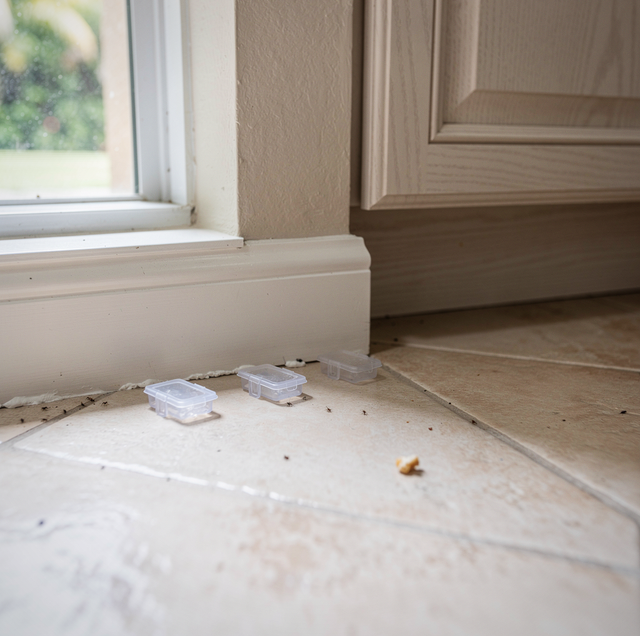
Four beads of sweet gel bait went down along your baseboard on a Sunday. By Thursday, they are still there, still glossy, with no ants on them. The small cone of shredded wood under the door casing has rebuilt itself twice since the weekend, with what appear to be insect legs and heads in the pile.
So yes, different ants need different treatments, and your gel is failing on two counts. It is the wrong chemistry for the ant working that casing, and it sits nowhere near the route that ant travels. Where a colony nests decides whether you can reach its foragers at all, and how large it has grown decides how long a correct placement takes to show.
How Many Queens the Colony Runs
A carpenter ant colony runs on a single queen. Every worker you find in the house traces back to her eggs, and reaching her leaves the colony no way to replace itself.
Ghost ants are built the other way. One colony carries many egg-laying queens at once across its nest sites, so losing one is arithmetic the colony barely registers. The imported fire ant comes in both forms: some mounds hold a single queen and a hard boundary against the mound next door, others hold dozens of laying queens and run together, so two mounds fifteen feet apart can be one population.
That sets your objective before any product is chosen. Against one queen you have a single point of failure to reach. Against many, no such point exists, so whatever you put down has to be carried through the network by the ants themselves. A repellent on their trail pushes them the wrong way, because a multi-queen colony under chemical stress answers by splitting workers, brood, and spare queens off into new nests.
Appetite runs on the same biology. Adult workers can only swallow liquid, while larvae digest solids and need protein and fat, so a nest full of brood sends foragers after grease and a nest between cycles sends them after sugar. Correct chemistry gets walked past in the wrong half of that cycle.
Soil, Wall Void, or Structural Wood
Every ant treatment turns into a placement question, and the material the nest sits in decides the answer.
Fire ants nest in soil, and the mound you can see is the smallest part of the structure. The dome is a brood chamber the colony moves young into and out of as the ground warms and cools, and the galleries run well past its footprint with the queen deep in that network. You know exactly where this nest is and still cannot reach it directly: a surface drench that does not carry down the soil column kills the workers it wets and leaves her lying a foot below your feet.
Ghost ants and the small sweet-feeding ants you call sugar ants nest in almost nothing at all. A wall void, the gap behind a loose baseboard, the wet soil of a potted plant, the leaf bases of shrubs against the house, a fold in mulch. One colony occupies several of those at once and shifts between them, so there is no single nest for you to open up. Everything you place goes onto the foraging trail and travels inward on its own.
Carpenter ants nest inside wood, and that constrains a bait station more than either of the other two. A gallery cut through a sill plate has no opening you can dose, no soil around it to hold a residual, and no way in without drilling. What you have is the trail between that wood and the food, so getting bait onto that line is the whole job. Which bait depends on what the colony is feeding this week, and you can find that out yourself.
Set a dab of jelly and a dab of peanut butter an inch apart on a card beside the trail. Check in 30 minutes, note which one draws ants, then lift the card off so you are not feeding the colony.
Why Treating a Satellite Never Ends It
Carpenter ants do not eat wood. They mine it, cutting galleries through timber that moisture has already softened, and that softening is the condition that put them in your house. They make slow progress in sound, dry framing and fast progress in wood that has stayed wet: a sill plate under a leaking window, a fascia board behind an overflowing gutter, framing around a shower pan that has been damp for a year. The excavated material gets pushed out through slit-shaped openings, and the shredded pile under your door casing is that: wood fiber with insect fragments. Repair the water, and the condition is gone. Leave it, and a treated house is available again.
The colony's structure is what makes one treatment so easy to waste. The parent nest sits outdoors in a stump, a tree cavity, or a fence post, and it is the only place eggs are laid. The satellites sit inside your walls, hollow doors, and insulation, holding workers and older brood with no reproductive of their own. So the nest you find indoors is a workforce, and the nest producing the ants is somewhere in your yard or your neighbor's. Hit a satellite with an aerosol, and you have killed a crew the parent will replace, and lost the trail that would have led an inspection back to it.
That is the difference between a nest you can locate and one you can only bait toward. If the parent is found, the treatment is direct. If it is not, the trail is your only route in, which is why an untreated line of ants still running on your fascia is worth more to you than a knocked-down one.
Colony Size Sets the Clock
A mature imported fire ant colony holds on the order of 100,000 to 250,000 workers, all of them reached through a supply line you cannot watch: bait found by foragers scouring the ground surface, carried in, passed worker to worker, and delivered to queens deep in the soil. University extension guidance on fire ant baiting describes results measured in weeks, and that transport chain is the reason. No larger dose shortens it; the pace is set by how fast the colony moves food around inside itself.
A ghost ant colony is far smaller, but it occupies several nest sites at once, so the collapse reaches you in pieces. Your kitchen trail can be gone in three days while a bathroom trail fed by a different site of the same colony runs for two more weeks. Nothing is finished until every trail has taken bait, and the one you stop watching is the one that restarts.
A carpenter ant parent colony takes about three to five years to reach the size that produces winged reproductives. If swarmers have come out of a window casing in your house, that colony has been established nearby for years, and it does not empty in one season. Satellite activity can carry on after the parent nest has been reached, because those satellites hold workers and older brood with nothing feeding into them, and they wind down on the clock of the brood already inside.
What a Working Treatment Looks Like on Day Five
Each of those clocks produces a stretch where a correct treatment and a failed one look identical from where you stand, and that is where the urge to switch products is strongest.
On a fire ant mound, the mound stays busy. Workers keep coming out, keep rebuilding after rain, keep boiling up when something crosses the soil, and none of it tells you about the queens, because those workers were produced before the bait went down. What changes first cannot be seen from standing height: the mound stops expanding and stops throwing new mounds nearby. Judge it by how many ants are on top, and you will re-treat a colony that had already stopped replacing itself.
A disturbed fire ant mound puts workers onto shoes and pant legs within seconds, and they climb before they sting. Do not open, kick, or partially drench a mound to see what is happening inside it.
Indoors, a ghost ant treatment goes quiet unevenly. You lose the kitchen counter first, because that is where the bait went, and a week later you find a line on a bathroom windowsill you are certain is a fresh problem. It is the same colony working from another nest site, and that site needs its own placement. The number of separate trails in the house is what to track week to week, and it should drop.
With carpenter ants, your gauge is the frass pile. Sweep it flat, mark the date, and look again in a week. A pile that rebuilds means workers are still cutting that gallery. A pile that stays flat for two weeks means the satellite has stopped, while the parent outdoors keeps its own schedule. Avoid laying a second product over the first during any of these waits: a repellent spread on top of a working bait shuts the trail down and resets your clock.
Frequently Asked Questions
Hard six-sided pellets, close to a millimeter long, uniform in size and color, dry enough to roll when you push at them, with no wood fiber and no insect parts in the pile. That is drywood termite frass. Carpenter ant frass is loose and fibrous by comparison and holds the leftovers of prey the colony carried in. If you are sweeping up pellets, the inspection is performed by an operator licensed for wood-destroying organisms.
After dark. Carpenter ant foraging builds through the first couple of hours after sunset, so a daytime walk-through can show you a house with no ants in it while a trail runs along the same fascia board at ten at night. Take a flashlight along the foundation, the fence line, and any tree limb touching the roof, and follow the ants in both directions. The direction leading away from the building ends at the parent nest.
No. Fire ant broadcast baits are built as defatted corn grit soaked in soybean oil, and they go out over turf at rates on the order of a pound to a pound and a half per acre with a hand seeder. The oil carrier goes rancid, so a container you opened a season ago gets refused even though it looks fine to you. Indoor gel for a kitchen is a separate product, placed in small dabs out of reach of children and pets.
Because a treated house is still somewhere a founding queen can move into. After a mating flight, a newly mated queen drops her wings, seals herself into a chamber, and raises her first brood alone on her own body reserves. Those first workers are undersized and are called minims, and there are only a handful, so the colony stays out of your sight for months before it has the foragers to reach a counter. Check whether the moisture that let the last colony in was ever repaired.
No single species carries that name. It is a catch-all for small ants that are drawn to sweets, and around a house it covers several insects, including ghost ants and white-footed ants. The distinction matters at the bait. White-footed ant workers carry food to the larvae instead of exchanging it among themselves, so material moves through that colony slowly, and a sweet liquid station you leave in place for several weeks will do more for you than a gel dab you replace twice.
The waist. Between the thorax and the gaster sit one or two small, raised segments called nodes, and the count immediately splits the group. Fire ants and pharaoh ants carry two. Carpenter ants carry one, paired with a thorax that arches in a single even curve with no dip in the profile. Ghost ants also carry one, but theirs is flattened and tucked under the front of the gaster, so under a hand lens their waist can look like it has none.
Ants still working a trail after two rounds of bait are pointing at where the nest sits — an inspection that names the species and finds the nest is what puts the right product on the right line. Buggify Pest Solutions serves Boca Raton, West Boca, and communities across Palm Beach and northern Broward. Call Tyler: (561) 672-0200.
