
Cockroach Control in West Boca Raton
Harborage work + gel baits + IGRs. Multi-family unit-to-unit driver protocol. Dispatched from inside West Boca.
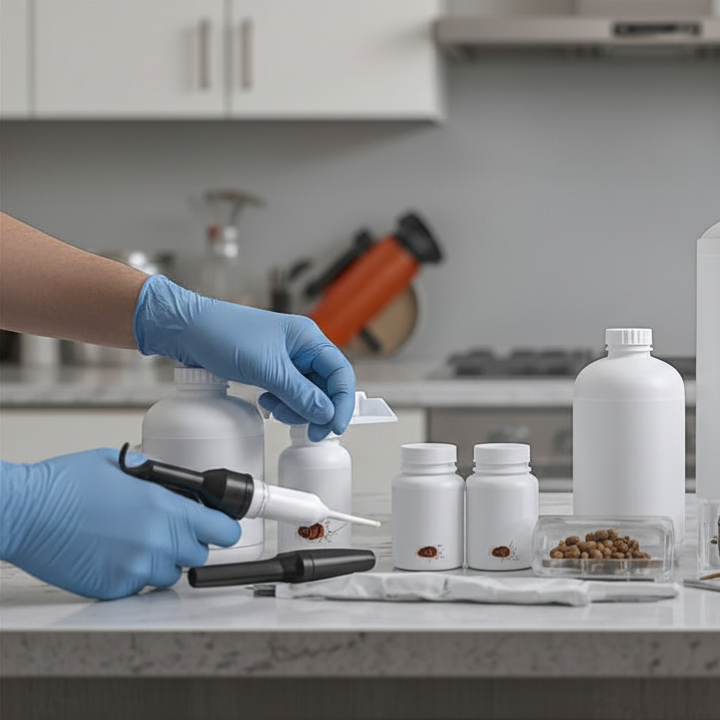
West Boca Raton cockroach work concentrates on two distinct patterns: single-family German roach harborage work in older master-planned-community kitchens (Sandalfoot Cove 1970s, original Loggers' Run sections, older Boca Del Mar) plus the multi-family unit-to-unit driver protocol in townhome and condo clusters (Mission Bay townhomes, Boca Lago 55+, Whisper Walk, parts of Century Village West). The protocol on this page covers Tyler's harborage-first approach + gel bait + IGR methodology + the multi-family transfer-point inspection that perimeter-spray-only contractors miss.
Buggify Pest Solutions
Why West Boca cockroach pressure is mostly a harborage + multi-family driver problem
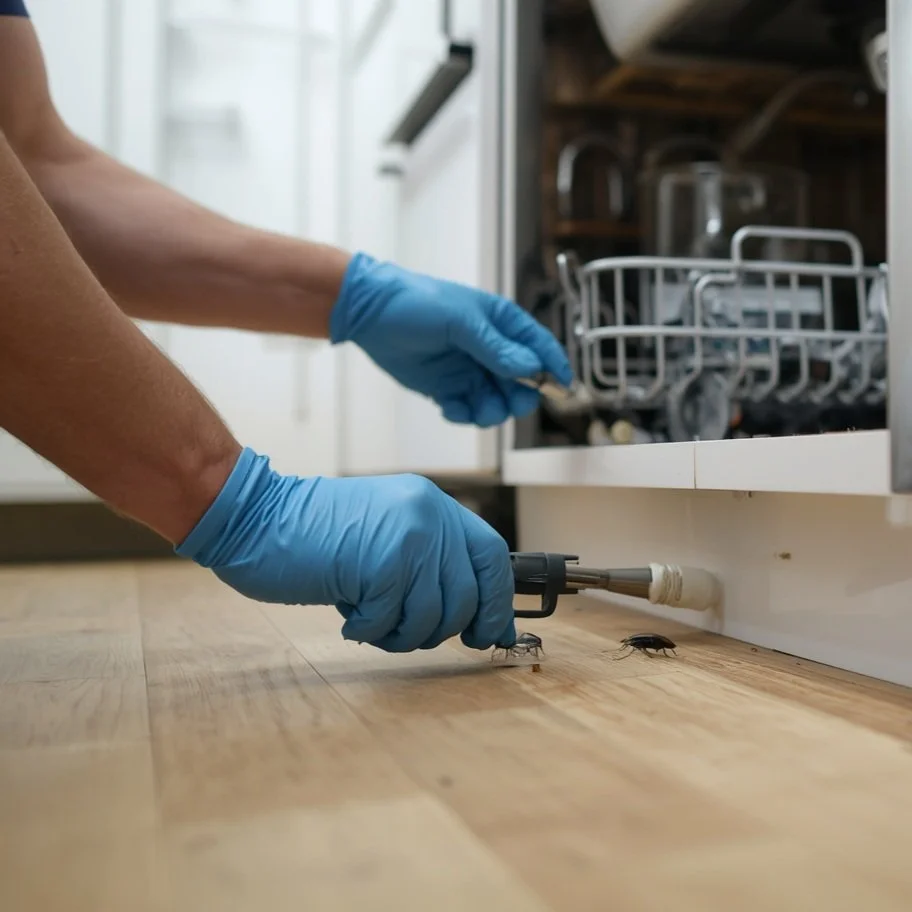
German cockroach work in West Boca splits along a single-family vs multi-family axis. Single-family German roach calls (1970s Sandalfoot Cove kitchens, older Loggers’ Run deck-adjacent kitchens, Boca Del Mar standalone homes) are typically harborage-driven; the population lives in crack-and-crevice zones within 5 feet of food and water (under sinks, behind dishwashers, in refrigerator motor housings). Perimeter spray reaches none of those zones. Gel bait + IGR at the harborage is the protocol.
Multi-family German roach calls (Mission Bay townhomes, Boca Lago 55+ condos, Whisper Walk multi-unit clusters, parts of Century Village West) add a unit-to-unit driver. German cockroaches migrate through shared-wall plumbing penetrations and electrical conduit gaps between adjacent units, regardless of single-unit treatment. The building contractor running perimeter-only quarterly spray misses the wall-cavity transfer entirely; that’s why “my unit was treated, but the activity came back” is the most common multi-family complaint.
American cockroaches (palmetto bugs) are the secondary issue, mostly outdoor-sourced and seasonal. Heavy mulch lines, palm-frond accumulation, sewer-vent areas, and lanai-zone debris are the outdoor harborages. Indoor American roach sightings after summer storms are common but usually don’t indicate an established indoor problem; the outdoor source is where treatment focuses.

German Roach Harborage Work
Crack-and-crevice gel bait at actual harborage points — not perimeter spray. The 95% of the population in harborages is what treatment has to reach.
IGR Reproductive Interrupt
Insect Growth Regulator on every German roach job. Interrupts the egg cycle so the population can't rebuild.
Shop IS in West Boca
22617 Middletown Dr. — most West Boca communities are 2-10 minutes from the shop.
Multi-Family Inter-Unit Protocol
Mission Bay, Boca Lago townhomes — shared-wall transfer point identification + sealing + driver-unit identification.
Tyler Answers Directly
Mon–Fri 8 am – 5 pm. Same technician every visit.
No Multi-Year Contracts
Bills per visit. Cancel anytime, no fees.
Every West Boca cockroach issue Buggify handles
Harborage-first single-family protocol + multi-family driver inspection + outdoor American roach source identification.
-
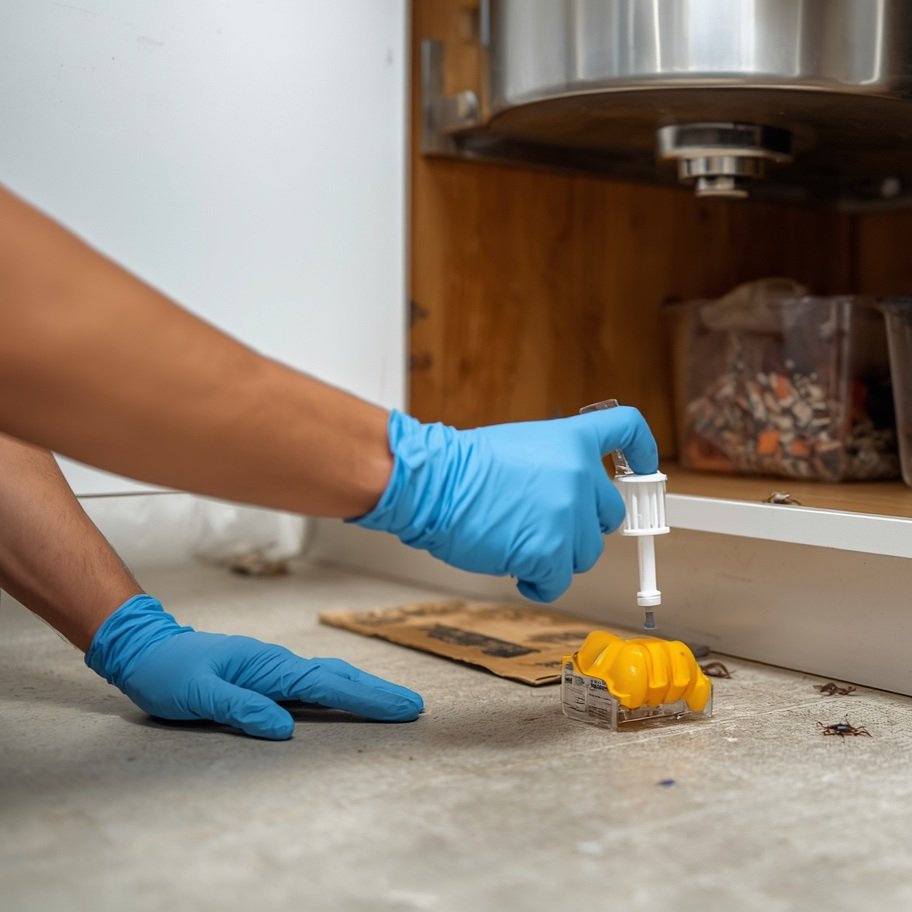
Older West Boca single-family kitchens (Sandalfoot Cove 1970s, original Loggers’ Run, Boca Del Mar standalone homes). Treatment: gel bait at actual harborage points (under-sink corners, behind-dishwasher, refrigerator motor housings, plumbing-line penetrations through cabinet backs, outlet boxes) + IGR for reproductive cycle interrupt. Standard 14 to 21-day elimination timeline.
-
Mission Bay townhomes, Boca Lago 55+ condos, Whisper Walk multi-unit, Century Village West multi-unit clusters. Treatment: inspection identifies driver unit + wall-cavity transfer points, gel bait at unit-level harborage, sealing of shared-wall plumbing penetrations + electrical conduit gaps, IGR application, conversation with HOA about whether building perimeter service is missing the wall-cavity driver. Multi-visit protocol over 6 to 8 weeks.
-
Outdoor harborage at mulch lines, palm-frond accumulation, sewer-vent areas, lanai-zone debris. Indoor sightings after summer storms are common. Treatment: mulch-line setback (12 inches from foundation) + palm-frond cleanup + sewer-vent area perimeter residual + lanai-zone harborage reduction. Indoor treatment only when activity has established a beachhead indoors.
-
Under-sink leaks, dishwasher seal failures, behind-range grease accumulation, food debris in crack-and-crevice zones, and cardboard accumulation. Tyler discusses sanitation findings during inspection; without changes on the homeowner side, treatment fights uphill. A written checklist is provided after every German cockroach inspection.
-
Less common but present in West Boca. Smoky-brown nests outdoors (similar to American). Australian in heavy landscaping. Asian roaches actively fly and are attracted to light. Tyler IDs and adjusts protocol.
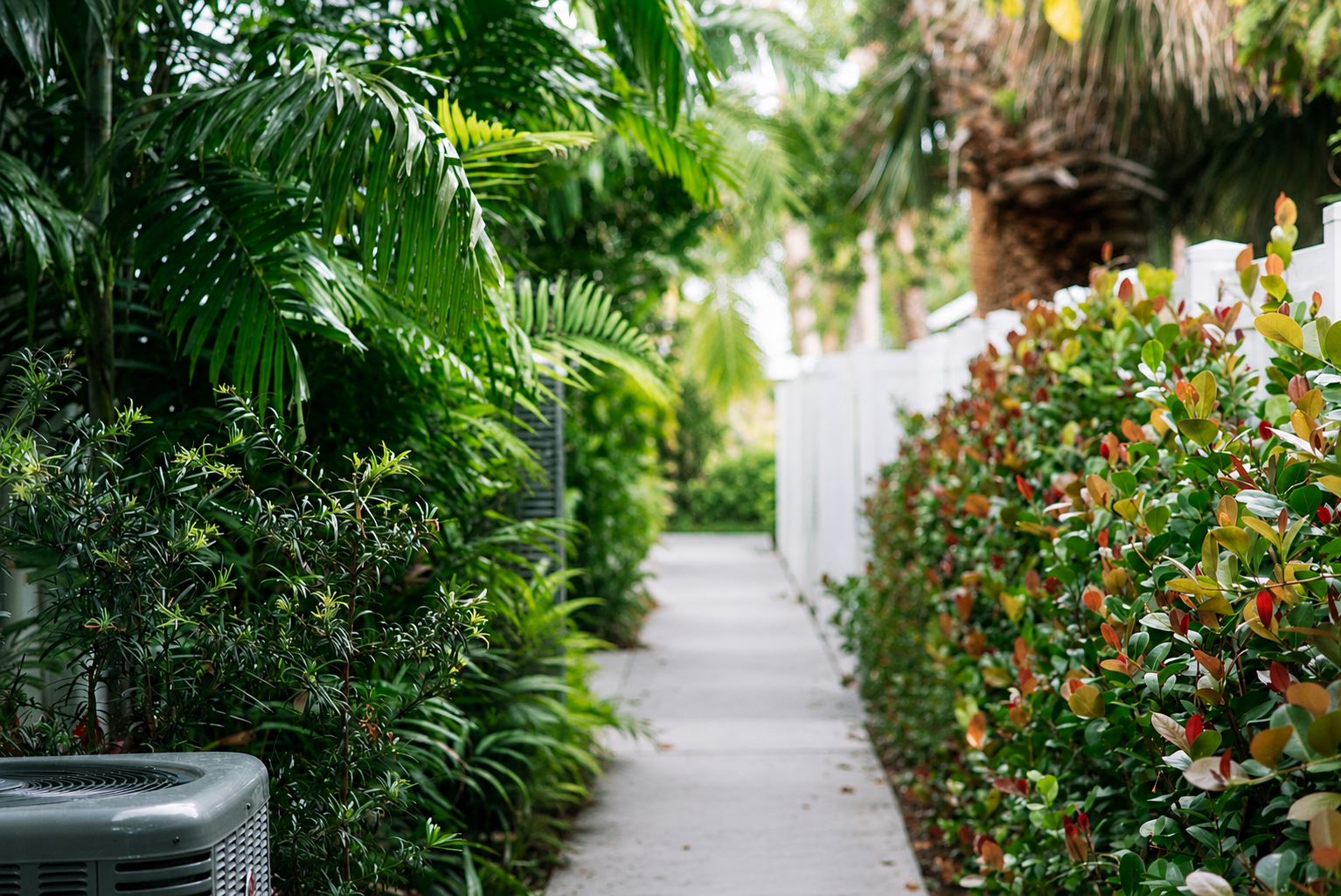
Mission Bay townhome — three months of building-contractor perimeter spray failed; Tyler closed it in 4 weeks
The setup
A Mission Bay townhome homeowner had been fighting recurring German roaches in her kitchen for three months. The building’s quarterly pest contractor had treated her unit twice with perimeter spray, producing no change. The homeowner had also tried over-the-counter gel bait at the kitchen counter with minimal effect.
The result
Activity dropped sharply within 14 days and was fully eliminated by week 4. The customer moved to the Full Home Protection plan for ongoing monitoring. The HOA-level conversation drove building-wide protocol upgrade; Buggify now serves all 24 units in the cluster.
Tyler's inspection
Inspection identified two harborage zones: behind the dishwasher (motor housing + supply-line penetration) and inside the shared wall to the neighbor’s unit (electrical conduit penetration where the neighbor’s outlet was wired). The neighbor unit was the driver; heavy roach activity migrated through the conduit gap regardless of perimeter spray on her side.
The protocol
Three-part: (1) gel bait + IGR at harborage points on her side, (2) polyurethane sealing of the electrical conduit penetration to block wall-cavity transfer, (3) conversation with HOA about whether building perimeter service was reaching the actual driver (it wasn’t; the building moved to per-unit Buggify service two months later).
West Boca cockroach treatment pricing
Cockroach pricing depends on species, severity, and whether multi-family transfer work is needed.
One-Time Cockroach Treatment: $195+
Single-visit treatment for localized American roach sightings or initial German cockroach assessment. Includes species ID, harborage identification, gel bait + IGR for German, perimeter + outdoor harborage reduction for American.
German Cockroach Multi-Visit Protocol: $350 to 700
2 to 3 visit protocol over 4 to 6 weeks. Initial harborage work + gel bait + IGR, follow-up at week 2 to refresh, final at week 4 to 6 to confirm elimination.
Bi-Monthly Plan Coverage
Recurring pressure homes are best on Full Home Protection ($720 to 960/yr), with free re-service between visits. Complete plan ($900 to 1,400/yr) adds attic + lanai treatment for outdoor American roach pressure.
Multi-Family Inter-Unit Protocol: $400 to 900
Heavier scope: unit-level harborage work + wall-cavity transfer-point sealing + HOA-level conversation. Pricing scales with unit count and transfer-point complexity.
Buggify vs. National Pest Chains
Six-point comparison: every row is verifiable from how Buggify operates.
| Feature | Buggify in West Boca Raton | National Pest Chains |
|---|---|---|
| Treatment location | Crack-and-crevice harborage — gel bait at actual nest points | Perimeter spray on kitchen baseboards — doesn't reach harborage |
| IGR deployment | Insect Growth Regulator on every German cockroach job | Often skipped — single-product protocol |
| Multi-family driver-unit ID | Driver unit + wall-cavity transfer points identified + sealed | Single-unit spray; misses unit-to-unit migration |
| Drive time to West Boca | 2-10 minutes from the shop | 20-30+ minutes from regional dispatch |
| American roach outdoor source | Mulch-line setback + sewer-vent area + lanai harborage reduction | Indoor spray only; outdoor source untreated |
| Contract structure | Bills per visit, cancel anytime | Multi-year contracts common |
lti-year contracts commonFour West Boca conditions that shape cockroach work
West Boca's multi-family + older single-family + tropical-landscape mix defines the cockroach protocol.
-
Mission Bay townhomes, Boca Lago 55+ condos, Whisper Walk, parts of Century Village West, and Villages of Oriole: multi-family German roach work is common in West Boca. Building contractors running perimeter-only quarterly service typically miss the wall-cavity transfer driver. Tyler’s protocol identifies driver units and shared-wall transfer points.
-
Sandalfoot Cove 1970s, original Loggers’ Run sections, older Boca Del Mar standalone homes have pre-1978 kitchen construction with original under-sink plumbing, original dishwasher seals, and aged cabinet construction. German roach harborages concentrate in these older kitchens. Harborage work + gel bait + IGR is the protocol.
-
Heavy tropical landscaping (mulch beds, palm trees, dense shrub plantings) across master-planned communities creates outdoor American cockroach harborage. Mulch piled against foundations, palm-frond accumulation, and rotting plant debris are the primary outdoor sources. Mulch-line setback (12 inches from foundation) is the highest-leverage intervention.
-
Heavy summer rainfall saturates outdoor harborages and drives American roach indoor migration through door thresholds, garage gaps, and slab cracks. Indoor sightings after named storms are common but usually don’t indicate established indoor populations. Threshold sealing + post-storm exterior perimeter handles the migration.
Four technical details specific to West Boca cockroach work
Buggify's West Boca cockroach protocol depth.
Crack-and-Crevice Harborage Work — Where the Roaches Actually Are
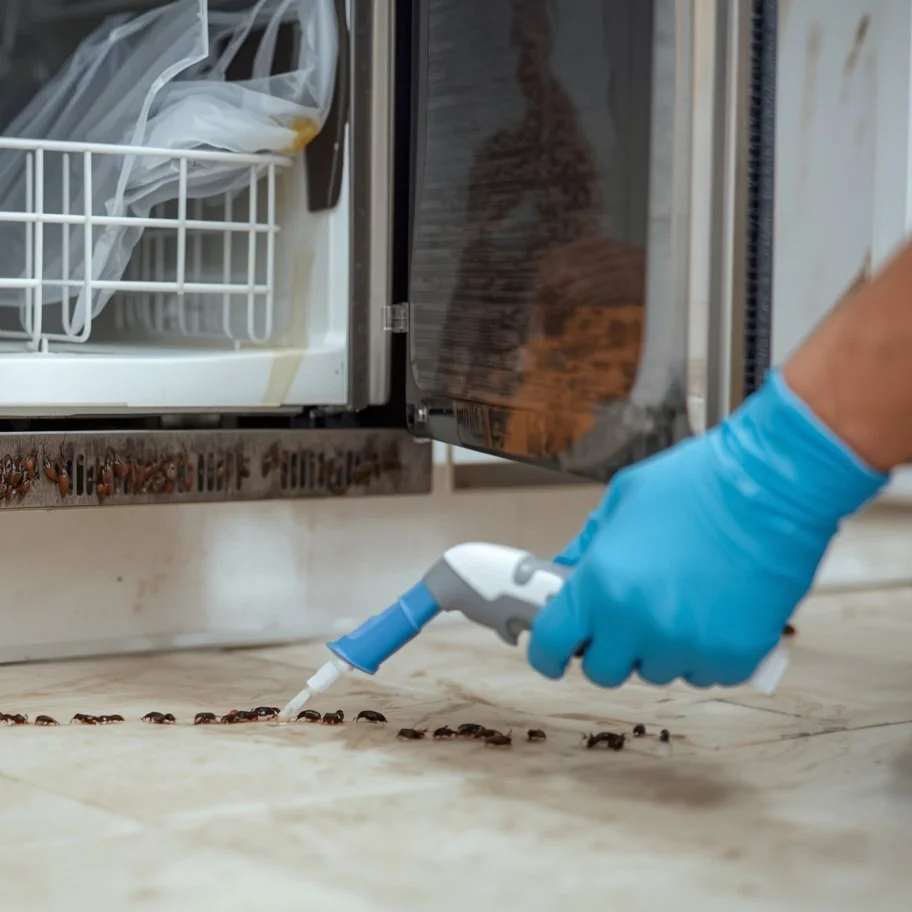
German cockroaches live in crack-and-crevice harborages within 5 feet of food and water: under sinks, behind dishwashers, in refrigerator motor housings, behind cabinet plumbing-line penetrations, in outlet boxes. Tyler uses precision equipment (crack-and-crevice tips on the residual gun, B&G aerosol with extension wand) and knowledge of where the cracks actually are. Most national-chain protocols skip crack-and-crevice work entirely; they spray accessible baseboards. The accessible 5% gets treated; the unseen 95% in harborages doesn’t.
American Roach Outdoor Source Protocol
American cockroaches (palmetto bugs) are outdoor pests that occasionally invade. Tyler’s protocol focuses on outdoor source elimination: mulch-line setback (12 inches from foundation), palm-frond cleanup, sewer-vent area perimeter residual, lanai-zone debris reduction. Indoor treatment only when activity has established a beachhead. The mulch-line setback alone reduces American roach indoor incursions by 70 to 80%.
IGR — Reproductive Cycle Interrupt
Insect Growth Regulators (methoprene, hydroprene, pyriproxyfen) mimic juvenile hormones. They don’t kill adults, but they prevent cockroach nymphs from molting into reproductive adults. The egg cases that survive the gel-bait protocol don’t produce the next generation. Without IGR, the colony rebuilds from surviving eggs even after 80%+ adult kill. National-chain single-product protocols typically skip the IGR step; Tyler adds it to every German cockroach job.
Multi-Family Driver-Unit Identification
Mission Bay townhomes, Boca Lago 55+, Whisper Walk: multi-family German roach work has to account for the unit-to-unit driver. Tyler’s inspection: shared-wall plumbing penetration check, electrical conduit transfer points between adjacent units, shared HVAC system risks. Treatment: unit-level gel-baiting + IGR + exclusion sealing at wall penetrations + conversation with HOA about whether building perimeter service is missing the wall-cavity driver.
Three things Buggify will never do to you
Quote a real treatment price without inspecting the property first. Phone gives a range; firm pricing comes after an on-site walkthrough.
Indoor spraying when the source is outside. Most West Boca Raton pest pressure is driven by outdoor harborage; indoor-only work is a short-term cover-up.
Long-term contracts that lock you in. Bi-monthly plans bill per visit and cancel anytime, no fees.
Call (954) 287-1972. Tyler answers, gives you a price range on the first call, and (in most cases) gets you on the West Boca Raton schedule same-day or next-morning.
Frequently Asked Questions
-
Probably German cockroaches if small (1/2 inch) and light brown with stripes. American cockroaches (palmetto bugs) are 1.5 to 2 inches and reddish-brown. Different species, different protocols. Tyler IDs in seconds on-site.
-
Multi-family German roach work needs unit-to-unit driver inspection. The building’s perimeter-only service misses wall-cavity transfer between adjacent units. Tyler’s protocol identifies driver units and shared-wall transfer points, then seals the conduit gaps. Often requires an HOA-level conversation about building protocol.
-
2 to 10 minutes from the shop. Same-day appointments are routine when you call before noon.
-
American roaches (palmetto bugs) are outdoor-sourced. Heavy rain saturates outdoor harborages and drives migration through door thresholds. Buggify’s protocol: mulch-line setback (12 inches from foundation) + threshold sealing + outdoor perimeter residual. The outdoor source is the real issue.
-
German cockroaches live in crack-and-crevice harborages inside the home (under sinks, behind dishwashers, in motor housings). Perimeter spray on baseboards reaches none of those zones. Treatment requires gel bait at actual harborage points + IGR for the reproductive cycle interrupt.
-
Yes. Gel baits are placed in cabinet voids, behind appliances, in crack-and-crevice locations that aren’t pet- or kid-accessible. Label-compliant, pet-safe, and child-safe.