
Ghost Ants in Boca Raton: Why They're So Hard to Get Rid Of
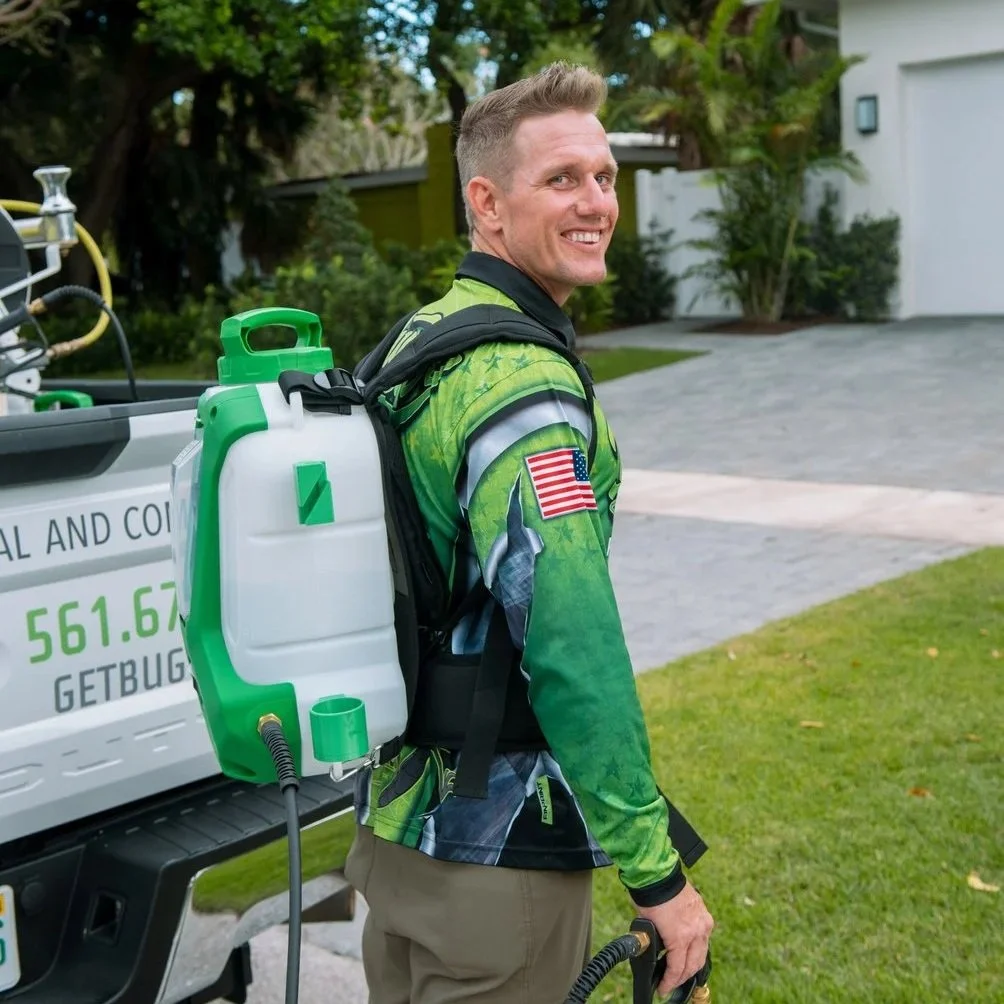
Professional ghost ant treatments help Boca Raton homeowners eliminate recurring ant infestations using non-repellent baiting and exterior barrier protection methods.
If you have tiny, almost see-through ants trailing through your kitchen or bathroom in Boca Raton, you almost certainly have ghost ants — and you have probably already tried a spray that seemed to work briefly before the problem came back worse than before. Ghost ants are one of the most common pest calls in South Florida, and the reason they are so difficult to eliminate with consumer products comes down to a specific biological behavior that makes standard spray treatments actively counterproductive.
What Are Ghost Ants?
Ghost ants, scientifically known as Tapinoma melanocephalum, are a tropical ant species that thrives in South Florida's warm, humid climate. They get their name from their appearance — the head and thorax are dark brown or black while the abdomen and legs are pale, almost translucent. They are tiny, measuring about 1.5mm in length, and move rapidly in large, unpredictable trails that can appear to materialize seemingly out of nowhere.
Ghost ants are one of the most common household pests throughout Palm Beach and Broward counties. They are attracted to sweet foods, greasy foods, moisture, and warmth — which makes kitchens and bathrooms their preferred indoor environments. Outdoors, they nest in the soil under rocks, in landscape mulch, in potted plant soil, and in the hollow stems of plants. In South Florida's climate, they maintain large, multiple-queen colonies that can quickly reestablish themselves after partial treatment.
Why DIY Sprays Make Ghost Ant Infestations Worse
This is the most important thing to understand about ghost ant control in Boca Raton: repellent insecticide sprays — which include virtually all consumer ant sprays — cause ghost ant colonies to fragment and expand.
Ghost ants form what are called polygyne colonies, meaning they have multiple queens. When a repellent product is applied to their foraging trail, the colony interprets it as a threat and undergoes a process called budding — splitting into multiple sub-colonies that relocate to new areas of the home. The queen, or multiple queens, move with their respective groups and establish new nesting sites. The homeowner who sprays their kitchen trail on Monday may find ants in the kitchen, bathroom, and two bedrooms by the following week — and believe the product made things worse. It did. But it is not the homeowner's fault — it is a predictable biological response to repellent treatment.
The solution is non-repellent professional bait. Non-repellent baits are undetectable to ants — they forage through the bait, carry it back to the colony, and share it with the queen and larvae. The entire colony, including every queen, is eliminated from the inside out. This is the only treatment approach that produces lasting ghost ant control.
Signs You Have Ghost Ants, Not Another Species
Trails in the kitchen and bathroom simultaneously: Ghost ants commonly establish trails in multiple rooms at the same time. Finding simultaneous ant activity in the kitchen and bathroom is a strong indicator of ghost ants rather than a single-species localized infestation.
Ants appear after rain events: Ghost ants nest outdoors and forage indoors. Heavy rain saturates their outdoor nesting sites and drives them inside. If ant activity spikes after rain, ghost ants are the likely culprit.
Trail disappears and reappears in new locations: If a trail disappears after treatment but reappears in a different area within days, the colony has fragmented — the classic response to repellent spray application.
Tiny, partially translucent ants: At 1.5mm, ghost ants are significantly smaller than most common ant species. The pale, almost invisible abdomen and legs are the most reliable identification characteristic.
What Professional Ghost Ant Treatment Looks Like
A professional ghost ant treatment from Buggify begins with an assessment of the active trails and likely outdoor nesting sites. Non-repellent gel bait is applied at specific points along active foraging routes — not broadcast sprayed across surfaces. The ants carry the bait back to the colony and share it with every individual, including every queen.
After the interior infestation is resolved, a non-repellent perimeter barrier treatment is applied around the exterior of the home to prevent reinvasion from outdoor colonies. Quarterly exterior maintenance keeps ghost ant pressure below the threshold that triggers interior activity.
Results from professional non-repellent bait treatment are typically visible within 3–5 days and complete within 1–2 weeks for most infestations.
Call Buggify for Ghost Ant Control in Boca Raton
If ghost ants have invaded your Boca Raton home, call Buggify Pest Solutions at (561) 672-0200 for a free phone estimate and same-day service. We provide professional ghost ant control throughout Boca Raton, Parkland, Coral Springs, Delray Beach, Boynton Beach, and Coconut Creek — using the non-repellent baiting approach that actually works.
