
How to Tell the Difference Between a Bee and a Wasp in South Florida
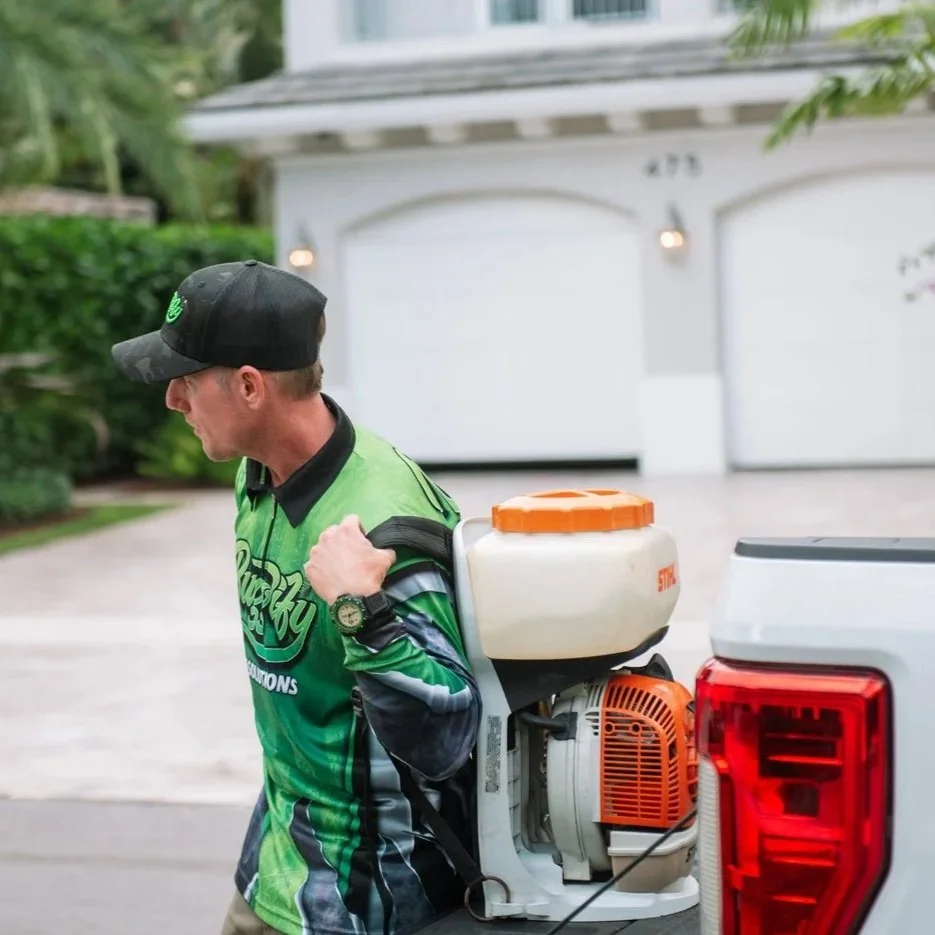
Professional pest control service inspecting bee and wasp activity near residential property in South Florida to ensure safe pest identification.
One of the most common questions we get from homeowners in Boca Raton and across South Florida is: 'Do I have bees or wasps?' It is an important question — because the answer affects not just how the pest is treated, but whether relocation is an option versus extermination being necessary. Misidentifying a wasp nest as bees and attempting to relocate it — or conversely, exterminating a honey bee colony that a beekeeper could have saved — both lead to unnecessary frustration and expense. Here is a practical guide to telling the two apart in South Florida.
Physical Appearance: Key Differences
Body shape: Bees have a rounder, fuzzier, more compact body. Honey bees and bumble bees are visibly hairy — they are covered in fine hair that collects pollen. Wasps have a narrow waist pinched between the thorax and abdomen, a smoother body with less visible hair, and a more elongated, angular appearance.
Coloring: Most wasps found in South Florida — including paper wasps, yellow jackets, and bald-faced hornets — have distinct yellow and black or black and white banding. Honey bees have a similar gold-and-black coloring but appear fuzzier. Bumble bees are larger and distinctly fuzzy with yellow and black bands. Carpenter bees are large and mostly black, which often causes confusion — the males have a yellow face while females are entirely black.
Size: Yellow jackets are small — roughly the same size as a honey bee. Paper wasps are notably larger and more elongated with long legs that dangle during flight. Bumble bees are the largest fuzzy species. Carpenter bees are similar in size to bumble bees but have a shiny, hairless black abdomen.
Nest Type: The Most Reliable Identification
Open paper comb under eaves or in shrubs: If you see a visible, open honeycomb structure made of gray papery material — typically under an eave, attached to a door frame, inside a shrub, or on a fence post — this is a paper wasp nest. Paper wasps are the most common stinging insect you will encounter on South Florida homes.
Large enclosed gray paper nest in a tree: A large, football-shaped enclosed paper nest in a tree or on a structure is a bald-faced hornet nest. These are much more aggressive than paper wasps and should be treated urgently by a professional.
Bees entering and exiting a gap in the structure: A steady stream of bees flying in and out of a gap in the soffit, wall, or roofline indicates an established honey bee colony inside the structure. There is no visible nest on the exterior — the colony is building comb internally.
Ground activity with bees coming and going from a soil hole: Yellow jackets frequently establish underground colonies in disturbed soil, burrow holes, or at the base of landscape shrubs. A hole in the ground with heavy flying insect traffic is typically yellow jackets — not bees.
Round holes bored into wood: Smooth, round 1/2-inch holes drilled into fascia boards, decking, or outdoor furniture are the work of carpenter bees — not honey bees. Carpenter bees are solitary and do not form colonies.
Behavior Differences
Honey bees are generally docile unless their colony is directly threatened. A swarm of honey bees resting on a tree branch or fence post — common in South Florida in spring — is typically calm and poses little risk unless disturbed. They are focused on finding a new home, not on defending a territory.
Paper wasps are moderately defensive. They will sting if the nest is touched or if someone moves quickly near it, but they do not typically pursue threats at a distance. Yellow jackets are significantly more aggressive — they will pursue perceived threats well away from the nest and can sting multiple times without dying. Bald-faced hornets are highly aggressive and react strongly to any nearby movement.
Carpenter bees behave differently from social species. Males hover aggressively near their galleries and will buzz close to people, but male carpenter bees cannot sting. Females can sting but rarely do unless directly handled.
Why the Identification Matters for Treatment
Honey bees are a protected and valuable pollinator species in Florida. Licensed beekeepers can safely relocate a honey bee colony, and live relocation is always the preferred response when it is safely feasible. Exterminating a honey bee colony when relocation was an option is unnecessary and environmentally counterproductive.
Wasp colonies — paper wasps, yellow jackets, hornets — are not relocatable. They require direct colony treatment and nest removal. Using relocation methods on a wasp nest will not work and will result in an aggressive defensive response.
Carpenter bees do not form removable colonies. Treatment focuses on treating the existing galleries with dust or liquid insecticide and applying preventative treatment to vulnerable wood surfaces to discourage new boring.
When to Call a Professional
Call a professional immediately for any nest inside a wall or structural cavity — whether bees or wasps. Call a professional for any yellow jacket ground nest — these colonies are highly aggressive and underground access makes safe DIY treatment nearly impossible. Call a professional for any nest near a regularly used entry point, children's play area, or outdoor living space.
If you are unsure what you are dealing with, call Buggify Pest Solutions at (561) 672-0200 for a free phone estimate. We can identify the species from your description and recommend the appropriate response — whether that is relocation, professional removal, or a preventative treatment.
