
Signs You Have a Rodent Problem in Your Boca Raton Home
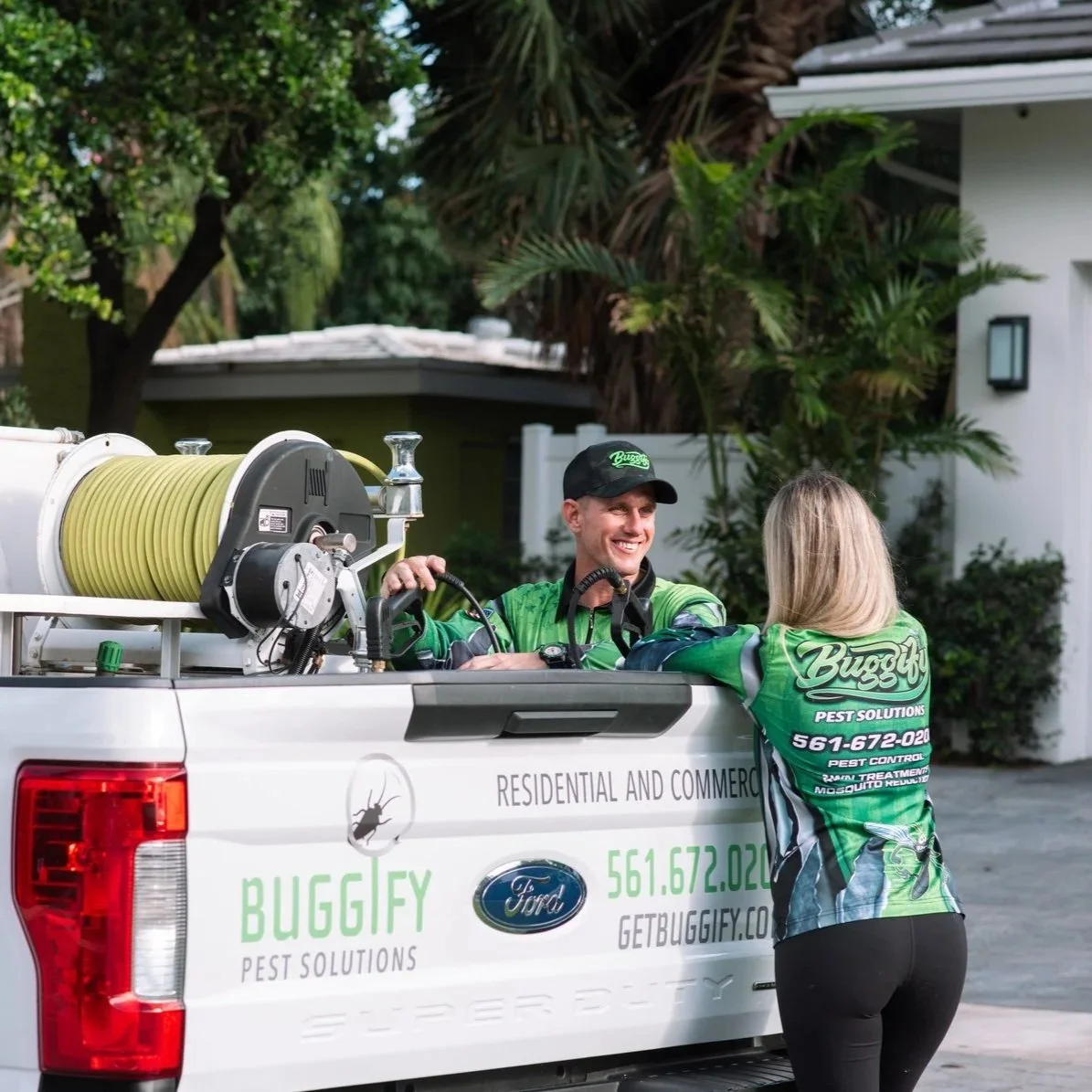
Buggify Pest Solutions technicians beside service truck discussing residential rodent control and pest inspection services outside Boca Raton home property.
Nobody wants to find out they have rats or mice in their home. But in Boca Raton, where the subtropical climate and dense tropical landscaping create ideal conditions for rodents year-round, infestations are more common than most homeowners realize. The key is catching the signs early — before a small number of rodents becomes a full infestation. This guide covers exactly what to look for, why Boca Raton homes are particularly vulnerable, and what to do when you spot the signs.
Why Boca Raton Homes Are Vulnerable to Rodent Infestations
South Florida's year-round warmth means rodents never go into seasonal decline the way they do in colder climates. Boca Raton's mature tree canopy, lush landscaping, and network of canals provide ideal foraging and travel routes for the roof rat — the most common rodent species in our area. Roof rats are agile climbers that use tree branches, utility lines, and palm fronds as highways to reach rooflines and attic vents. A gap the size of a quarter in your soffit or around an attic vent is all they need to establish a nest indoors.
New construction throughout West Boca Raton and the surrounding areas regularly displaces established rodent populations, driving them into adjacent residential neighborhoods. If major development activity is happening near your neighborhood, rodent pressure on nearby homes typically increases. This is a predictable seasonal pattern that proactive homeowners can get ahead of with early professional treatment.
The Most Common Rodents in Boca Raton
There are three rodent species you are most likely to encounter in and around your Boca Raton home. The roof rat is the most prevalent — a dark-colored, agile climber that prefers attic spaces and upper areas of the home. Norway rats, also called brown rats, are larger and tend to burrow in the ground or inhabit lower areas of structures. House mice are the smallest and most adaptable species, capable of fitting through gaps as small as a dime, and are common in both residential and commercial properties throughout the area.
Warning Signs of a Rodent Problem in Boca Raton
Scratching or scurrying sounds at night: Roof rats are nocturnal. If you hear scratching, scurrying, or squeaking from the attic or inside walls after dark, this is the most reliable early warning sign of roof rat activity. Do not dismiss it as settling sounds or wildlife outside — if it is consistent and directional, it is almost certainly a rodent inside the structure.
Droppings in the attic, pantry, or kitchen cabinets: Rat droppings are dark, cylindrical pellets roughly the size and shape of a grape seed. Mouse droppings are smaller and more tapered. Finding droppings in food storage areas, along the backs of cabinet shelves, or concentrated in the attic confirms active rodent presence in that area of the home.
Gnaw marks on wiring, wood, or food packaging: Rodents gnaw constantly — both to keep their teeth at a functional length and to access food and nesting material. Gnaw marks on electrical wiring are a fire hazard that should be addressed immediately. Gnawed food packaging in the pantry confirms rodents have access to your kitchen.
Grease marks along baseboards or structural runs: Roof rats follow established travel routes and leave oily rub marks on surfaces they navigate repeatedly — particularly along baseboards, pipe chases, and the edges of ceiling joists in the attic. A visible dark smear mark on a baseboard or beam is a reliable indicator of a regularly used rodent run.
Nesting material in the attic or storage areas: Rats build nests from insulation, paper, fabric, and plant material. Discovering shredded insulation, paper, or soft material gathered into a pile in the attic or inside a storage area is a direct sign of nesting activity.
Damaged roof vents or soffits: Inspect your roofline periodically for gaps around attic vents, damaged soffit panels, and any unsealed penetrations where utility lines enter the structure. These are the primary entry points for roof rats in Boca Raton.
Unusual pet behavior: Cats and dogs often detect rodent activity before humans do. Unusual interest in a specific wall, cabinet, or area of the floor — particularly combined with any of the other signs above — is worth investigating.
What to Do If You Find Signs of Rodents in Your Boca Raton Home
The most important thing to understand is that a rodent problem will not resolve itself. Rodents breed rapidly — a single female roof rat can produce up to 40 offspring per year — and a small number of rodents visible in the early stages represents an infestation that has already been established for weeks or months.
Do not attempt to seal entry points before professional treatment. Sealing an active rodent inside the structure increases aggression and can cause them to chew through interior surfaces to escape. The correct sequence is: professional inspection and trapping first, confirmed elimination, then exclusion sealing of every entry point to prevent reinfestation.
Avoid using rodenticide bait inside the home without professional guidance. Secondary poisoning from rodents that die in inaccessible wall voids produces a persistent odor problem and can harm predatory wildlife. Professional tamper-resistant bait stations positioned at the exterior are a safer and more effective approach.
Call Buggify for Rodent Control in Boca Raton
If you have found signs of rodents in your Boca Raton home, call Buggify Pest Solutions at (561) 672-0200 for a free phone estimate and same-day service. We provide comprehensive rodent inspection, professional trapping, entry point identification, and professional exclusion sealing throughout Boca Raton, Parkland, Coral Springs, Delray Beach, Boynton Beach, and Coconut Creek.
