
Why Carpenter Ants Are a Problem for South Florida Homes
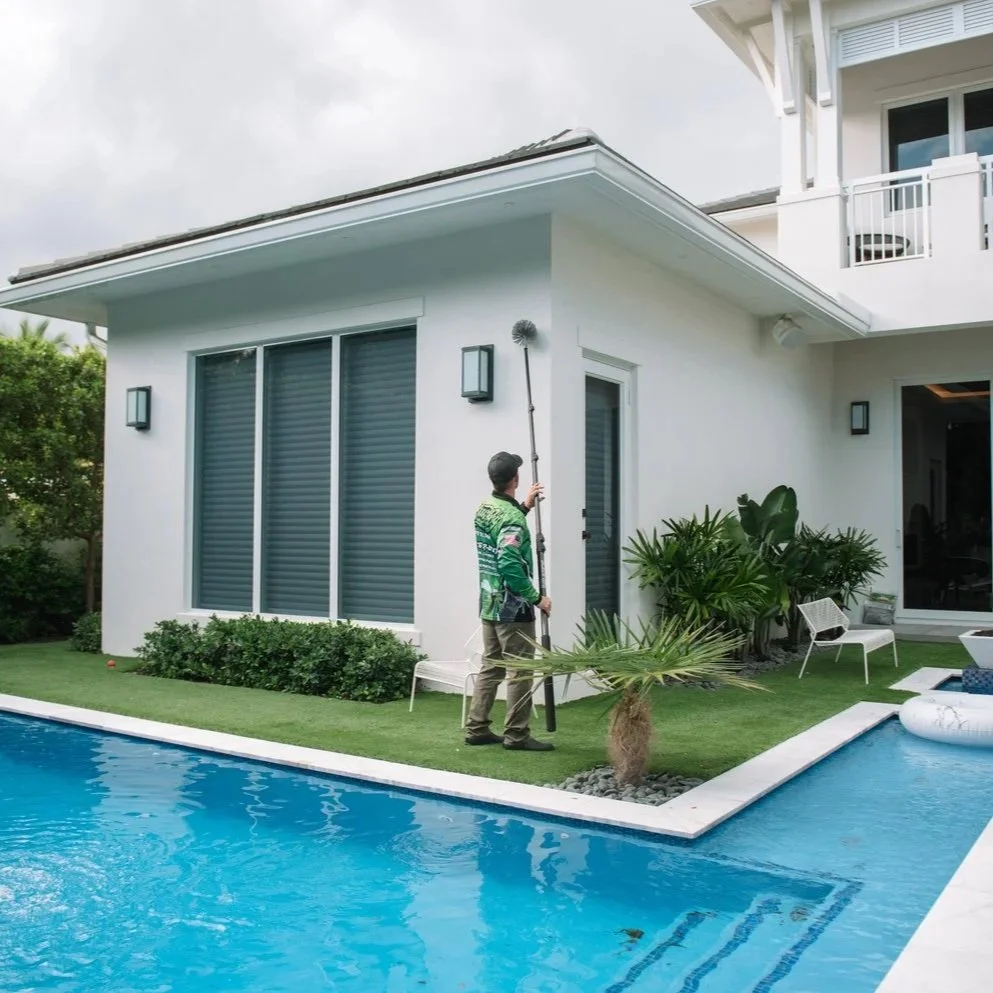
Professional carpenter ant inspection at Boca Raton home helps identify moisture issues and prevent structural wood damage from infestations.
When most South Florida homeowners think of ant problems, they think of ghost ants — the tiny, semi-transparent species that trails through kitchens and bathrooms. But carpenter ants, while less common, are significantly more destructive and can cause serious structural damage if left untreated. This guide covers how to identify carpenter ants in your Boca Raton or South Florida home, what damage they cause, and when professional treatment is necessary.
What Are Carpenter Ants?
Carpenter ants are large ants — the workers are typically 6–12mm long, making them among the largest ant species in Florida. In South Florida, the most common species is Camponotus floridanus, which is black or dark reddish-brown in color. Unlike termites, carpenter ants do not eat wood — they excavate galleries inside it to create nesting chambers. The damage they cause is structural rather than nutritional, and the galleries they create weaken the wood progressively over time.
Carpenter ants prefer wood that has already been softened by moisture or fungal decay. A carpenter ant infestation is almost always associated with a moisture problem — a leaking roof, plumbing leak, condensation issue, or consistently wet area of the structure. This is why treating carpenter ants without also identifying and resolving the underlying moisture issue typically results in reinfestation.
How to Identify Carpenter Ant Activity in Your Home
Large black or dark reddish-brown ants: Carpenter ant workers are much larger than ghost ants or fire ants. Finding large ants — particularly indoors near wood surfaces — is the most direct indicator of carpenter ant activity.
Sawdust-like frass: Carpenter ants push the wood shavings and debris from their excavation out of the gallery through small openings in the wood. This material, called frass, looks like coarse sawdust mixed with insect body parts and dead ants. Finding frass on window sills, along baseboards, or around door frames is a reliable sign of active carpenter ant galleries in the nearby wood.
Hollow-sounding wood: Tap suspected areas with a screwdriver handle. Wood that has been excavated by carpenter ants produces a hollow sound compared to solid wood.
Large ants seen at night: Carpenter ants are primarily nocturnal. Seeing large ants moving along baseboards, walls, or countertops after dark is a strong indicator of an established indoor colony.
Ant activity near moisture damage: Check any area of the home with known or suspected moisture issues — under bathroom sinks, around window frames with evidence of water intrusion, in any area with a history of roof leaks, or around HVAC condensate drainage points. Carpenter ant colonies concentrate near the moisture source that makes the wood suitable for galleries.
What Damage Do Carpenter Ants Cause?
Carpenter ant galleries weaken structural wood progressively. A long-established colony in a load-bearing wall, floor joist, or roof rafter can cause significant structural compromise over several years. The damage is compounded by the fact that carpenter ant infestations are typically associated with wood that is already weakened by moisture — meaning the structural wood affected is often in a compromised state even before the ants begin excavating.
Unlike termite damage, which is typically concentrated below ground level or within the wood's interior, carpenter ant galleries often extend through the wood in irregular patterns and can sometimes be detected by the frass deposits they leave behind. Early detection significantly limits the extent of the damage.
Treatment for Carpenter Ants in South Florida
Professional carpenter ant treatment combines direct void injection of insecticide into the galleries, exterior perimeter barrier treatment, and identification of the moisture source driving the infestation. Consumer spray treatments applied to foraging trails are rarely effective against established carpenter ant colonies — the colony is typically inside the wood, not on the surfaces where sprays are applied.
After professional treatment, the moisture source that made the wood attractive for galleries must be resolved. If the leak, condensation issue, or water intrusion is not corrected, a new colony will establish in the same or nearby wood within months.
Call Buggify for Carpenter Ant Treatment in Boca Raton
If you have found signs of carpenter ants in your South Florida home, call Buggify Pest Solutions at (561) 672-0200 for a free phone estimate and same-day service. We provide professional carpenter ant treatment throughout Boca Raton, Parkland, Coral Springs, Delray Beach, Boynton Beach, and Coconut Creek — including inspection to identify the underlying moisture conditions driving the infestation.
